
Here is where the smell comes from, what clears it at home and which signs mean your dentist should take a look.
Key takeaways
- Your tongue is a common source. A coating on its back holds bacteria that brushing your teeth never touches.
- Gum pockets trap odour. Bacteria and tartar deep under inflamed gums need a professional cleaning.
- Saliva keeps breath fresh. A dry mouth lets odour-making bacteria multiply.
- Mouthwash is not a fix on its own. Lasting change comes from cleaning what your brush misses and treating the cause.
Why does your breath still smell after you brush?
Your breath still smells because the bacteria behind it live where a toothbrush cannot reach. Brushing cleans the surfaces of your teeth but misses your tongue, the spaces between teeth and the area under your gums.
Those bacteria break down food scraps, dead cells and proteins in your saliva. Feeding bacteria give off sulphur gases that smell like rotten eggs. They grow best where there is little oxygen, so the deepest corners of your mouth smell the worst.
A quick brush freshens your mouth for a while, but plaque, the soft film of bacteria on your teeth, starts to form again within hours.
Is your tongue the cause?
For many people, yes. The rough back of the tongue ranks among the top sources of bad breath, and it is easy to forget.
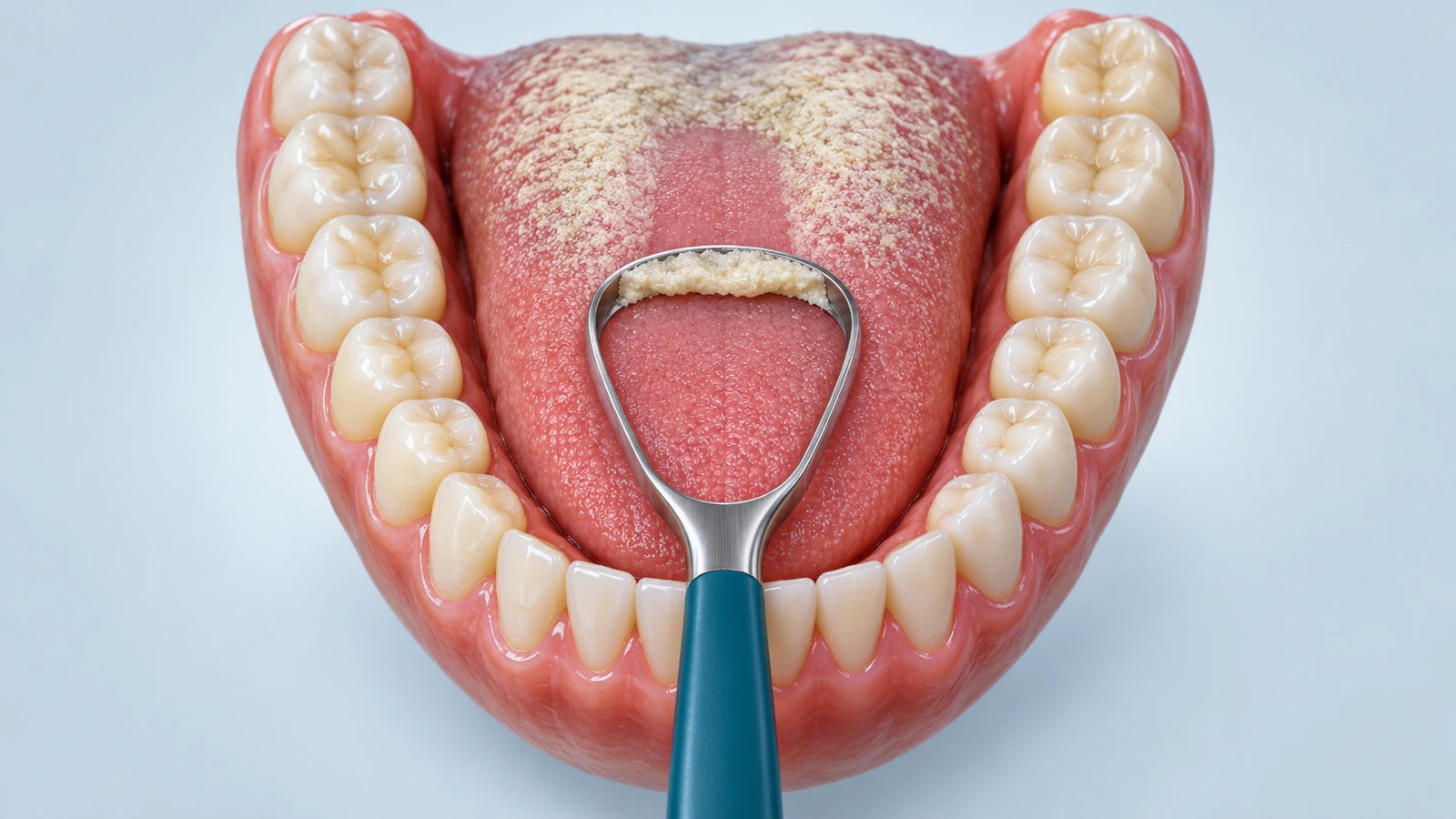
Your tongue is covered in tiny bumps called papillae. Food, dead cells and bacteria settle between them and collect most towards the back. A pale white or yellow coating there is that build-up.
Clean your tongue each morning before you brush. Place a tongue scraper or a soft toothbrush as far back as feels comfortable and draw it forward with light pressure. Rinse the scraper and repeat until it comes away clean.
Can gum disease cause bad breath?
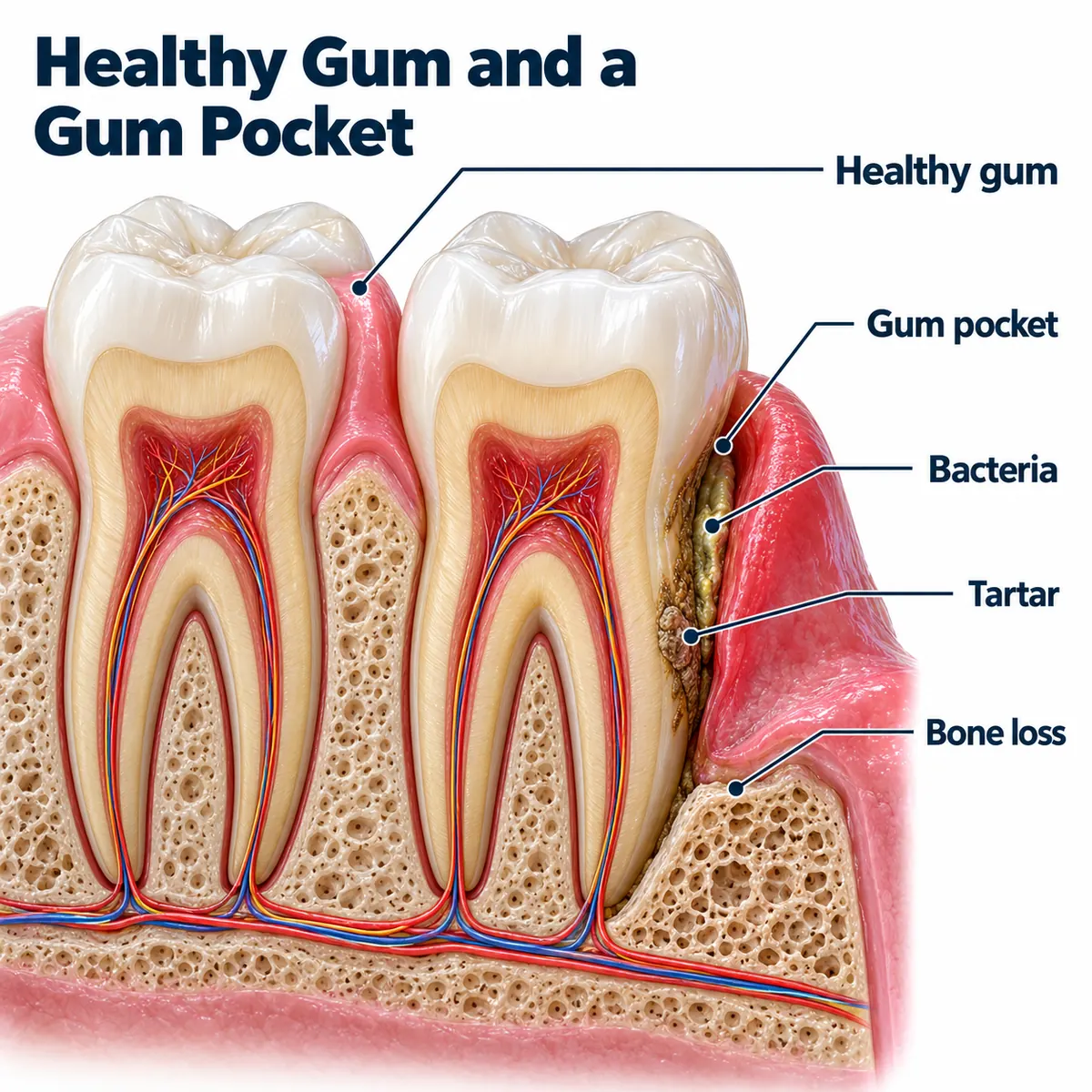
Yes. Gum disease is one of the main dental causes of bad breath that brushing cannot fix.
It starts as gingivitis, when plaque left at the gum line makes the gums red, swollen and quick to bleed. Plaque that stays in place hardens into tartar, which brushing does not move. Left alone, gingivitis can turn into periodontitis. The gum pulls away from the tooth and forms a pocket where bacteria live out of reach of your brush and floss.
Bleeding when you brush, puffy or sore gums and gums shrinking back from your teeth all point to your gums as the source.
Caught early, gingivitis reverses with a professional cleaning and better habits at home. Deeper pockets need scaling and root planing to clean the root surface below the gum line. Bone lost to gum disease does not grow back, so early care matters.
Could a cavity or an old filling be trapping food?
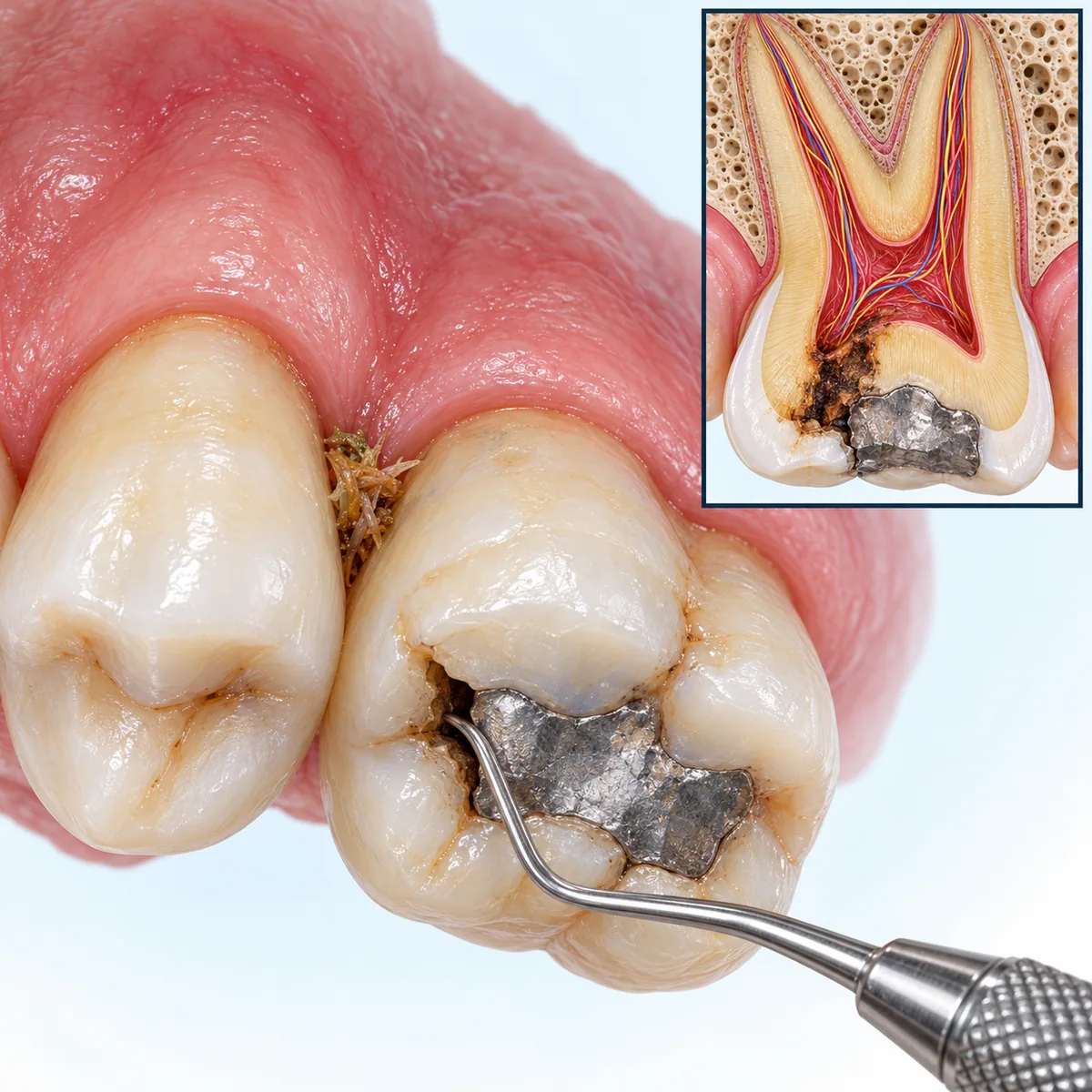
Yes. A cavity, a worn filling or a gap at the edge of a crown holds food and bacteria where no brush or floss can clean them out.
A filling that feels rough or keeps catching food is worth having checked.
Food and bacteria hide in these places:
- Old fillings that have chipped, worn down or pulled away at the edge.
- Crowns with a small gap where the crown meets the tooth.
- A cracked tooth with bacteria collecting inside the crack.
- A partly erupted wisdom tooth with a flap of gum over it that traps food at the very back.
Your dentist finds these with an exam and x-rays where needed. A leaking edge is repaired with a new filling or a crown. A wisdom tooth that keeps trapping food and getting infected can be removed.
How does a dry mouth make bad breath worse?
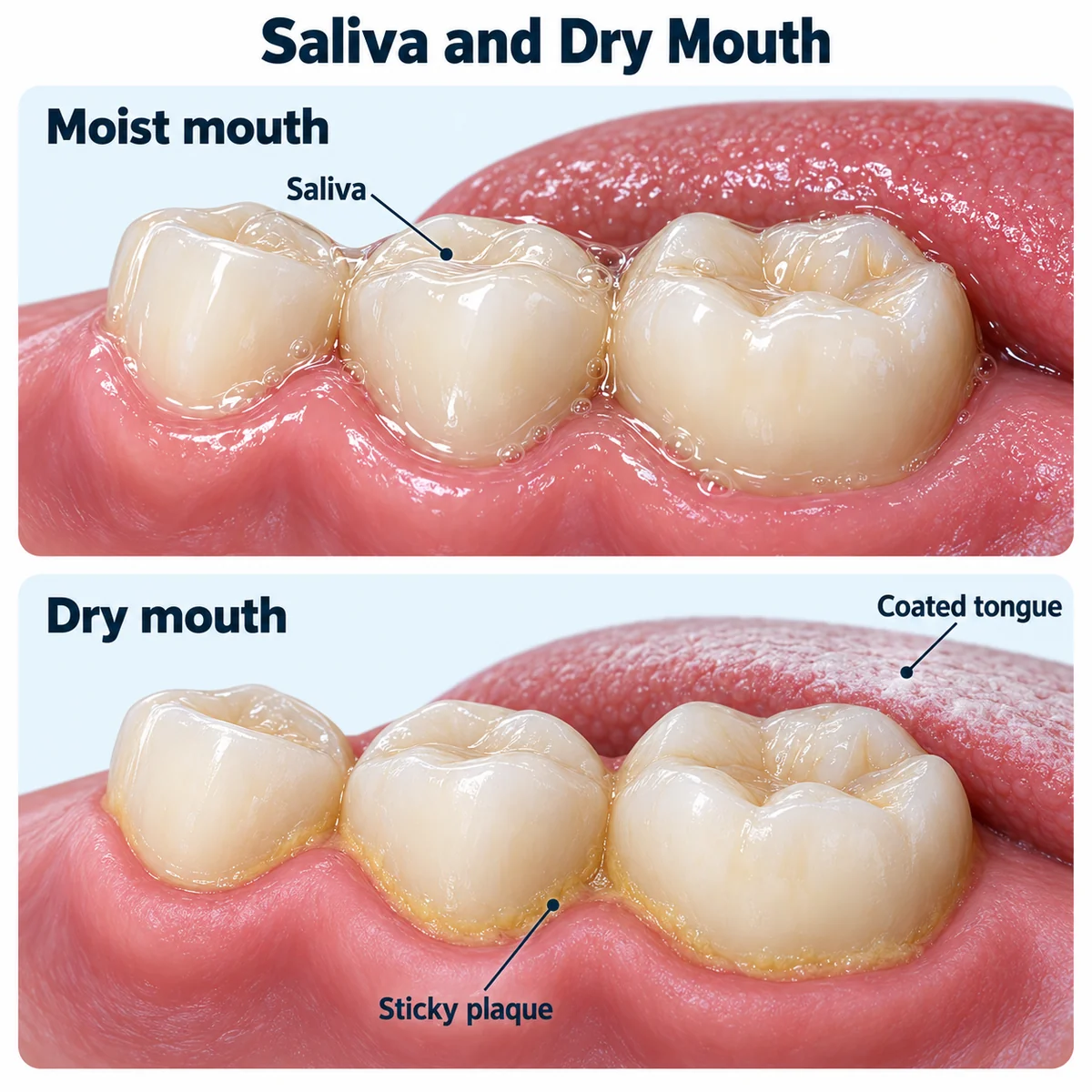
Saliva rinses food and bacteria away all day long. When your mouth makes less of it, bacteria multiply and the smell builds up faster.
Many everyday medicines reduce saliva, including some for allergies, depression and blood pressure. Mouth breathing, smoking, stress and too little water add to the problem.
Sip water through the day and chew sugar-free gum to get saliva flowing again. If a medicine dries your mouth, tell your dental team and ask your doctor or pharmacist about it. Keep taking a prescribed medicine until your doctor says otherwise.
What else keeps bad breath going?
Some foods, smoking, low-carb diets and a few health problems outside the mouth cause bad breath that brushing cannot clear.
- Garlic and onions. Their compounds pass into your blood and leave through your lungs until your body clears them.
- Smoking. Tobacco leaves its own smell and raises your risk of gum disease.
- Low-carb diets. Burning fat for fuel releases ketones that change the smell of your breath.
- Sinus and throat problems. Mucus from post-nasal drip feeds odour-making bacteria, and tonsil stones in the folds of the tonsils smell strongly.
- Acid reflux and other health conditions. Reflux and some medical conditions can also change how your breath smells.
Your dentist checks your mouth first. If no dental cause turns up, tell your doctor about the smell.
What gets rid of bad breath that lasts after brushing?
Daily cleaning of the places your toothbrush misses is the first step, and your dental team treats what home care cannot reach.
- Brush twice a day for two minutes with a fluoride toothpaste and the bristles aimed at the gum line.
- Clean between your teeth once a day with floss, an interdental brush or a water flosser.
- Clean your tongue every morning with a scraper or a soft brush.
- Replace your toothbrush every three months because worn bristles clean less well.
- Clean anything you wear in your mouth. Take dentures out at night unless you were told otherwise, and keep them in water. Let a night guard dry completely before you store it, since a guard shut away damp starts to smell.
When should you see a dentist about bad breath?
Book a visit when bad breath keeps returning despite daily brushing, flossing and tongue cleaning. Come in sooner if you also have bleeding gums, a loose tooth, a rough filling or a tooth that hurts.
Your dentist asks what you have noticed and which medicines you take. The checkup looks for decay, gum pockets and failing fillings, and the cleaning removes tartar you cannot shift at home. At Dentistry on Britannia in Mississauga, you also hear which spots your brushing misses and how to reach them.
A swollen gum with a bad taste that will not shift points to an infection, so call us the same day and keep heat off your face. Go to hospital for trouble opening your mouth or any sign listed below. When we are closed, use an after-hours dental service and call us once we open.
Frequently asked questions
Does mouthwash get rid of bad breath?
Not on its own. A rinse cuts bacteria and masks the smell briefly, but the source stays in place. Keep using any rinse your dentist prescribed, and pick an alcohol-free one so it does not dry your mouth.
Why is my breath worst in the morning?
Your mouth makes less saliva overnight, so bacteria build up as you sleep, and sleeping with your mouth open dries it even more. Cleaning your tongue and drinking water after you wake up helps.
Is bad breath always a sign of poor brushing?
No. People who brush well can still have gum disease, a dry mouth or a leaking filling that causes it.
Can children have bad breath?
Yes, for the same reasons as adults: a coated tongue, food between the teeth and breathing through the mouth. If it lasts despite good brushing, book a children's dental check-up. Bad breath with a fever or facial swelling needs a call the same day, or the hospital if the swelling spreads.
Does cleaning my tongue help bad breath?
Yes, for many people. The back of the tongue holds a coating of bacteria that brushing your teeth never touches. Clean it each morning with a scraper or a soft toothbrush.