

A dental cleaning removes the plaque and hardened tartar that brushing and flossing leave behind above and below the gum line. Most people book one alongside a check-up.
If you have been looking for a dental cleaning near you in Mississauga, you can book here. No referral needed and you do not have to be an existing patient.
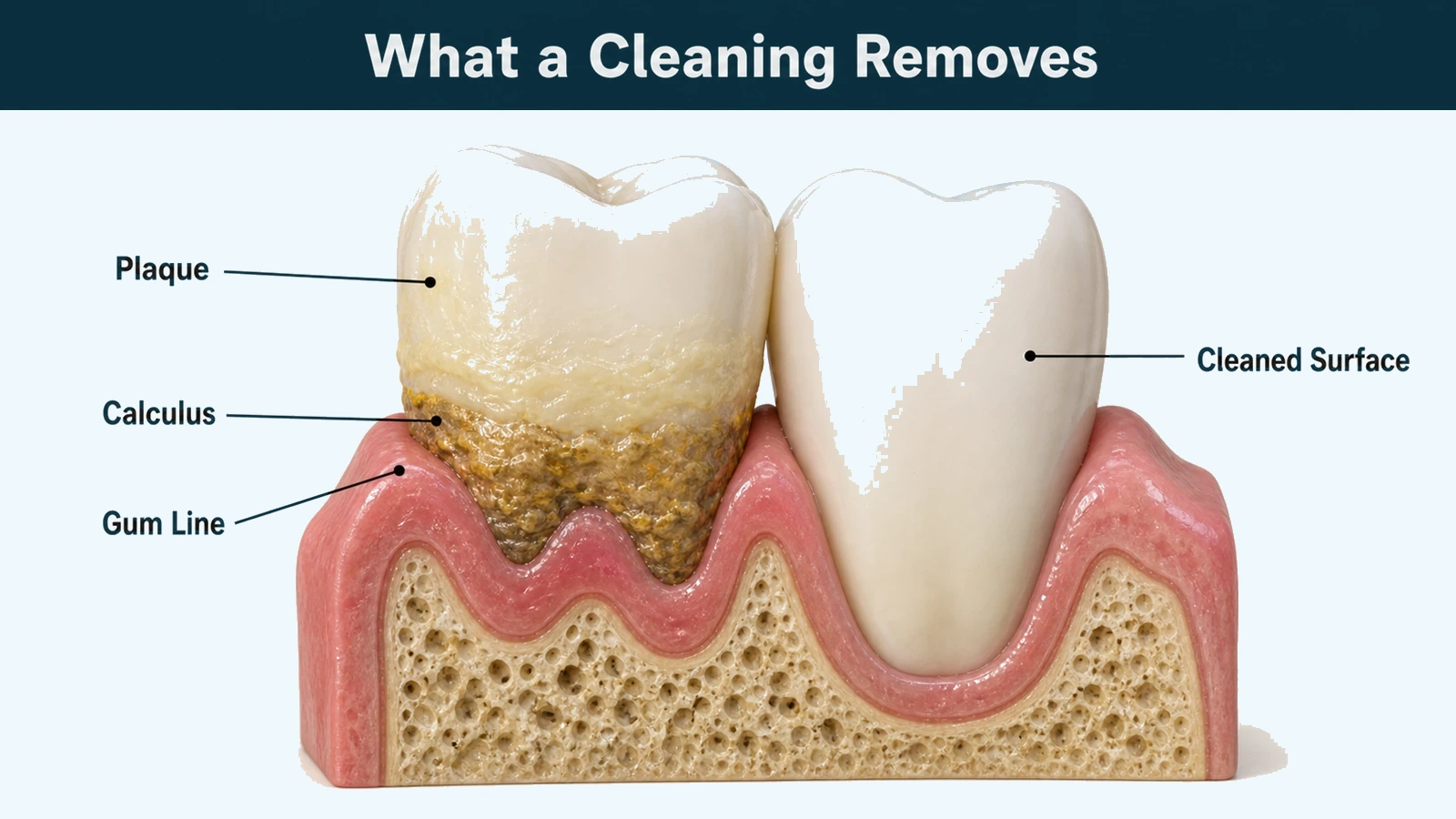
What a professional cleaning removes that brushing cannot
Two things build up on teeth and the difference explains this appointment.
Plaque is the soft film that forms within hours of brushing. You remove that yourself with a brush and floss.
Tartar is plaque that has hardened onto the tooth, which your dentist calls calculus. Brushing does not move it and taking it off needs instruments. That is the part of this appointment you cannot do at home.
Plaque gathers along the gum line and just beneath it, and that is where gum disease begins. Floss and interdental brushes clean what they can reach. Hardened deposits below the margin are what this appointment is for.
What happens at your teeth cleaning appointment
- A look first. We check your teeth and gums and note where they bleed.
- Scaling. Deposits come off the tooth and from just beneath the gum line, with hand instruments and an ultrasonic scaler where there is more to shift.
- Between the teeth. Bristles do not fit between teeth, which is why deposits gather there and why floss matters.
- Polishing to lift the surface stains left by coffee, tea, red wine and tobacco.
- Fluoride where it is recommended for you.
- What to change at home. Not "brush more". Which tooth, which technique and why it matters in your mouth.
How long it takes. Most cleanings run 30 minutes to an hour. Heavy build-up or a long gap since your last visit takes longer, so ask the office what to allow when you book.
Due a clean? Call (905) 821-8632 or book online.
Does a dental cleaning hurt?
Most of what you feel is pressure and scraping.
Inflamed gums are tender and they bleed more than healthy ones, so the appointment is less comfortable when gums have been left. Exposed roots and heavy build-up can make it sore too. Say so before we start if your teeth are sensitive, and tell us during it if anything feels sharp.
Deep cleaning works further under the gum, so it is planned differently. Cleveland Clinic describes local anaesthetic to numb the gums before scaling and root planing begins.
After your cleaning
Teeth can feel sensitive to cold for a day or two and gums feel tender where there was most build-up. Both usually settle within a few days.
A toothpaste for sensitive teeth takes the edge off cold. The American Dental Association says it blocks sensation from the tooth surface reaching the nerve and needs several uses before it works.
Brush and floss as normal that evening, gently over any sore spots.
If you had fluoride, wait at least 30 minutes before eating or drinking. We will tell you if yours needs longer.
You may read that polishing strips a protective layer and leaves teeth open to stains for a whole day. That layer is the pellicle, a thin protein film from saliva. A 2020 review in the Journal of Dental Sciences found it starts sticking to a clean tooth within seconds to minutes and is fully formed within 90 to 120 minutes.
Anything urgent comes first. Bleeding you cannot stop, swelling that is spreading, or a fever needs a call the same day. Call 911 if you have difficulty breathing or swallowing, are drooling because you cannot manage your saliva, your voice has changed or sounds muffled, or you feel confused or faint.
Otherwise call us if sensitivity gets worse instead of better, if a gum stays sore after a few days, or if bleeding does not settle.
How often should you have a dental cleaning?
Six months is the interval most people are given. It is a starting point, not a rule.
Your dentist weighs these when setting the gap.
- Gum disease or gums that bleed when you brush
- Smoking
- Diabetes
- Braces or aligners
- A dry mouth
- Tartar that builds up fast, which some people do whatever they do at home
A longer gap makes sense where your mouth is stable and your risk is low.
The Canadian Dental Association says the frequency of care "is based on a patient's individual needs and risk of oral diseases". Ask what yours is based on. The answer should come from your own mouth, not from the calendar.
Cleaning, or deep cleaning?
A routine cleaning keeps healthy gums healthy.
Where gum disease has taken hold and pockets have formed, deposits sit deeper on the root surface. Treating that is a different procedure, planned after your gums have been measured and the diagnosis is clear.
That procedure is scaling and root planing. Scaling lifts the deposits off. Root planing, in the words of Cleveland Clinic, "smooths your teeth roots and removes plaque and tartar below your gumline".
The NHS lists these signs of gum disease. Mention any of them when you book.
- Gums that bleed when you brush, floss or eat hard foods
- Gums that are swollen, red and sore
- Bad breath or a bad taste in your mouth
- Gums that have shrunk back from the teeth
- Teeth that feel loose
Untreated, it can go on until teeth loosen and fall out.
If your gums have already been measured, the numbers tell you which of the two you need. Bring them, or tell us who measured them, and we will pick up from there.
What a dental cleaning will not do
It will not whiten your teeth. Polishing lifts surface stain and teeth look brighter for it. The natural colour of the tooth does not change and that is what teeth whitening is for.
It is not a diagnosis. The cleaning removes the deposits and the exam alongside it is what finds decay, cracks, gum problems and early signs of mouth cancer.
It will not undo advanced gum disease. Bone lost around a tooth does not grow back on its own and no cleaning restores it. Treatment works to stop the loss going further. That is the argument for dealing with bleeding gums early.
Cleaning with braces, aligners, implants or dentures
Brackets and wires trap plaque and decay around them leaves marks on the teeth you are straightening. Aligner trays hold whatever is underneath them against the enamel.
An implant cannot decay. The gum and bone holding it can still get infected, which is why an implant needs checking and cleaning of its own.
A denture needs cleaning and so do the teeth around it. A partial denture holds plaque against whatever it rests on.
Tell us what you wear and we will plan the appointment around it.
Read about braces, clear aligners, dental implants and dentures.
What a dental cleaning costs in Mississauga
A basic cleaning in this area runs about $99 to $350 for a visit of 30 minutes to an hour. Where you land inside that depends on how much build-up there is and how long it takes to shift.
Deep cleaning is different work and priced differently. Scaling and root planing runs about $200 to $400 per quadrant, so one area starts at about $200 and a full mouth reaches about $1,600. That is why your gums get measured before anyone quotes you for it.
What decides your number: how much there is to remove, how many areas need treating, whether x-rays are needed and what your gums turn out to need.
Why cleanings are priced by time
Scaling in Ontario is billed in units of time. The Ontario Dental Hygienists' Association fee guide sets one unit at 15 minutes of procedure time. The count follows the tartar. A mouth cleaned on schedule needs fewer units than one with years of build-up.
Polishing and fluoride each have their own codes too. So do the exam and any x-rays. Some offices bundle them into one visit price and others list each one. Ask what your quote includes before you compare two offices.
Dentists here often set fees with the Ontario Dental Association Suggested Fee Guide in mind. It comes out every year. The ODA says dentists do not have to follow it and fees can sit above or below it.
Many insurers base their payments on the guide, sometimes an older year of it. That gap is one reason a claim can pay less than the bill.
Those are ranges for the area, not our price list. Your own figure comes in writing before treatment starts.
- A written estimate before treatment begins
- Direct insurance billing, so the claim goes in from here
- The Canadian Dental Care Plan, which is open to all ages for eligible Canadian residents; eligibility requires no access to private dental insurance, the required Canadian tax returns, adjusted family net income under $90,000, and Canadian residency for tax purposes. Coverage remains subject to frequency limits and any co-payment
- Nothing started before you have agreed the cost
Learn more about CDCP coverage at our practice.
Dentistry on Britannia is a general dental practice. Our dentists are general dentists, not specialists in any RCDSO-recognised specialty.