
Why prevention is the part that pays
Almost every dental problem is cheaper, quicker and less invasive when it is caught early. That is not a slogan. It is the sequence.
A tooth caught early needs a filling. Left longer, it may need root canal treatment and a crown. Later still, it may not be savable. Each step costs more, takes longer and leaves fewer options than the one before.
The difficulty is that dental problems are quiet. Decay does not hurt until it is well established. Gum disease is largely painless until it is advanced. By the time something announces itself, the easy version has passed.
That is the entire argument for coming when nothing hurts.
Preventive dental care is also written as preventative dentistry. The two spellings mean the same thing. Both describe the same appointments: a check-up, a cleaning and the small treatments that stop decay before it starts.
What preventive care actually involves
What you do at home is most of it
This is the uncomfortable truth about prevention. What happens in the chair removes what has accumulated since the last visit. What happens at home every day decides how much accumulates.
Cleaning between the teeth matters most, and it is the part people skip. Decay between teeth and gum disease below the gumline both start where a brush does not reach.
Spit, do not rinse after brushing. Rinsing washes the fluoride off before it has done anything. It costs nothing and it is the most commonly missed piece of advice in dentistry.
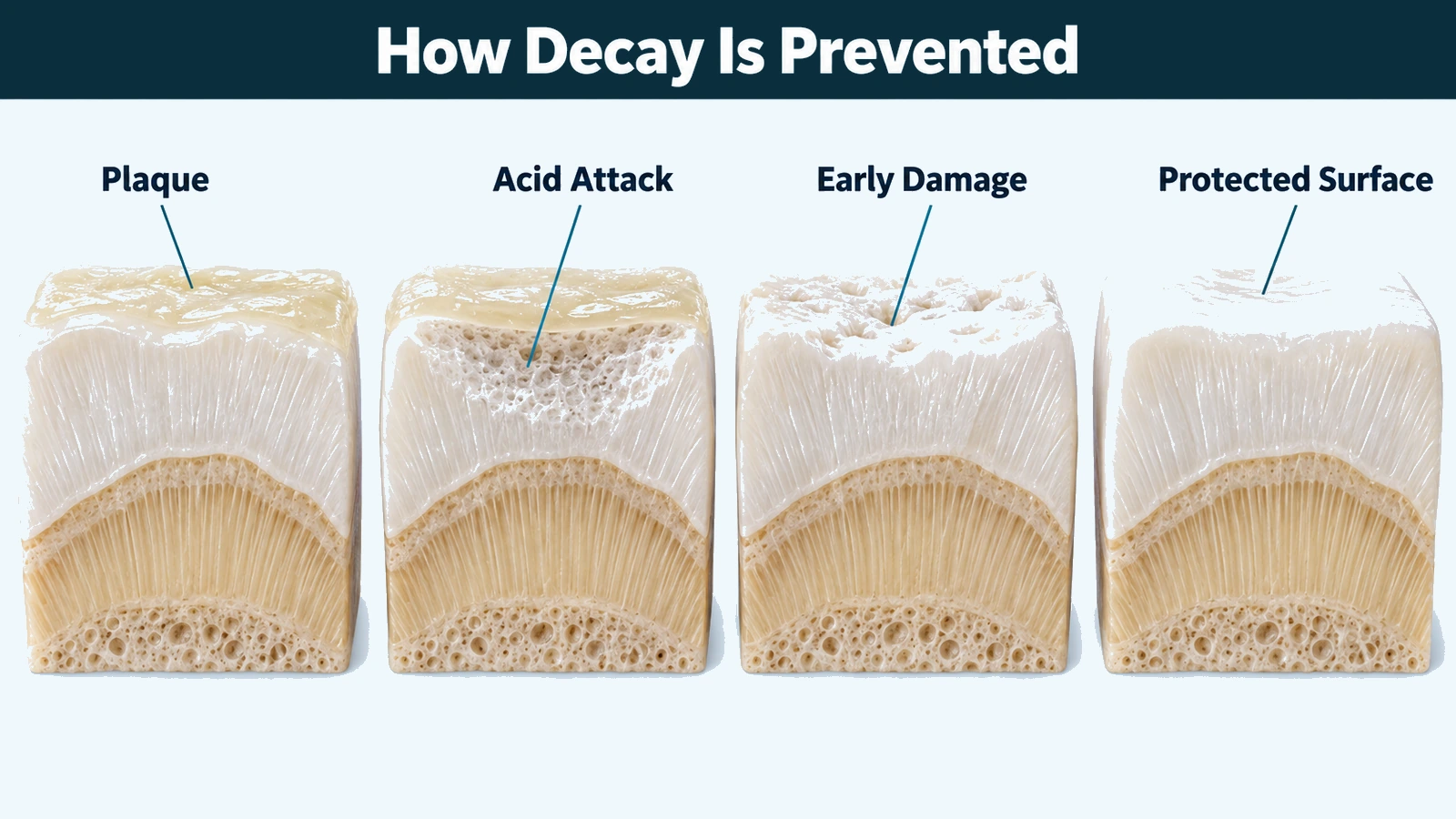
Frequency of sugar matters more than quantity. Grazing keeps the acid attack running all day. The same amount eaten at mealtimes is considerably less damaging.
You will be told what to change, specifically. Not "brush more", but which area, which technique, and why it matters for your mouth. General advice is easy to give and easy to ignore.
Who needs more than the standard interval
Risk is not the same for everyone, and the interval should reflect that.
Above-average risk if you:
- Have gum disease
- Have had repeated decay
- Have a dry mouth
- Smoke
- Have diabetes
- Wear orthodontic appliances
- Have exposed root surfaces
- Build tartar quickly
- Have reduced dexterity
Dry mouth is the under-recognised one. Saliva is the mouth's own defence. Many common medications reduce it. If your mouth is drier than it used to be, mention it. It changes what we recommend.
What prevention cannot do
It does not undo damage already done. Bone lost to gum disease does not come back. Enamel worn away by grinding does not regrow. Prevention protects what is there.
It does not make treatment unnecessary for everyone. Some people are more susceptible to decay or gum disease through no fault of their cleaning. For them, prevention means catching things early instead of avoiding them entirely.
A cleaning is not a diagnosis. It removes deposits. The examination alongside it is what finds problems.
Cost, insurance and CDCP
We do not publish prices. Preventive treatment is among the least expensive dentistry there is. It costs less than the treatment it helps you avoid. You get a written estimate before treatment begins.
CDCP: we accept the Canada Dental Care Plan. It is open to all ages for eligible Canadian residents; eligibility requires no access to private dental insurance, the required Canadian tax returns, adjusted family net income under $90,000, and Canadian residency for tax purposes. Prevention sits at the centre of what it pays for, from examinations and diagnostic X-rays through to cleanings, scaling and preventive treatment, within its frequency limits.
Insurance: most plans cover examinations and cleanings at a set frequency. Direct insurance billing is available, and you can review CDCP coverage at our practice.
Dentistry on Britannia is a general dental practice. Our dentists are general dentists, not specialists in any RCDSO-recognised specialty.