
Two things a first visit is for
Finding anything that needs attention, obviously.
And building a child's expectation of what a dentist is. The second one matters more than people expect. Ask an adult who is frightened of the dentist where it started. The answer points back to childhood, and to a first appointment that only happened because something was already wrong.
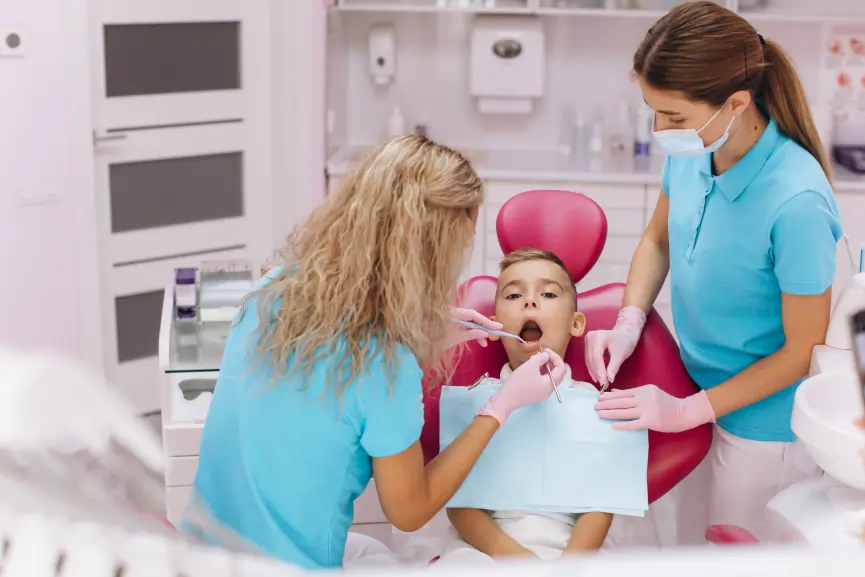
A first visit where nothing much happens is a good first visit. Counting teeth, a look around, a ride in the chair.
A kids dentist in Mississauga, at a family practice. Children are seen here by general dentists, in the same office as their parents. We are not pediatric dentists. Pediatric dentistry is a recognised specialty in Ontario. Where a child needs that level of care, we refer to a pediatric dentist instead of keeping the case here.
When should a child first come?
Early, and before there is a problem.
Bring them along to your own appointment before they need one of their own. Sitting in the room when nothing happens to them is the cheapest anxiety prevention available.
Say when you book if it is a first visit, so enough time is set aside and nobody is rushed.
What we do for children
Baby teeth matter, and here is why
They get dismissed, on the reasoning that they fall out anyway.
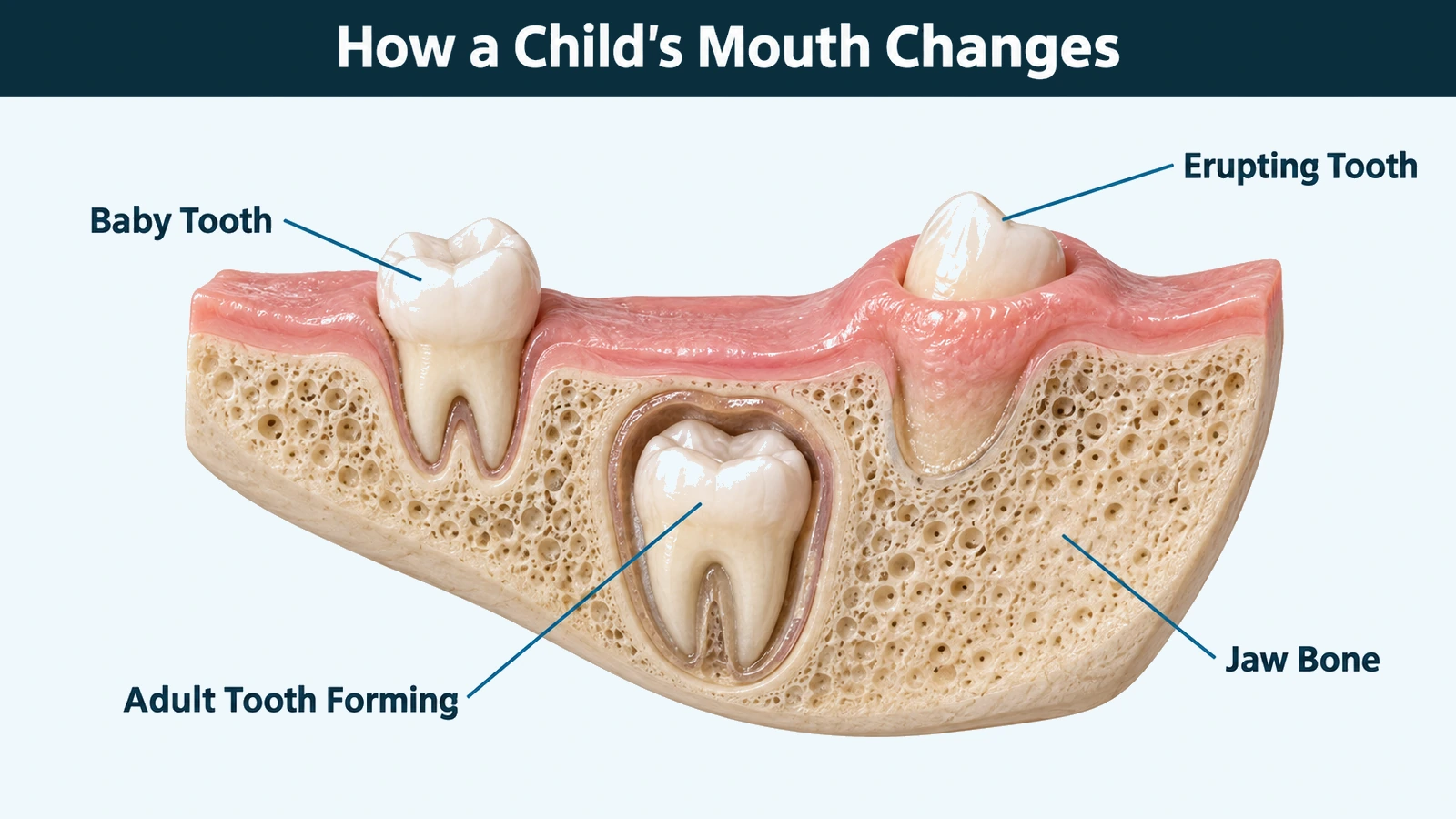
They hold the space for the permanent tooth coming behind. A baby tooth lost early lets the neighbouring teeth drift into the gap, and the permanent tooth arrives to find less room than it needed.
Decay in a baby tooth causes the same pain as decay in an adult tooth.
Infection in a baby tooth can affect the permanent tooth developing underneath it.
A child in dental pain is a child not sleeping, not eating properly and not concentrating at school.
Practical things that make a difference
Supervise brushing. Children do not have the dexterity to clean effectively on their own for longer than most parents assume, so stay involved past the age you would expect to.
The amount of toothpaste matters, and it depends on age. Ask at the appointment.
Spit, do not rinse. Rinsing washes the fluoride off before it has done anything.
Frequency of sugar matters more than quantity. A juice box sipped over an hour does more damage than the same juice drunk in five minutes. Grazing keeps the acid attack running all day.
Water between meals, as the default.
Watch the ones that do not look like sweets: dried fruit, fruit juice, sports drinks, flavoured milk and many cereals.
Habits parents ask about
Thumb sucking and soothers are normal in young children. They become a dental question if they continue as permanent teeth arrive, because sustained pressure can affect how teeth and jaws develop. It is worth raising at a check-up. You do not have to work it out alone.
Grinding in children is common, and most outgrow it. Mention it at a check-up so a dentist can look at the teeth. Where snoring or interrupted breathing comes with it, raise that with a physician too.
Teething is uncomfortable and normal. Persistent fever, or a child who is genuinely unwell, is not teething and needs a physician.
If your child is anxious
Say so when you book. It changes how the appointment is arranged and how much time is set aside.
Avoid words that plant an idea. "It won't hurt" introduces the possibility of hurting. "They're going to count your teeth" does not.
Do not promise a treat for being brave, which frames the visit as something to endure.
Bring them to your appointment first, if you can.
Say if you are anxious yourself. Children read a parent's tension before they read anything else in the room, and it is a common and entirely normal thing to mention.
Emergencies with children
A knocked-out baby tooth should never be put back, because replanting it can damage the permanent tooth developing underneath. If you are not sure whether it is a baby tooth or an adult one, do not put it back. Keep it in milk and call us.
A knocked-out permanent tooth is time-critical. Hold it by the crown, never the root, and get to a dentist immediately.
Do not use cheek storage with a child, because the tooth can be swallowed or inhaled. Use milk.
If there was a head injury, loss of consciousness or a suspected broken jaw, go to the emergency department first. Learn more about emergency dental care in Mississauga.
Cost, insurance and CDCP
We do not publish prices. You get a written estimate before treatment begins.
CDCP: we accept the Canada Dental Care Plan, which is open to all ages for eligible Canadian residents; eligibility requires no access to private dental insurance, the required Canadian tax returns, adjusted family net income under $90,000, and Canadian residency for tax purposes. For a child that means examinations, X-rays, cleanings, preventive treatment and fillings, inside the plan's own criteria and frequency limits.
Insurance: most plans cover children's examinations and cleanings, and many cover sealants with an age limit. Direct insurance billing is available. Learn more about CDCP coverage at our practice.
Dentistry on Britannia is a general dental practice. Our dentists are general dentists, not specialists in any RCDSO-recognised specialty.