
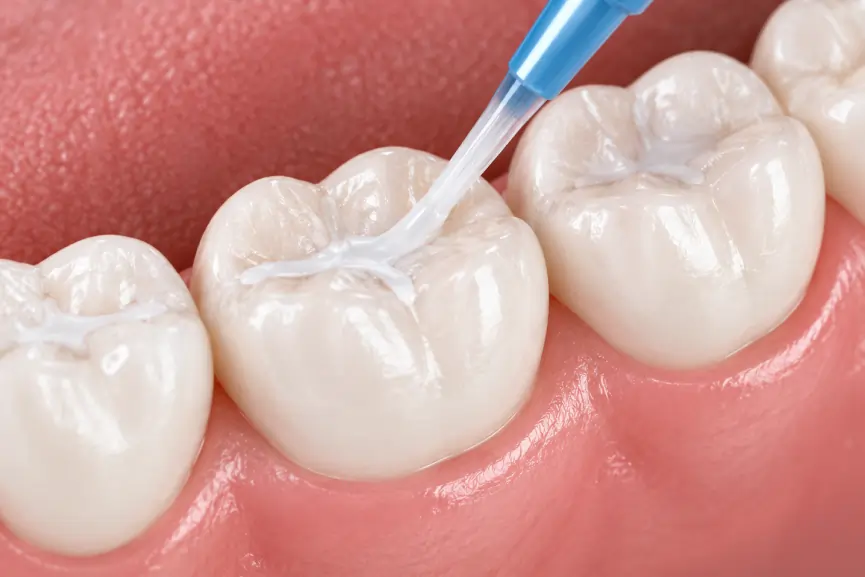
A fluoride treatment is a concentrated fluoride varnish, gel or foam put on your teeth at the dental office. It strengthens enamel and helps stop decay at its earliest stage, before a hole forms.
Your dentist decides whether you need it from your risk of cavities. You can book it here on Britannia Road West.
What does fluoride do for your teeth?
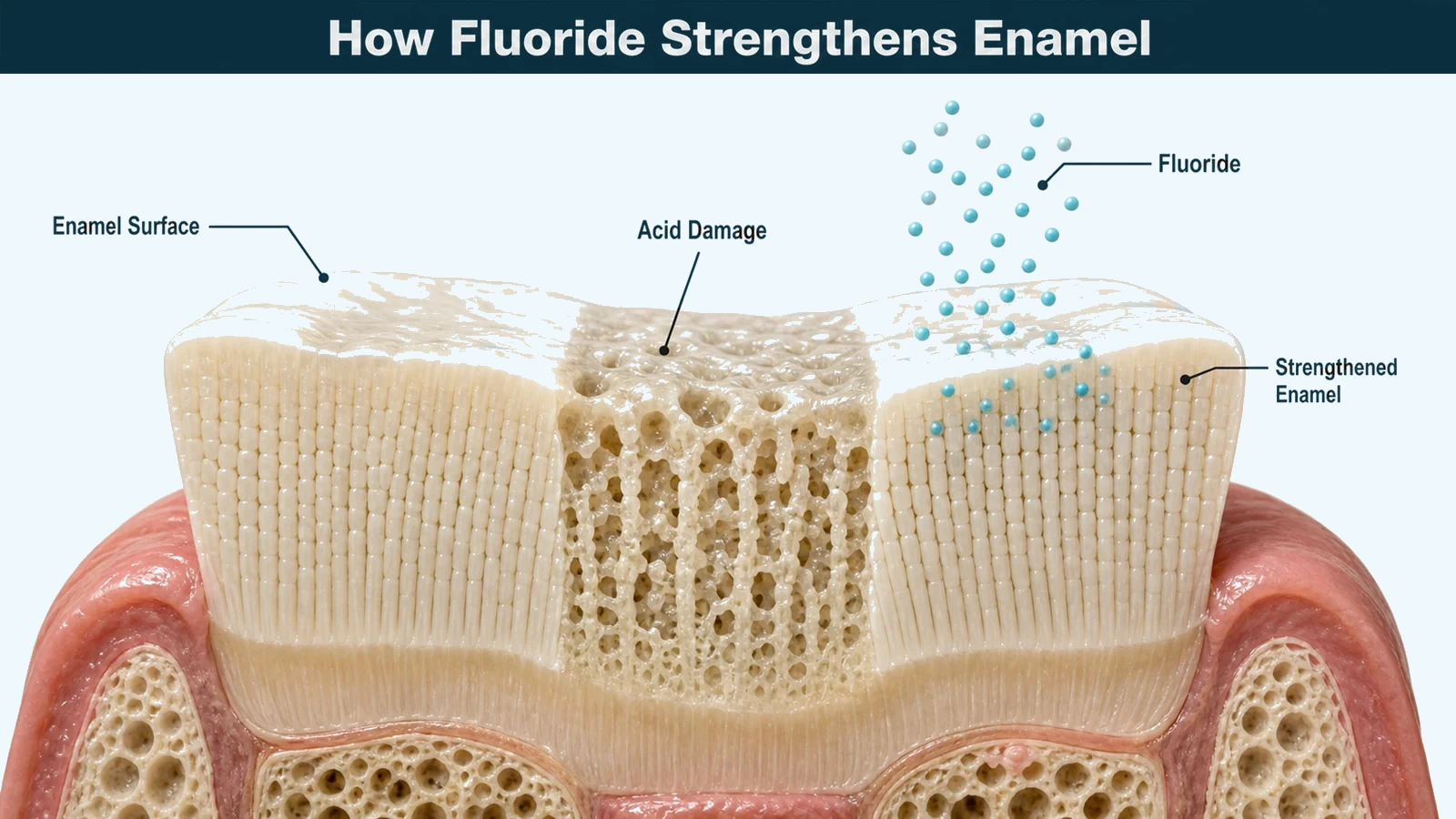
Fluoride is a mineral found naturally in water, air, food and soil. Your enamel loses and regains minerals every day. Bacteria in plaque turn sugar into acid, and that acid pulls calcium and phosphate out of the surface. Saliva puts some of it back between meals.
Fluoride helps more of those minerals return to the enamel. The rebuilt surface resists the next acid attack better than the original.
One early sign of decay is a chalky white spot. Not every white mark is decay, and your dentist checks which it is. At that stage the damage sits below an intact surface and can harden again.
Once the surface breaks down into a hole, fluoride cannot rebuild it. Your dentist then decides how to treat the tooth, and a filling is the common repair.
Varnish or gel: the two kinds we use
Fluoride varnish is painted onto each tooth with a small brush. It sets on contact with saliva and holds the fluoride against the enamel.
Gel or foam goes into a soft tray that fits over your teeth. You hold it in place for a short time and spit out the extra afterwards. Do not swallow the gel or foam.
Your dentist picks the form from your age, your risk and how well you manage the tray. Varnish has the stronger evidence. Health Canada says gels and foams do not work as well as varnish.
Office varnish is a 5% sodium fluoride preparation, the strength the CDA names in its position on fluoride. The American Dental Association describes varnish as holding a high concentration of fluoride against the teeth for several hours.
Gel has evidence behind it too. A Cochrane review of gels found 28% fewer new decayed, missing or filled surfaces in the permanent teeth of children and teens. Most of those trials had a high risk of bias, and the review covered gels, not foams.
Who benefits from fluoride treatment?
Fluoride toothpaste and Mississauga tap water give you a daily dose. A professional treatment adds more where your risk is higher:
- Children and teens while their teeth are coming in
- Anyone with new cavities in the past few years
- A dry mouth from medications, a medical condition or radiation treatment to the head and neck
- Braces, clear aligners, or crowns, bridges and fillings with edges that trap plaque
- Gum recession with exposed roots, which are softer than enamel
- Sugary snacks or acidic drinks through the day
- Early white spots found at your exam
- Sensitive teeth where roots are exposed
A stable mouth with no recent decay may not need it. Your dentist will tell you if that is you.
Ask about fluoride at your next visit. Call (905) 821-8632 or book online.
What happens at a fluoride treatment appointment
Fluoride is part of general dentistry, so you do not need a separate fluoride treatment dentist. You can ask about it at your next teeth cleaning.
- Your teeth are dried with air or gauze
- Varnish is brushed on, or a tray of gel or foam is placed
- With gel or foam, the tray comes out and you spit out what is left. Do not swallow it
Give it at least 30 minutes with nothing to eat or drink. Some preparations need longer and we will say so.
Tell us before treatment about any allergies, and about sores or ulcers in your mouth.
What to do after a fluoride varnish
Varnish sits on the teeth for hours after it goes on. NHS guidance for a fluoride varnish programme is to avoid hard or crunchy food for four hours. It also says to skip brushing that night and brush as normal the next morning. Aftercare differs between varnish and gel, so ask which one you had at your visit.
Does fluoride treatment hurt?
The treatment uses no needles and no drilling. Some people dislike the taste of gel, and a tray can set off a gag reflex. Tell us if either bothers you and we will talk through your options.
How often do you need it?
There is no single schedule. The Canadian Dental Association advises a varnish no more than once every six months, unless your dentist or a caries risk assessment calls for more.
High-risk mouths can need more. A low-risk adult may not need it at all. Your dentist reviews your need for fluoride treatments at each checkup, since risk changes with medications, braces and diet.
The American Dental Association panel recommends a 2.26% fluoride varnish or a 1.23% acidulated phosphate fluoride gel for patients aged six and over at higher risk of decay. Under six it recommends varnish alone. The ADA also says varnish needs at least two applications a year for a lasting benefit.
Fluoride treatment at home
Professional fluoride therapy adds to daily fluoride. It does not replace it.
- Brush twice a day with fluoride toothpaste
- Spit out the extra and do not rinse with water straight after, so fluoride stays on the teeth
- Use a mouth rinse only if your dentist suggests one
When your risk is high, your dentist can prescribe a 5,000 ppm fluoride toothpaste for home use. Use it exactly as directed. Only the person it is prescribed for should use it, and store it out of reach of children.
Fluoride for children and fluorosis
The CDA advises a first dental visit by 12 months of age or within six months of the first tooth. Before age three, a child uses fluoride products daily only if found at risk for decay.
Health Canada asks parents of a child under three to check with a health professional whether that child is at risk of tooth decay. A child at risk should have their teeth brushed by an adult using a rice-sized grain of fluoridated toothpaste.
From age three, Health Canada says to use no more toothpaste than a small green pea. Brush your young child's teeth for them. From age six, once they can spit out the toothpaste, they can start brushing with an adult watching. Never give a fluoride mouth rinse to a child under six.
Too much swallowed fluoride while adult teeth form under the gums can cause dental fluorosis. Mild fluorosis shows as faint white lines or flecks and is cosmetic only. Health Canada says fluorosis cannot develop once adult teeth have grown in.
Varnish at the dental office is a different case. The ADA reports the position of the US Centers for Disease Control and Prevention: no published evidence makes professionally applied fluoride varnish a risk factor for dental fluorosis, even in children under six.
See children's dentistry.
Is fluoride safe?
The CDA says more than 50 years of research show fluoride is safe and effective against tooth decay. The amount matters. That is why children get a measured amount of toothpaste and why you spit out gel or foam.
Health Canada names two effects of too much fluoride: dental fluorosis and skeletal fluorosis. Skeletal fluorosis hardens the bones and joints. It follows years of ingesting very high levels of fluoride every day, and Health Canada calls it extremely rare in Canada. Apart from those two conditions, Health Canada states that no other health risk has been proven to be related to fluoride.
Swallowing a large amount of concentrated fluoride at once can cause nausea and stomach pain, per a review in the NCBI library. Office gel and foam are spat out for that reason. A child's toothpaste is measured for the same one.
Mississauga tap water is fluoridated. Peel Region keeps it between 0.5 and 0.8 mg/L. The Canadian optimal level is 0.7 mg/L. A professional treatment adds a small, measured amount applied to the teeth, with the extra wiped away or spat out.
What fluoride will not do
- Fill or repair an existing cavity
- Protect the deep grooves of back teeth well. A dental sealant does that job, and the two work together
- Whiten teeth
- Replace brushing, flossing and less frequent sugar
What fluoride treatment costs in Mississauga
| Treatment | Area range |
|---|---|
| Fluoride varnish, gel or foam, one application | $15 to $50 |
Five Ontario clinics that publish a price, one of them in Mississauga, run from $15 to $50. The Ontario Dental Association's suggested fee guide, as quoted by a Toronto clinic, lists gel at $37 and varnish at $38.
These are area ranges and not our fee schedule. Your written estimate is the number that counts.
Fluoride has its own code in the fee guide. A price quoted for a whole hygiene visit may already contain it. Ask whether the fluoride is in the quote before you compare two offices. Those guide figures are a reference point only: the ODA tells patients dentists are free to charge above or below its guide.
- We offer direct insurance billing. Plans set their own age and frequency limits for fluoride, so check yours
- Adult fluoride is a separate question on many plans. Ask whether yours pays for it and whether the dentist has to record a high risk of decay first
- Children and youth 17 and under in Healthy Smiles Ontario have fluoride covered up to four times a year. Ask when you book whether that program can be billed here
- The Canadian Dental Care Plan pays toward topical fluoride, including varnish, for eligible members of all ages. Eligibility requires no access to private dental insurance, the required Canadian tax returns, adjusted family net income under $90,000, and Canadian residency for tax purposes. It allows one treatment in any 6 months up to age 16 and one in any 12 months from age 17. Anything past those limits needs preauthorization from the plan. Ask what the plan pays and what is left for you to pay before you accept treatment
Full details on dental coverage and the CDCP.
Dentistry on Britannia is a general dental practice. Our dentists are general dentists, not specialists in any RCDSO-recognised specialty.