
What restorative dentistry covers
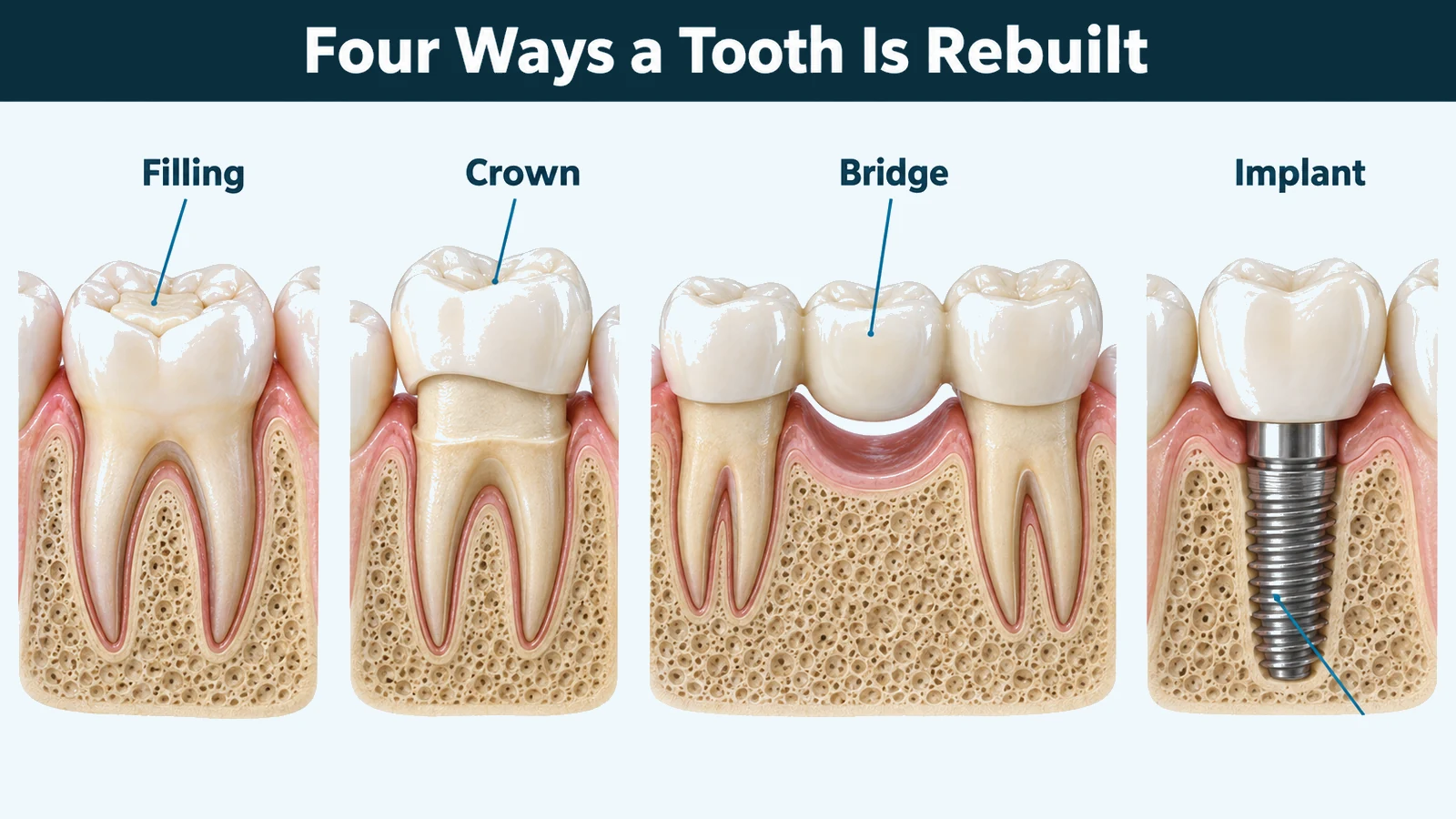
A dental restoration is any treatment that rebuilds a damaged tooth or replaces a missing one. Fillings, crowns, bridges, dentures and implants are all dental restorations. Restorative dentistry is the part of general dentistry that deals with them, and tooth restoration is the everyday phrase for the same work.
It covers two related jobs: repairing a damaged tooth and replacing a tooth that has gone.
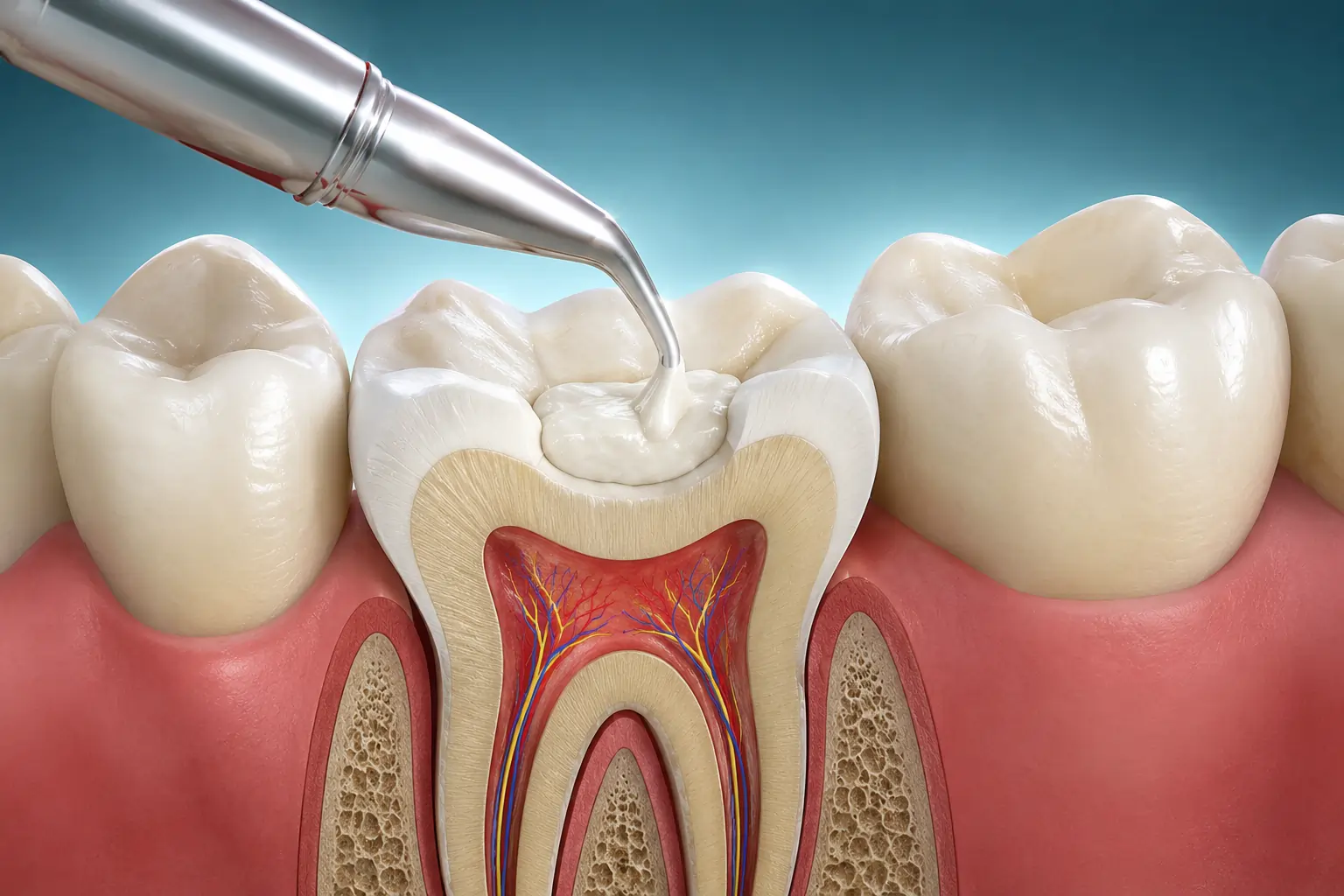
The first means fillings, crowns and root canal treatment. The second means implants, bridges and dentures.
The two are closely connected. How much of a tooth is left decides which repair is possible. How long a gap has been there decides which replacements are realistic.
Repairing a damaged tooth
Replacing a missing tooth
| Implant | Bridge | Denture | |
|---|---|---|---|
| Fixed or removable | Fixed | Fixed | Removable |
| Involves surgery | Yes | No implant surgery | Not the denture itself |
| Affects neighbouring teeth | No | Yes, usually reshaped | Clasps rest on them |
| Teeth replaced | One or several | Usually one or two | One to a full arch |
| Time to complete | Staged over months | Weeks | Weeks |
| CDCP | No | No | May help, conditions apply |
| When it is the wrong choice | Bone is insufficient, gum disease is active, or surgery is not appropriate | The neighbouring teeth are healthy and intact | A fixed result matters more than cost or intervention |
Read about dental implants, dental bridges and dentures.
The first things to check are the condition of the teeth either side of the gap and how much bone is there. If the neighbouring teeth already carry crowns or large fillings, a bridge uses preparation that has already happened. If they are untouched, an implant leaves them alone.
Read the full comparison: Implant, bridge or denture
Missing a tooth? Book an assessment or call (905) 821-8632.
Leaving the gap is an option too
Leaving the gap is a real decision with real consequences. It is also what you are doing by default until you decide.
Teeth either side can drift and tilt into the space. The tooth opposite, with nothing meeting it, can over-erupt. The bone that held the root gradually shrinks, and that matters most if you want to keep an implant open as an option.
How much of this happens varies a great deal. Some gaps stay stable for years and others do not.
It is a sensible choice for some sites, especially a back tooth with a stable bite. Make the decision on purpose with the site reviewed, and not by default.
Who restorative treatment is for
Anyone with a broken, decayed or heavily filled tooth.
Anyone missing one or more teeth.
People who have been working around a problem for some time, such as chewing on one side, avoiding cold drinks or living with a tooth they know is not right. That kind of adapting happens so gradually that it goes unnoticed, and it is worth mentioning at an appointment.
What has to be dealt with first
Active gum disease is treated before restorative work. Building a crown or a bridge onto teeth whose support is being lost is building on a moving foundation.
Grinding is factored into the plan. If your dental work keeps breaking, the force behind it needs addressing along with the material. Replacing like for like without that is planning for a repeat.
Read about gum disease treatment and night guards.
What we will actually do
Examine and image before recommending anything.
Tell you every option that fits your case, not just one.
Say when an option is a poor fit for you, including when it is the more expensive one. A practice that recommends the same treatment to everyone is not assessing.
Give you a written estimate before treatment begins and come back to you if the plan changes partway.
Refer where a case needs a specialist instead of stretching to keep it in-house.
Cost, insurance and CDCP
We do not publish prices because restorative costs depend on what you actually need. You get a written estimate before treatment begins.
CDCP: the Canada Dental Care Plan is open to all ages for eligible Canadian residents; eligibility requires no access to private dental insurance, the required Canadian tax returns, adjusted family net income under $90,000, and Canadian residency for tax purposes, and we accept it. Fillings, root canal treatment and extractions sit inside what it covers. Implants and fixed bridges are excluded. Eligible dentures may be partly covered, subject to criteria, approval in advance where required, frequency limits and any co-payment.
Insurance: plans set their own rules for major restorative work. Ask us to submit a pre-determination so you have your insurer's answer in writing before you commit. Direct insurance billing is available. Learn more about CDCP coverage at our practice.
Dentistry on Britannia is a general dental practice. Our dentists are general dentists, not specialists in any RCDSO-recognised specialty.