
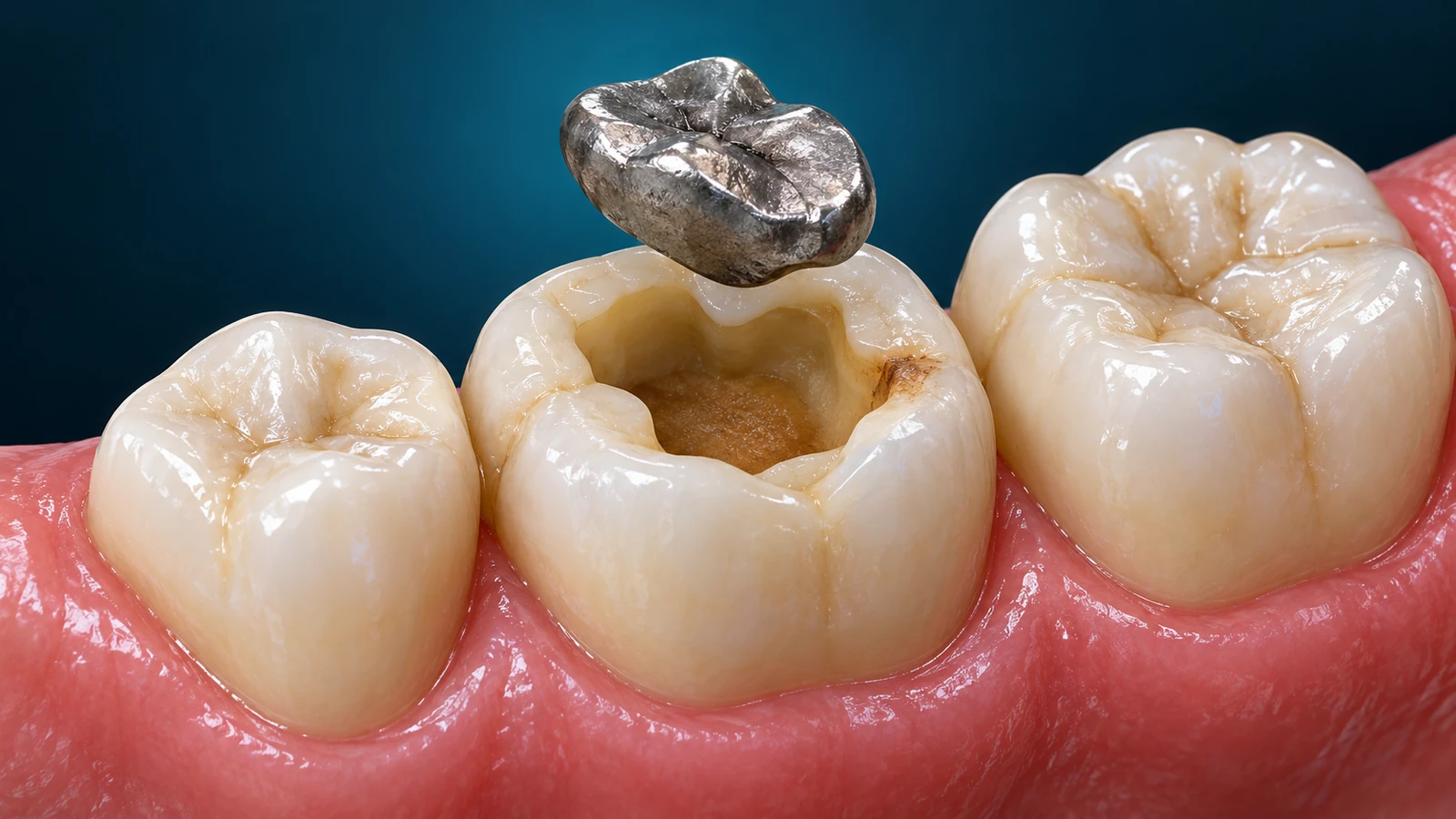
If your filling fell out today, here is why it happened, how to protect the tooth and how it gets fixed.
Key takeaways
- Book within a few days. A tooth without its filling is sensitive, and decay spreads faster in an open cavity.
- Protect the gap at home. Rinse after meals, brush gently and cover a sharp edge with dental wax.
- Never glue anything back. Household glue is not made for use in the mouth and seals decay inside the tooth.
- Strong pain or swelling changes the plan. Call us the same day, and follow the red box below for the signs that need 911 or a hospital.
How do you know a filling has come out?
You feel a hard and gritty piece in your mouth or your tongue finds a new hole in a tooth. Some people notice nothing until food packs into the gap or the tooth twinges with cold or sweets.
A lost crown is different because the whole cap of the tooth comes away, and most crowns can be cemented back on when the tooth under them is sound. Bring a crown or any piece of filling you find so your dentist can see what came out.
Why do fillings come loose?
Fillings come loose when decay, wear or a hard bite breaks the bond that holds them to the tooth. No filling lasts forever.
- New decay at the edge. Bacteria creep under the margin and loosen the filling from below.
- Grinding and clenching. Clenching loads teeth far harder than chewing, and grinding can crack or break fillings. A night guard takes that wear in place of your teeth.
- Hard food, habits and knocks. Ice, hard candy, opening packets with your teeth and a blow to the mouth all strain a filling.
- A weak bond. A filling that comes out soon after it was placed can point to a bond that never set, so tell your dentist when it was done.
What should you do first?
Clear out any loose pieces, rinse your mouth and call your dental office to book the repair.
- Take any pieces out of your mouth so you do not bite down on them or swallow them.
- Rinse gently with warm salt water. Stir half a teaspoon of salt into a cup of warm water and swish to wash out grit and food.
- Call the office. Say which tooth it is, when it happened and whether it hurts or anything looks swollen.
- Chew on the other side and keep hard, sticky or very cold food away from the gap.
- Ask a pharmacist which pain reliever is safe for you and mention a pregnancy, a blood thinner or a child's age. Follow the label dose and never combine two products with the same medicine.
Never hold an aspirin against the gum, because it burns the soft tissue and does nothing for the tooth. Breathed in a piece and now coughing or short of breath? Get medical help right away, and call 911 if breathing is hard.
What protects the open tooth until your visit?
Keep the hole clean and covered, and keep hard food away from it.
- Keep brushing morning and night with light strokes around the open tooth.
- Floss with care. Near the gap, slide the floss out to the side so it does not catch on the rough edge.
- Skip hard and sticky food on that side and rinse with water after you eat.
- Cover a sharp edge with dental wax or a small piece of sugar-free gum. Ask your dental office before you try a pharmacy temporary filling kit, since it is a stopgap and not a repair.
How soon should you see a dentist?
Within a few days if the tooth is comfortable, and the same day if it hurts badly or the gum swells. A gap left for weeks gives decay time to spread.
A tooth with no pain still needs a booked visit because decay works quietly. Toothache that keeps you from sleeping, working or concentrating needs a visit that day. So is a tooth that broke with the filling if the inside shows, it bleeds or it hurts a lot.
Swelling of the gum or face needs a call the same day, and keep heat off your face. Swelling that spreads over hours or comes with a fever belongs in hospital. Pregnancy is no reason to put off the repair, so tell the office how far along you are.
If the clinic is closed, find an after-hours dental service and call us when we reopen.
Why does an open tooth need a repair soon?
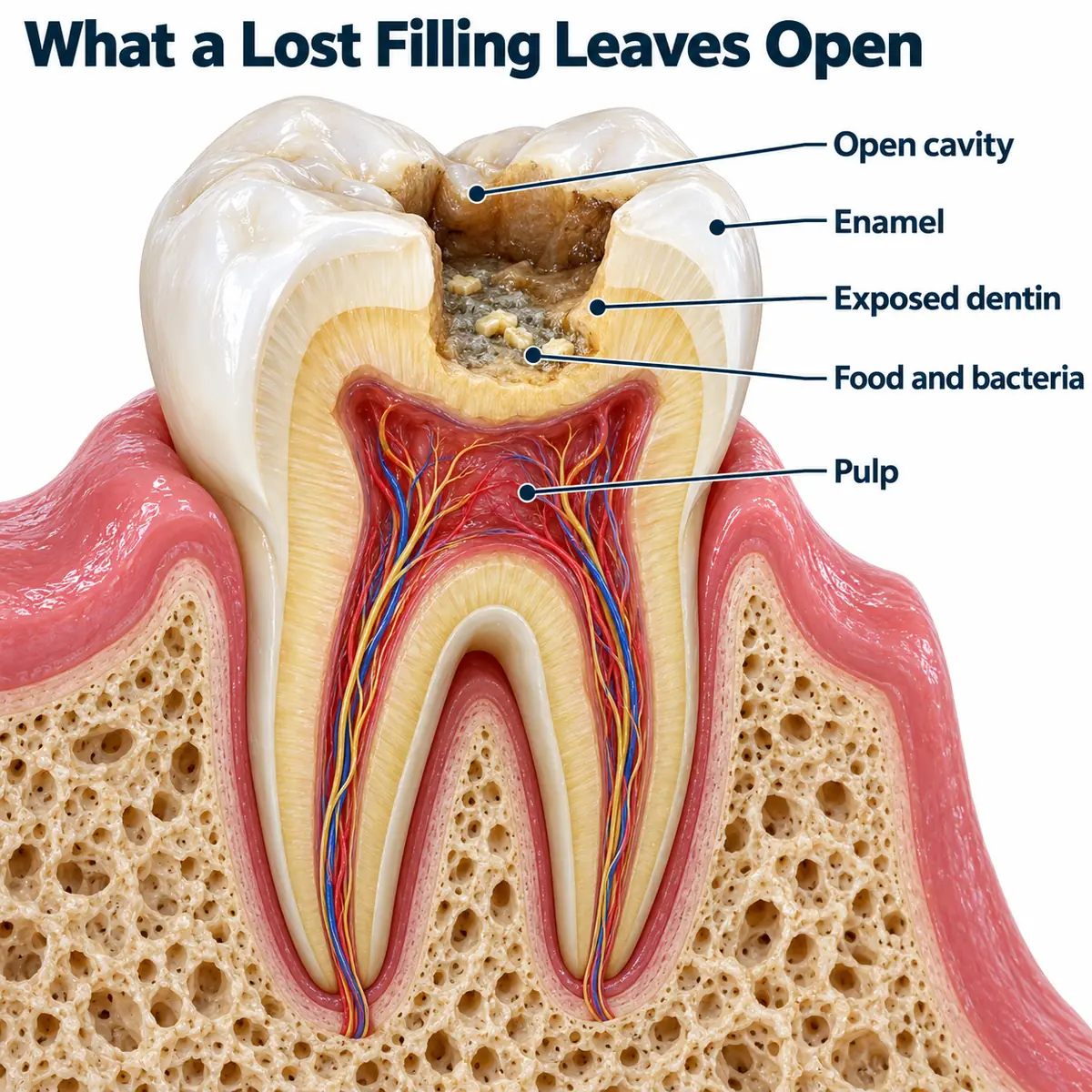
An open tooth decays faster than a sealed one, so a small repair can grow into a bigger one. The gap leaves the softer inner layer of the tooth bare.
Under the hard enamel shell sits dentin, a softer layer full of tiny channels that lead to the pulp with its nerve and blood supply. With the filling gone, food and bacteria rest right on that dentin and cold or sweet food reaches the nerve more easily.
The longer the gap stays open, the closer decay gets to the pulp. A prompt repair leaves the dentist more healthy tooth to work with, and a deeper cavity can need an onlay, a crown or root canal treatment.
How does a dentist repair the tooth?
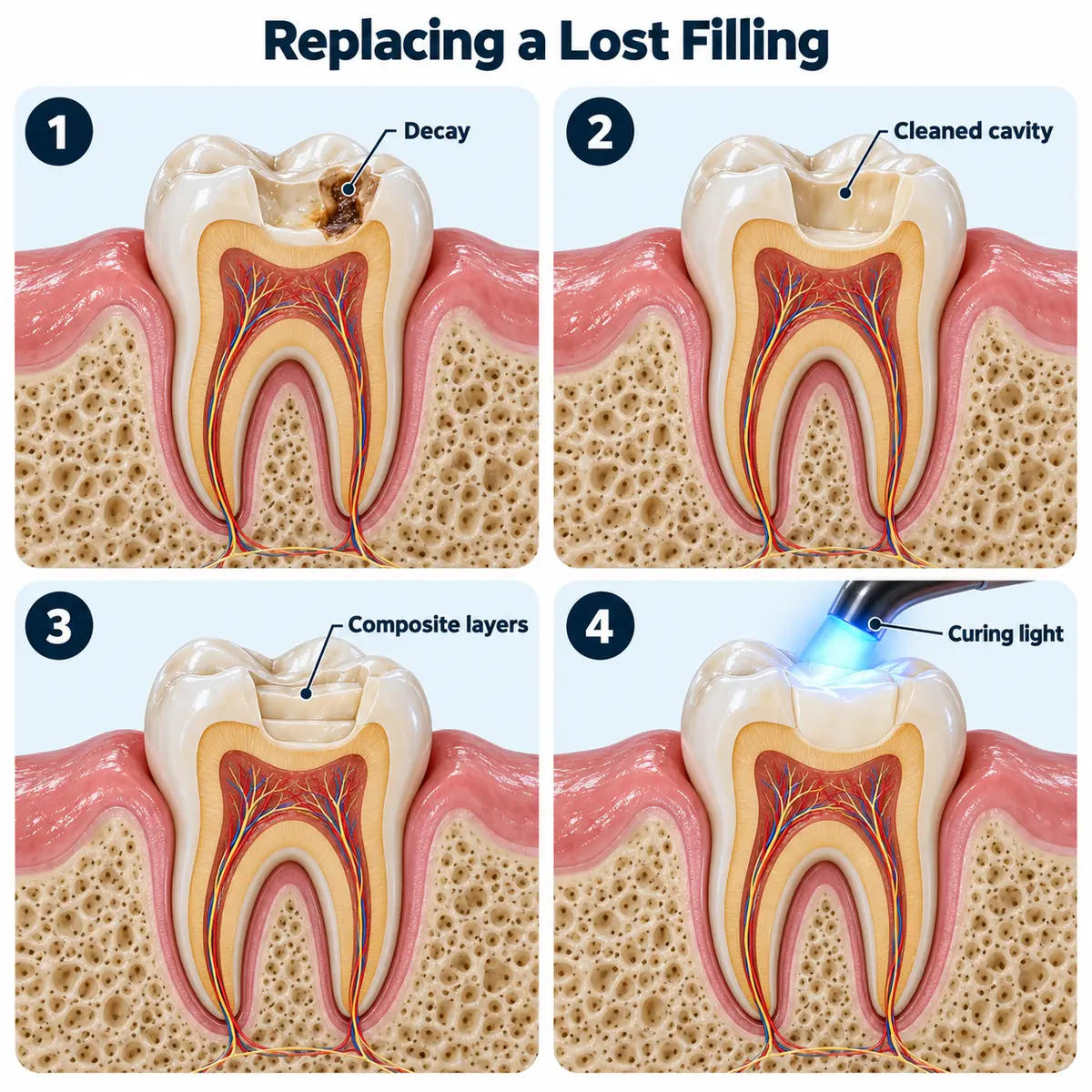
Your dentist checks the tooth, takes an x-ray where needed and chooses the smallest repair that will hold. How much healthy tooth is left decides the choice.
- A new filling. For a small or medium gap, the dentist removes any decay and builds up tooth-coloured composite in layers, hardening each one with a curing light in a single visit.
- An inlay or onlay. A gap too large for a filling but too small to need a crown gets a porcelain or gold piece made outside the mouth and bonded in.
- A crown. It covers and holds together a tooth that has lost a lot of its structure.
- Root canal treatment. Decay that has reached the nerve means cleaning and sealing the canals, and most back teeth then need a crown. A tooth that cannot be saved is removed.
Our dental fillings page explains each material and how long fillings last.
What will the repair cost?
A replacement is priced like any filling, by its material and the number of tooth surfaces it covers. At Dentistry on Britannia in Mississauga you get a written estimate before treatment begins and the office bills your insurer directly. Some plans limit how soon they pay for a second filling on the same tooth, so ask first. The Canadian Dental Care Plan is accepted for patients it covers within its own limits and any co-payment.
How can you help your other fillings last?
Daily cleaning and regular check-ups keep the edges of your fillings sealed.
- Brush twice a day with fluoride toothpaste and clean between your teeth once a day.
- Keep sugary and acidic snacks and drinks to mealtimes.
- Use your teeth for food only and never to open packets or crack nuts.
Each check-up looks at the edges of your fillings for new decay. Book a look sooner if a filling feels rough, looks darker or keeps trapping food.
Frequently asked questions
My filling fell out but it does not hurt. Can it wait?
For a few days, yes, but not for weeks. A tooth with no pain can still be decaying under the surface, so book a visit soon.
What if a temporary filling falls out?
Call the office that placed it. A temporary seals a tooth between visits, for example during root canal treatment, so it needs replacing soon. Chew on the other side until then.
Do I have to pay again if a new filling falls out?
Policies differ, so ask the office that placed it. Tell the dentist when the filling was done, since an early failure points to a cause worth finding.
Can I glue my filling back in?
No. Household glue is not made for use in the mouth and seals decay inside the tooth. Bring the piece with you to your visit instead.
Why do fillings fall out?
New decay at the edge, grinding, hard food or a weak bond can break the hold on the tooth. No filling lasts forever, and each check-up looks at the edges of your fillings.