
Here is what the habit can change and how to help your child give it up without a battle.
Key takeaways
- Most children stop on their own: the habit fades for most kids between ages 2 and 4.
- Force and hours matter: a resting thumb does far less than hard sucking all day.
- Age 4 is the time to act: gently discourage a strong habit after that.
- Encourage, do not scold: praise and patience help, and scolding can make the habit stronger.
Why do children suck their thumbs?
Sucking is a reflex babies are born with, and many start before birth. It calms them, so the thumb goes in when a child feels tired, bored, anxious or ready for sleep. Soothers and fingers meet the same need and count as the same habit.
What can a long thumb habit do to the teeth?
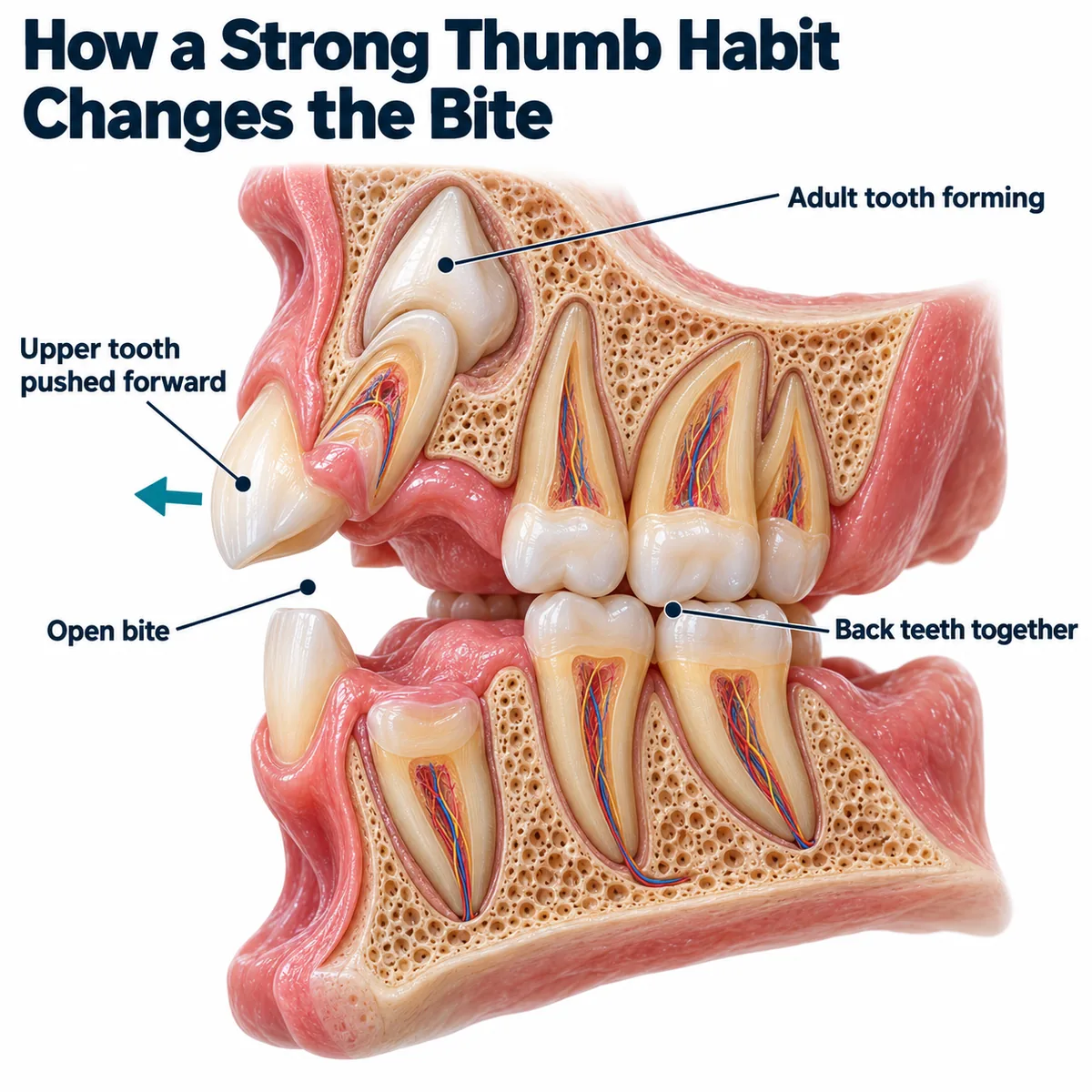
Steady pressure from the thumb pushes the upper front teeth forward and the lower ones back, and the cheeks squeeze the upper jaw narrower. Over years, a strong habit can lead to these changes:
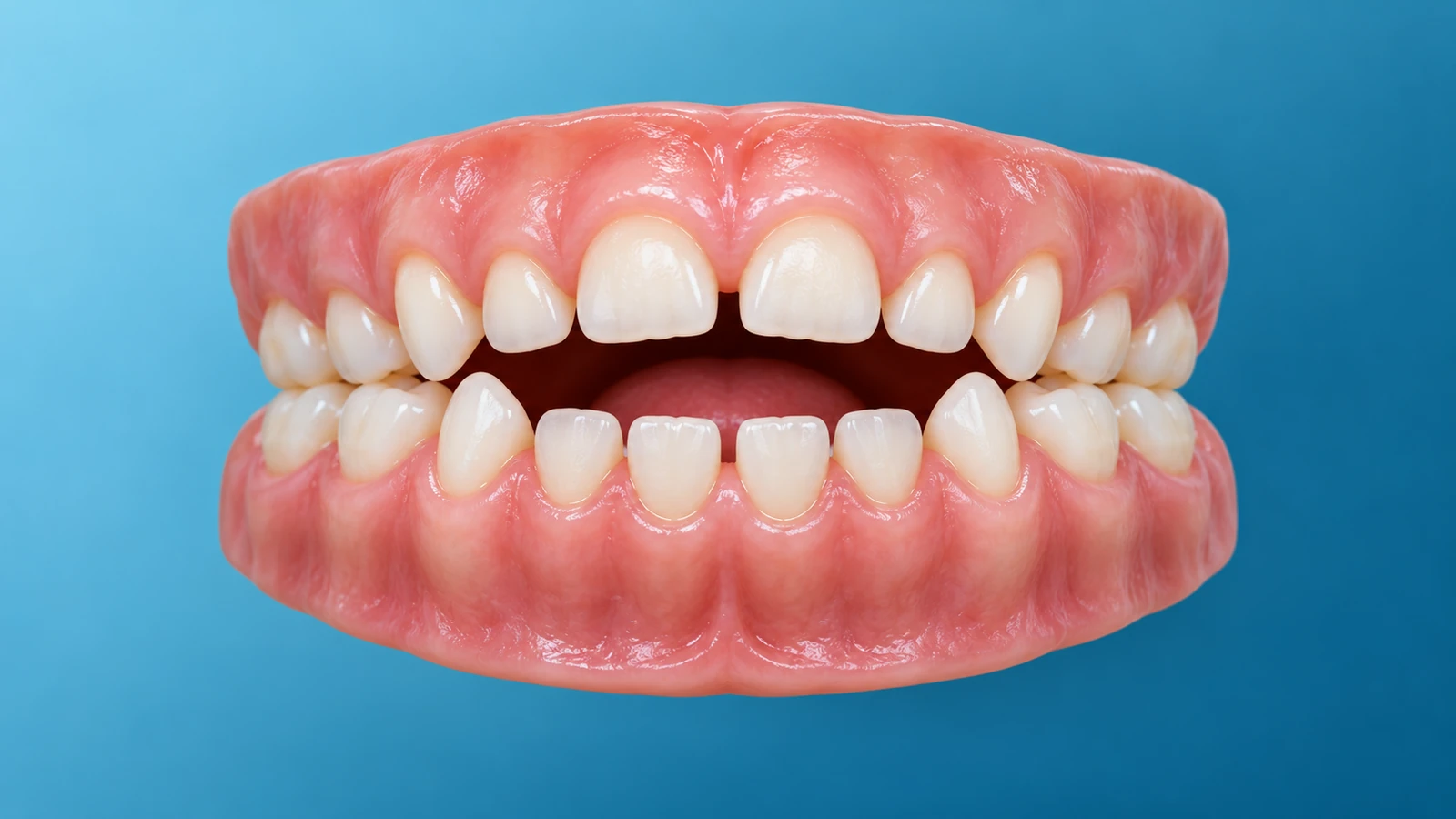
- Upper teeth that stick out. The thumb rests behind them and tips them forward.
- An open bite. The front teeth no longer meet when your child closes, even with the back teeth together.
- Lower teeth tipped inward. The thumb presses back on them as well.
- A narrow upper jaw. The upper back teeth can then bite inside the lower ones, called a crossbite.
- Speech changes. Some children develop a lisp on sounds such as s and z, so raise any speech worry with your doctor.
Changes in baby teeth can settle when the habit stops before the adult teeth come in. Changes that set in with the adult teeth can need orthodontic treatment later.
Does it matter how hard your child sucks?
Yes, and the hours count as much as the force. A thumb resting quietly in the mouth puts little pressure on the teeth. Hard sucking that pulls the cheeks in for hours each day does far more than a few minutes at bedtime.
When should your child stop?
Aim for the habit to fade by about age 4, and start gently discouraging it if it is still strong after that. The first adult front teeth come in at about 6 to 7, and our guide to when kids lose their baby teeth shows the order. A habit that carries on as those permanent teeth arrive can affect how teeth and jaws develop.
Book a dental visit if your child still sucks hard by day after age 4, or if the top teeth stick out or a gap shows when your child bites.
How can you help your child stop?
Lead with patience, praise and a swap for another comfort. Scolding and extra attention can make a child lean on the habit more. These steps suit children of about 4 and older, and a baby's crib should stay clear of toys, blankets and pillows.
- Notice the triggers. Watch for the moments the thumb goes in, such as tiredness, boredom or worry.
- Praise the good stretches. A sticker chart for thumb-free days keeps young children keen.
- Offer another comfort. A soft toy or blanket keeps little hands busy.
- Cover the thumb at night. A glove or sock makes a gentle reminder in bed.
- Ask before you add products. Check with your dentist or doctor before you try thumb guards or bitter nail coatings.
Expect slips when your child is sick or upset, and stay calm.
How can a dentist help?
A dentist checks how the front teeth meet, the shape of the upper jaw and the way the adult teeth are coming in. A short talk from the dentist about what the thumb is doing can also help a child decide to stop.
If encouragement has not worked, ask whether a habit appliance suits your child. It is a small device placed behind the upper teeth that makes sucking awkward. If the bite has already changed, ask about treatment options such as braces or aligners.
At Dentistry on Britannia in Mississauga, children are seen by general dentists in the same family practice as their parents. Our children's dentistry page explains what a first visit involves and when the practice refers a child to a pediatric dentist.
Frequently asked questions
Is a soother better than a thumb?
Not for the teeth, since hard and long soother use carries the same risk. The one dental advantage is that you can take a soother away, which you cannot do with a thumb.
Can thumb sucking damage baby teeth?
Hard sucking for many hours a day can push baby teeth out of line. These changes can settle if the habit stops before the adult front teeth come in.
My child only sucks their thumb in their sleep. Should I worry?
Do not scold, since a sleeping child cannot control it. For a child of 4 or older, try a glove or sock at night and mention the habit at the next check-up.