

What sedation is for
Sedation is for people who cannot get through treatment without it, and for treatment that is long or difficult enough to be worth it.
Those are two different reasons. One is about you. The other is about the procedure. Either one is reason enough to ask.
It is not a first resort. Plenty of anxious people get through appointments with time, explanation and a signal to stop. If that is enough for you, it is better than sedation, because it costs less and asks less of your day. Learn more about what to expect as a new patient.
If it is not enough, say so. Nobody here needs you to justify it.
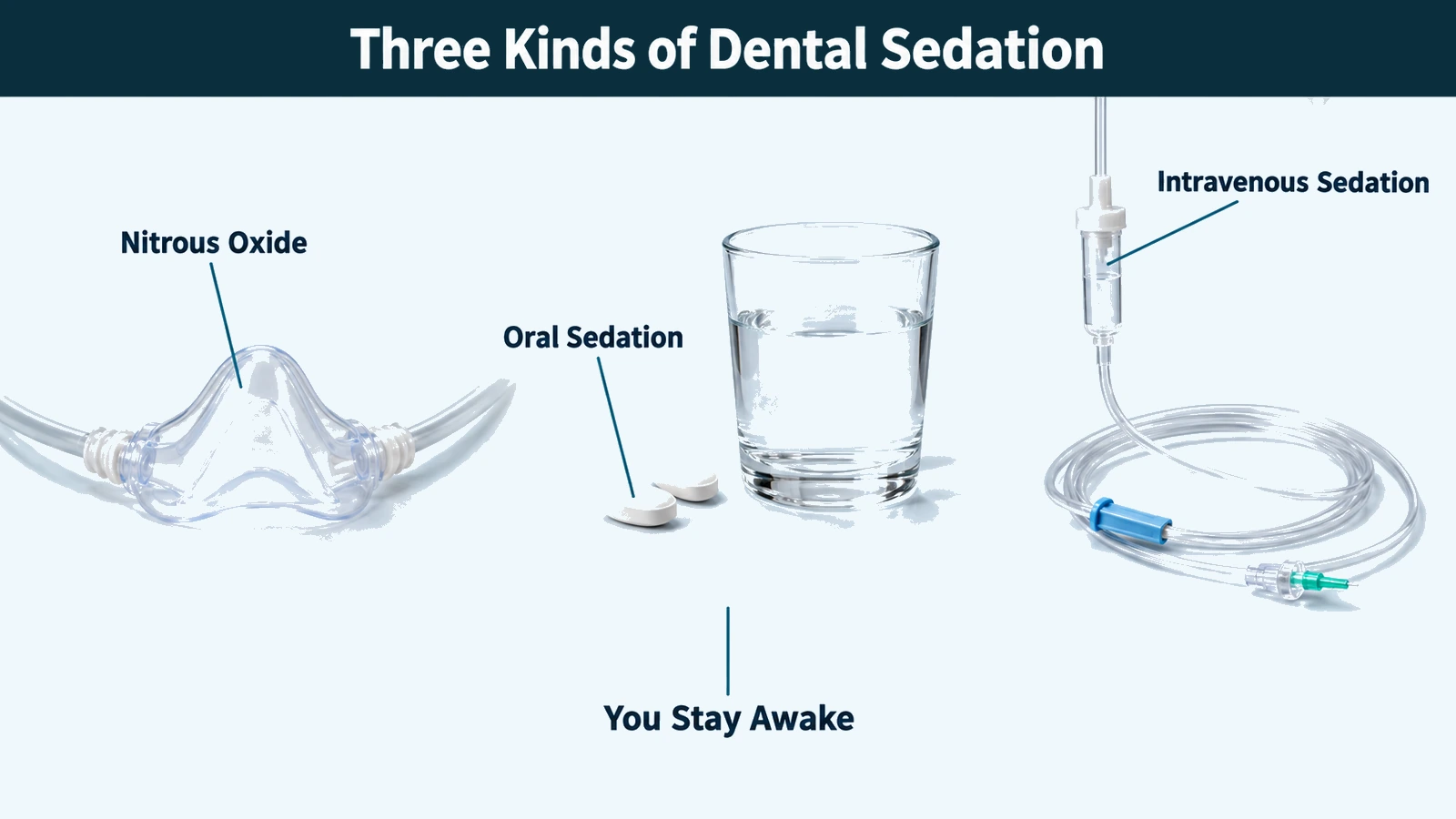
Nitrous oxide
What it is. A gas you breathe through a small mask over your nose, mixed with oxygen. Also called laughing gas.
What it feels like. Relaxed and slightly detached. You stay awake, you can talk to us, and you know what is happening.
How it starts and stops. It takes effect during the appointment and wears off after the mask comes off, while you are still in the chair.
What it asks of you. Less than the other two. Most people drive themselves home afterwards. We tell you before you book whether that applies to you.
Who it does not suit. A blocked nose stops it working, because you breathe it through your nose. Some respiratory conditions and some stages of pregnancy rule it out.
Oral sedation
What it is. Medication taken before your appointment, so it is working by the time treatment starts.
What it feels like. Drowsy and calm. You stay conscious and responsive, and many people remember less of the appointment afterwards.
How it starts and stops. Slower than nitrous oxide on both ends. It is still in your system when you leave.
What it asks of you. More planning. You cannot drive. A responsible adult has to bring you, take you home and stay with you afterwards. Arrange that before the day, not on it.
You may be told not to eat or drink beforehand. Whether that applies, and for how long, depends on what you are given. The practice tells you exactly what to do when the appointment is booked.
Intravenous sedation
What it is. Medication given through a small cannula in the back of the hand or the arm.
What it feels like. The deepest of the three. You stay conscious and able to respond, and most people remember very little of the treatment.
Why it is used. Longer or more involved treatment, and anxiety that the other two options have not been enough for.
What it asks of you. The most. You cannot drive. A responsible adult has to bring you, take you home and stay with you. You are monitored throughout the appointment and for a period afterwards before you leave.
Eating and drinking beforehand. There will be instructions, and they matter more here than with the other two. You get them in writing when the appointment is booked.
What sedation does not do
It is not a general anaesthetic. You are not unconscious. You can hear us, answer us, and signal to stop.
It does not replace local anaesthetic. The freezing still happens. Sedation changes how the appointment feels, not whether the tooth is numb.
It does not guarantee you remember nothing. Some people remember very little. Others remember most of it. Both are normal.
It does not make an unsuitable treatment suitable. If a case needs a different approach, sedation does not change that.
What we need to know before any of it
This is the part that decides whether sedation is safe for you, and it is the part people leave out.
Tell us all of the following, even if it seems unrelated:
- Every medication you take, including anything bought over the counter and any herbal or natural remedy
- Any breathing problem, including asthma, and any sleep apnoea diagnosis
- Any heart condition
- If you are pregnant, or think you might be
- Any previous reaction to sedation or to an anaesthetic, yours or in your family
- Anything you have been treated for recently
Some of these change which option we use. Some of them rule sedation out. You will be told which applies to you at the assessment, not on the day of treatment.
Sedation is not available to everyone, and being told it is not suitable for you is not the end of the conversation. There are other ways to get you through an appointment.
Getting home
Nitrous oxide: most people drive themselves. We confirm that with you before you book.
Oral and intravenous sedation: you do not drive, and you do not go home alone. A responsible adult takes you home and stays with you.
A taxi on your own is not an escort. The point of the escort is the person, not the transport.
The dentist tells you when it is safe to drive again. That is not a number we will guess at on a web page, because it depends on what you had and how you responded.
What it costs
We do not publish prices. Sedation is priced on which option you have and how long the appointment runs. Both come out of the assessment, not the phone call.
You get a written estimate before anything is booked, covering the sedation and the treatment it is for.
Insurance varies. Some plans cover sedation for some procedures and not others. We bill insurers directly. The office confirms what your plan covers before you commit. Learn more about CDCP coverage at our practice.
Where to start
Book an assessment, not a sedation appointment. Sedation is not something we can sensibly agree to over the phone, because the answer depends on your medical history and the treatment you need.
At the assessment we go through both and tell you which of the three applies to you. The treatment is booked from there.
Call (905) 821-8632 or book online.
Dentistry on Britannia is a general dental practice. Our dentists are general dentists, not specialists in any RCDSO-recognised specialty.