
November is Diabetes Awareness Month in Canada. Here is what diabetes changes in your mouth, which signs to book for and the habits that protect your teeth.
Key takeaways
- Your gums are at higher risk: diabetes makes gum disease more likely and harder to clear.
- The link runs both ways: gum infection can push blood sugar up, and blood sugar kept in range lowers the risk to your gums.
- A dry mouth means more decay: diabetes and some of its medicines can reduce saliva.
- Early gum disease is quiet: bleeding when you brush is a common first sign, so do not wait for pain.
Why does diabetes put your gums at risk?
High blood sugar weakens your defence against the bacteria in plaque. Your gums become inflamed more easily and your body has a harder time clearing infection.
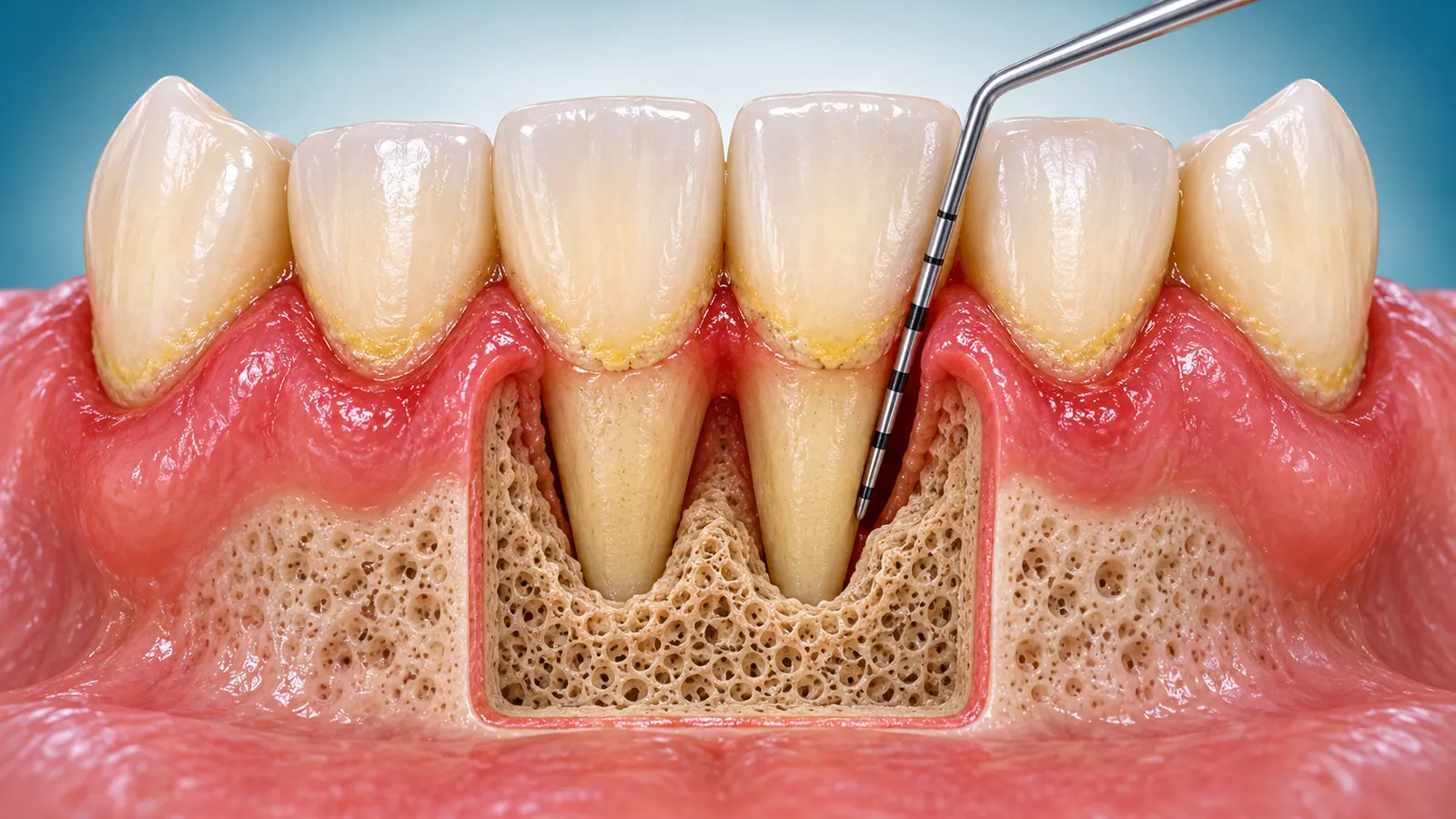
Plaque is the soft and sticky film of bacteria that forms on teeth every day. When your blood sugar runs high, your saliva carries extra sugar that feeds those bacteria. Plaque left at the gum edge causes gingivitis: red and puffy gums that bleed when you brush.
A professional cleaning and better care at home can reverse gingivitis. If it carries on, the inflammation can spread to the bone that holds your teeth. This stage is called periodontitis. Pockets open between gum and tooth, bone is lost and teeth can loosen. Lost bone does not grow back, so early care matters.
Smoking is a second risk factor that makes a gum infection harder to fight and slower to heal.
Can gum disease make diabetes harder to manage?
Yes, because gum disease is an infection and fighting an infection can raise your blood sugar. Health Canada puts it plainly: "People with diabetes are not only more at risk of gum disease, but gum disease can also affect the severity of their diabetes."
That makes healthy gums part of looking after your diabetes. Staying within the target range your diabetes team sets also lowers the risk to your gums.
What else can diabetes do in your mouth?
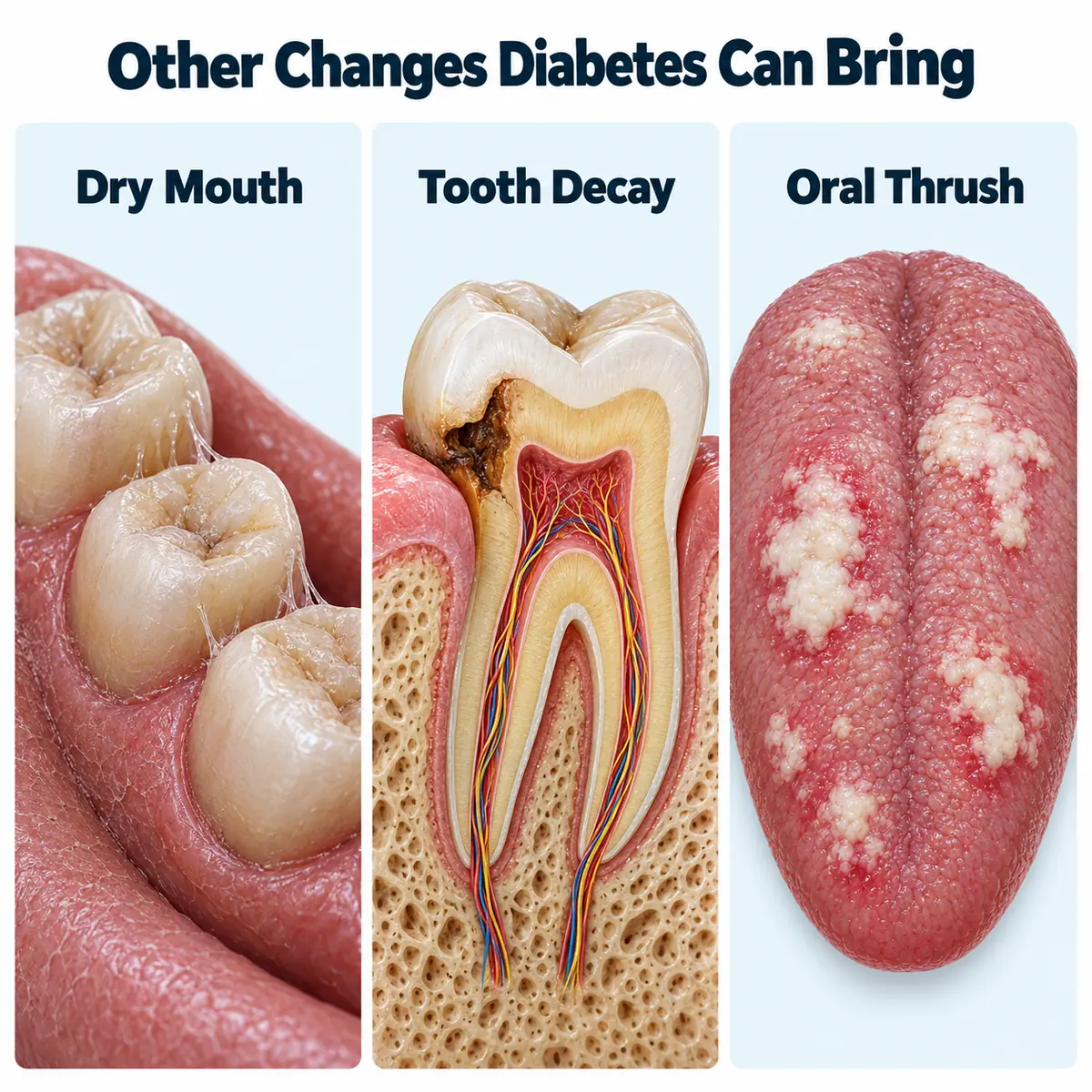
Diabetes can also bring other changes to your mouth:
- Dry mouth. Diabetes and some of its medicines can slow the flow of saliva. Saliva rinses away food and weakens acid, so less of it means more decay.
- Tooth decay. Extra sugar in saliva feeds decay bacteria. The acid they make eats into enamel and leaves holes called cavities.
- Oral thrush. This fungal infection can leave white patches on the tongue or a red and sore mouth. It can also change how food tastes.
- Slow healing. Mouth sores and gums after dental work can take longer to settle.
- Sore spots under dentures. Fungus can build up under a plate that is not cleaned well.
Treating a low with juice or candy also coats your teeth in sugar. Always treat the low first as your diabetes team advises. Then rinse your mouth with water once you feel better, above all at night when saliva flow drops.
Which signs should you book a visit for?
Book a dental visit if you notice any of these, since early gum problems rarely hurt:
- Gums that bleed when you brush or floss
- Red, swollen or tender gums
- Gums shrinking back from your teeth
- Bad breath or a bad taste that will not go away
- Loose teeth or new gaps between them
- White patches or a sore that has not healed in two weeks
A lump or swelling in one spot on the gum, or a swollen cheek, needs a call to us the same day, or an emergency dental service when we are closed. Spreading swelling, or swelling with a fever, belongs on the hospital list below.
How can you protect your teeth when you have diabetes?
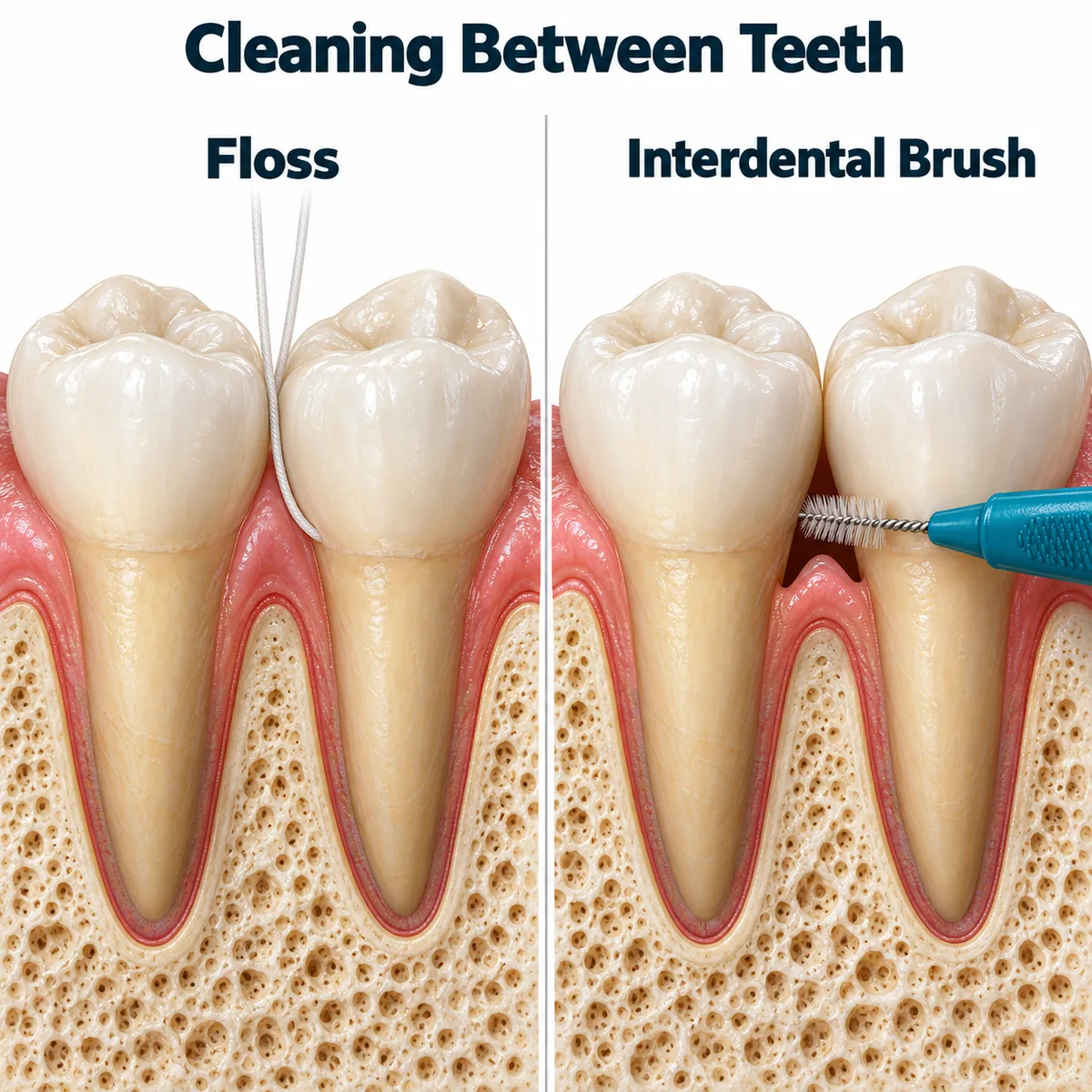
These daily habits do most of the work:
- Brush twice a day with fluoride toothpaste. Use a soft brush and angle the bristles toward the gumline where plaque collects.
- Clean between your teeth every day. Floss suits tight contacts and small interdental brushes reach the wider gaps where gums have shrunk back.
- Ease a dry mouth. Sip water through the day, chew sugar-free gum and ask about saliva substitute gels or sprays.
- Take dentures out at night. Clean them every day so fungus cannot build up.
What should you tell your dental team?
Tell them you have diabetes, even when it feels well controlled. Share your type of diabetes, how steady your blood sugar has been lately and every medicine you take. Mention a dry mouth, sore spots or dentures that fit differently. Before bigger treatment such as an extraction, let your doctor or diabetes team know as well. The same applies to a child with diabetes and to diabetes in pregnancy.
At Dentistry on Britannia in Mississauga, each cleaning starts with a check of your teeth and gums that notes where they bleed.
When should you book your next cleaning?
Your dentist sets the gap with you, and diabetes is one reason for shorter intervals. Six months suits many people, yet gum problems, a dry mouth, smoking and diabetes all point to more visits.
Once pockets have formed, a routine cleaning cannot reach deep enough. Scaling and root planing removes hardened tartar from the root surface below the gum. Our teeth cleaning page explains how the two appointments differ.
Frequently asked questions
Can diabetes make your teeth fall out?
Not directly, but untreated gum disease can. Once periodontitis destroys the bone around a tooth, the tooth can loosen and be lost.
Does diabetes cause bad breath?
It can, because gum infection and a dry mouth both let odour-causing bacteria build up. Breath that stays bad after brushing is worth a dental check. A fruity smell on the breath with vomiting, stomach pain or heavy thirst can mean diabetic ketoacidosis, a medical emergency, so call 911 or go to the nearest hospital.
Is sugar-free gum good for a dry mouth?
Yes, chewing sugar-free gum gets saliva flowing. Skip gum and mints with sugar, which feed decay bacteria.
Should I tell my dentist I have diabetes?
Yes, even when it feels well controlled. Share your type of diabetes, how steady your blood sugar has been lately and every medicine you take.
How often should I get a cleaning if I have diabetes?
Your dentist sets the gap with you, and diabetes is one reason for shorter intervals. Gum problems, a dry mouth and smoking point to more visits too.