
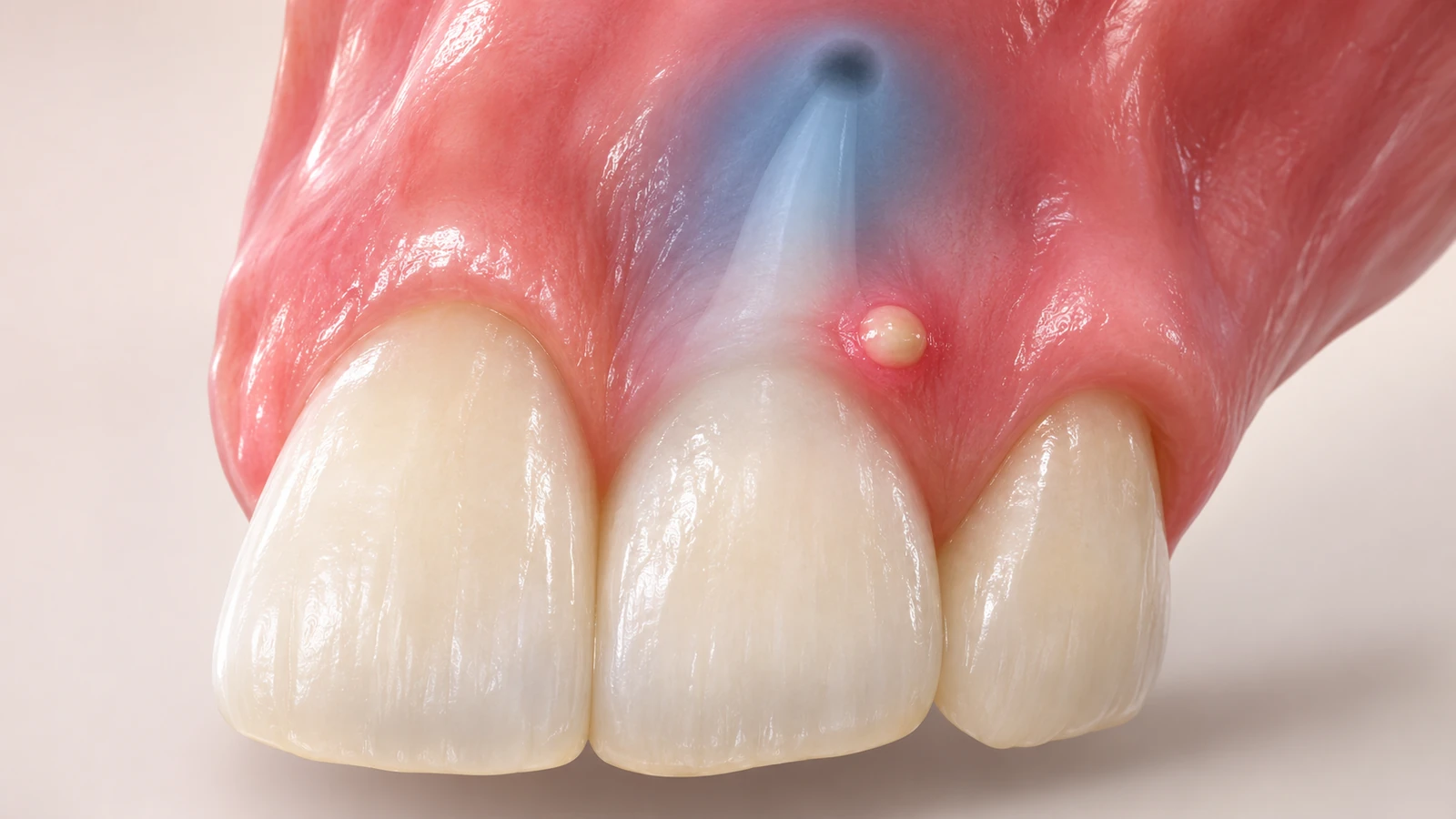
Here is what causes one, how to tell it from other sores and how a dentist treats it.
Key takeaways
- The bump is a drain: it lets pus escape from an infected tooth root or gum pocket.
- Do not squeeze it: popping it irritates the gum and leaves the infection in place.
- Shrinking is not healing: a drained boil can keep coming back as long as the source remains.
- Swelling or fever raises the urgency: swelling needs a same-day call, and spreading swelling or swelling with a fever needs a hospital.
What is a pimple on the gum?
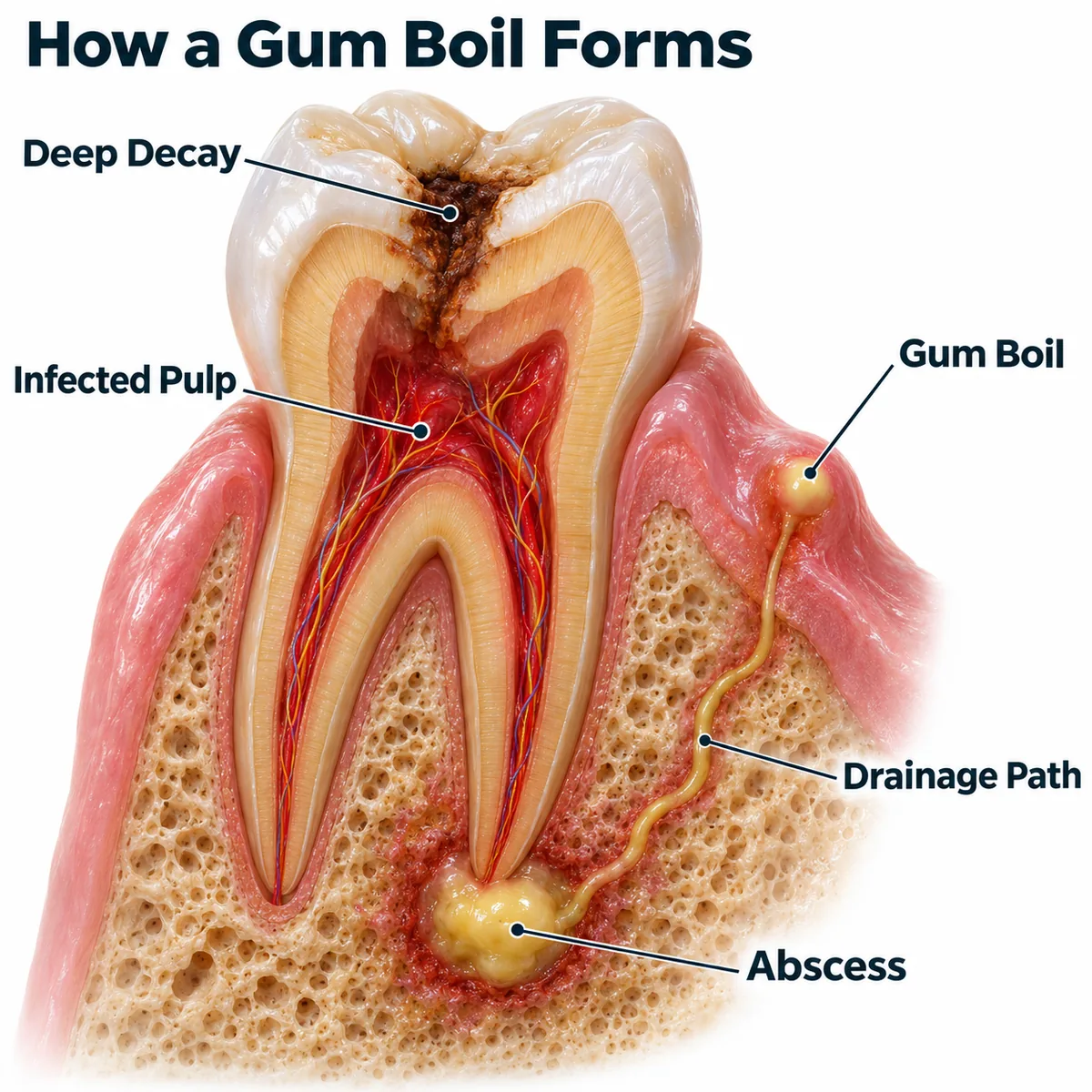
It is a raised bump of pus where an infection breaks through the gum. It looks like a small yellow, white or red pimple near the root of one tooth.
Pus is the thick fluid your body makes as it fights bacteria. When it builds up in the bone at the tip of a root, the pressure rises until a narrow tunnel forms through the bone and gum, ending in the bump you see.
Some boils throb and make the tooth tender to bite on. Others cause no pain at all, because a tooth whose nerve has died stops sending pain signals.
What causes a gum boil?
These are the common ways bacteria get in:
- Deep decay. A cavity that reaches the pulp, the soft core holding the nerve, lets bacteria reach the root tip.
- A crack or a knock. A cracked tooth or a blow that damaged the nerve opens a path in.
- Gum disease. Deep pockets between the gum and the root collect bacteria until an abscess forms.
- Trapped food. A popcorn hull or seed stuck under the gum edge can start one.
- Old dental work. Bacteria can leak in under a worn filling or crown.
- Dentures that rub. Friction from a loose plate can irritate the gum.
Why does it keep coming back?
Draining lets the pressure out, but the infection stays inside the tooth or the gum pocket. Pus builds up and the bump swells again, a cycle that can run for months as the infection harms the bone.
Squeezing or pricking the bump irritates the gum and does not remove the source. Left untreated, a dental infection can spread to nearby tissue and in rare cases through the body.
Could the bump be something else?
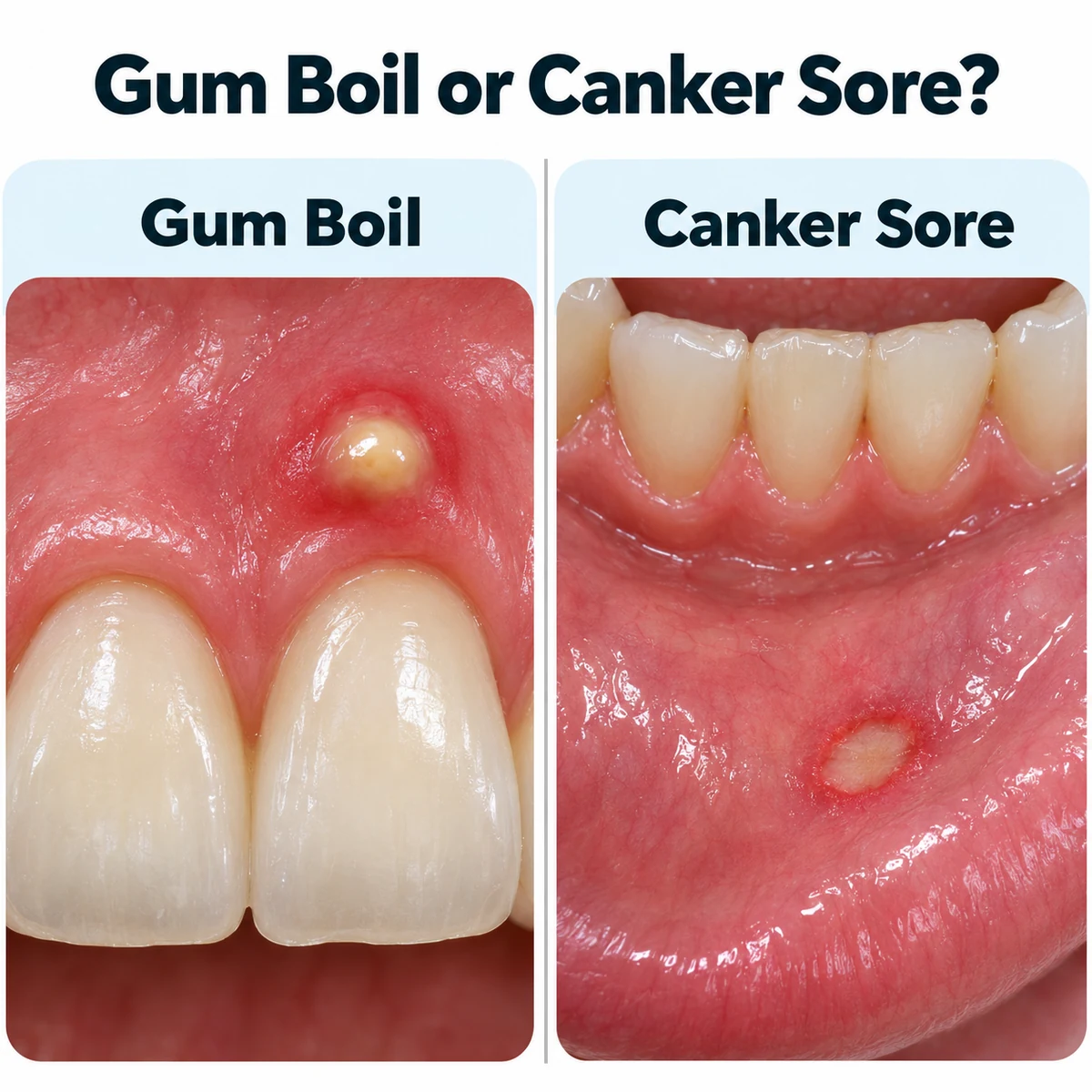
Other problems form bumps on the gums too, and only an exam tells them apart.
| Bump or sore | What it looks like | What it is |
|---|---|---|
| Gum boil | A raised yellow or white bump near a root that can leak pus | Pus draining from an infection |
| Canker sore | A small round sore with a sunken middle and a red border | A mouth ulcer, not a tooth infection |
| Bony lump (torus) | A hard and smooth lump that does not hurt | Extra bone, not an infection |
| Fibroma | A smooth pink or white lump after rubbing or a bite injury | Firm tissue from irritation |
When does a gum boil need a same-day call?
Call on the day you notice a gum boil, because gum and face swelling are on our same-day list. The office will tell you the soonest time we can see you.
The same goes for a child with a boil over a baby tooth and for anyone who is pregnant. If the clinic is closed, use an after-hours dental service and call us when we open. Never put heat on your face, which can make a spreading swelling worse. A dental infection can spread toward the airway, so call 911 for drooling or a muffled voice. Go to hospital if you cannot open your mouth or feel unwell and shivery, or if the swelling spreads over hours or comes with a fever.
How does a dentist treat a gum boil?
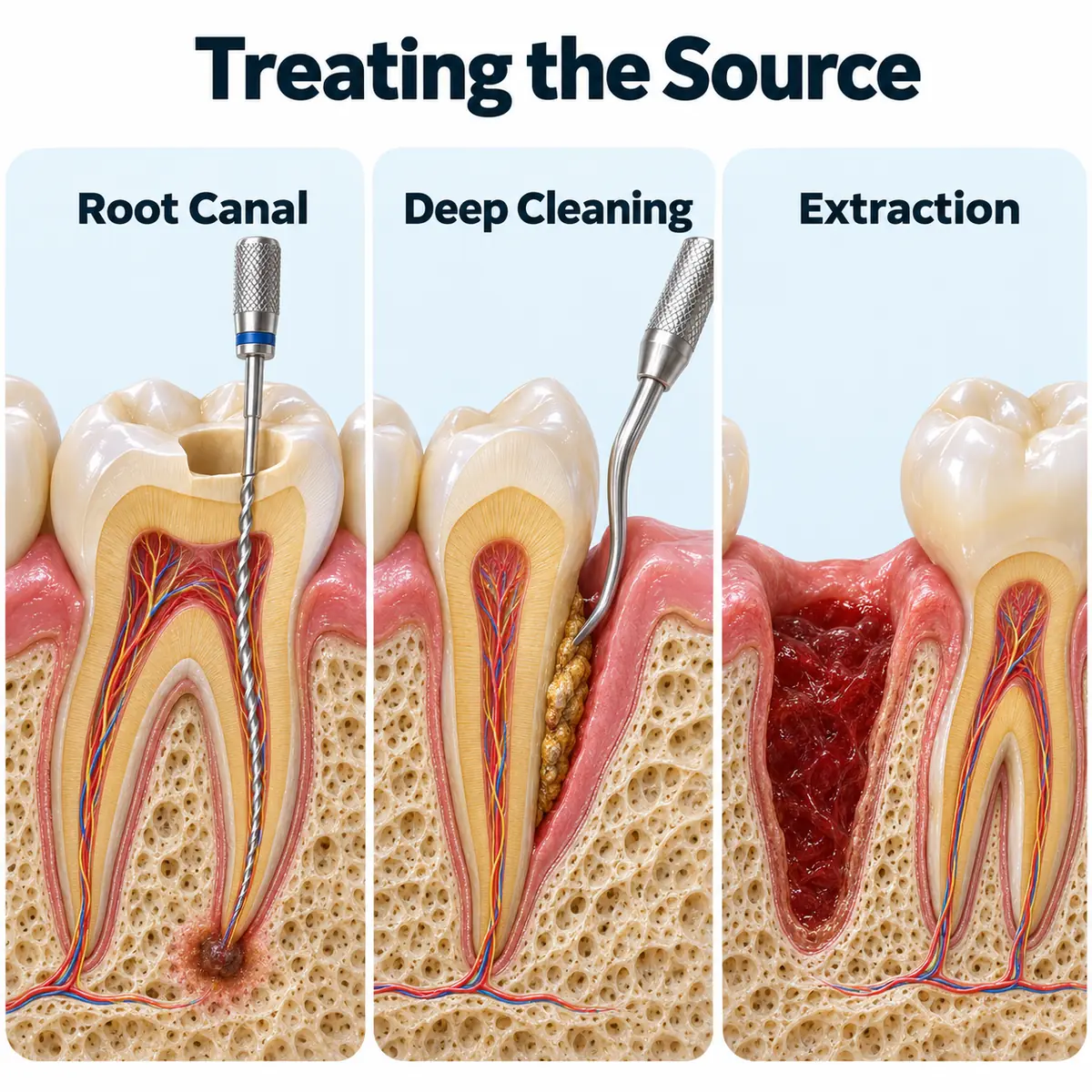
The dentist treats the source and not just the bump. Your tooth is tested with cold and gentle tapping, and an x-ray shows the root. Draining a swollen abscess eases the pressure, but it does not remove the cause.
The treatment depends on the cause and how much of the tooth is left:
- Root canal treatment for an infected or dead nerve. The canals are cleaned and sealed, and the tooth stays in your mouth.
- Deep cleaning for a gum pocket. Scaling and root planing removes hardened tartar from the root below the gum line.
- Extraction when a tooth is split or has too little left to restore.
Our dentists at Dentistry on Britannia in Mississauga do root canal treatment on every tooth, and our root canal treatment page explains each step.
How can you stay comfortable before the appointment?
Home care cannot cure the infection, but these steps keep you comfortable:
- Rinse with warm salt water. Stir half a teaspoon of salt into a cup of warm water and swish gently.
- Keep the area clean. Brush gently around the bump and chew on the other side.
- Use a cold pack. Hold it on your cheek for 10 to 15 minutes at a time.
- Take pain relief as the label says. Never take two products with the same ingredient or hold aspirin against the gum.
Pregnant, on blood thinners, giving medicine to a child or living with a health condition? Ask a pharmacist before you take anything, and tell us when you call if your immune system is weakened. Later, fluoride toothpaste and regular checkups help prevent another.
Frequently asked questions
Can a gum boil go away on its own?
The bump can shrink after it drains, but the infection behind it does not clear by itself.
Does a gum boil mean I need a root canal?
Not always. A gum pocket needs a deep cleaning instead, and an infected tooth can need a root canal or an extraction.
Why does a gum boil taste salty or bad?
The bump is leaking pus, which carries bacteria from the infection into your mouth.
Can a pimple on the gum be cancer?
Rarely, but oral cancer can start as a lump on the gum. See a dentist or doctor about any bump or sore that lasts two weeks or longer.
Will antibiotics clear a gum boil?
Not on their own. A dentist adds them when an infection spreads or brings a fever, but the source still needs treating.