
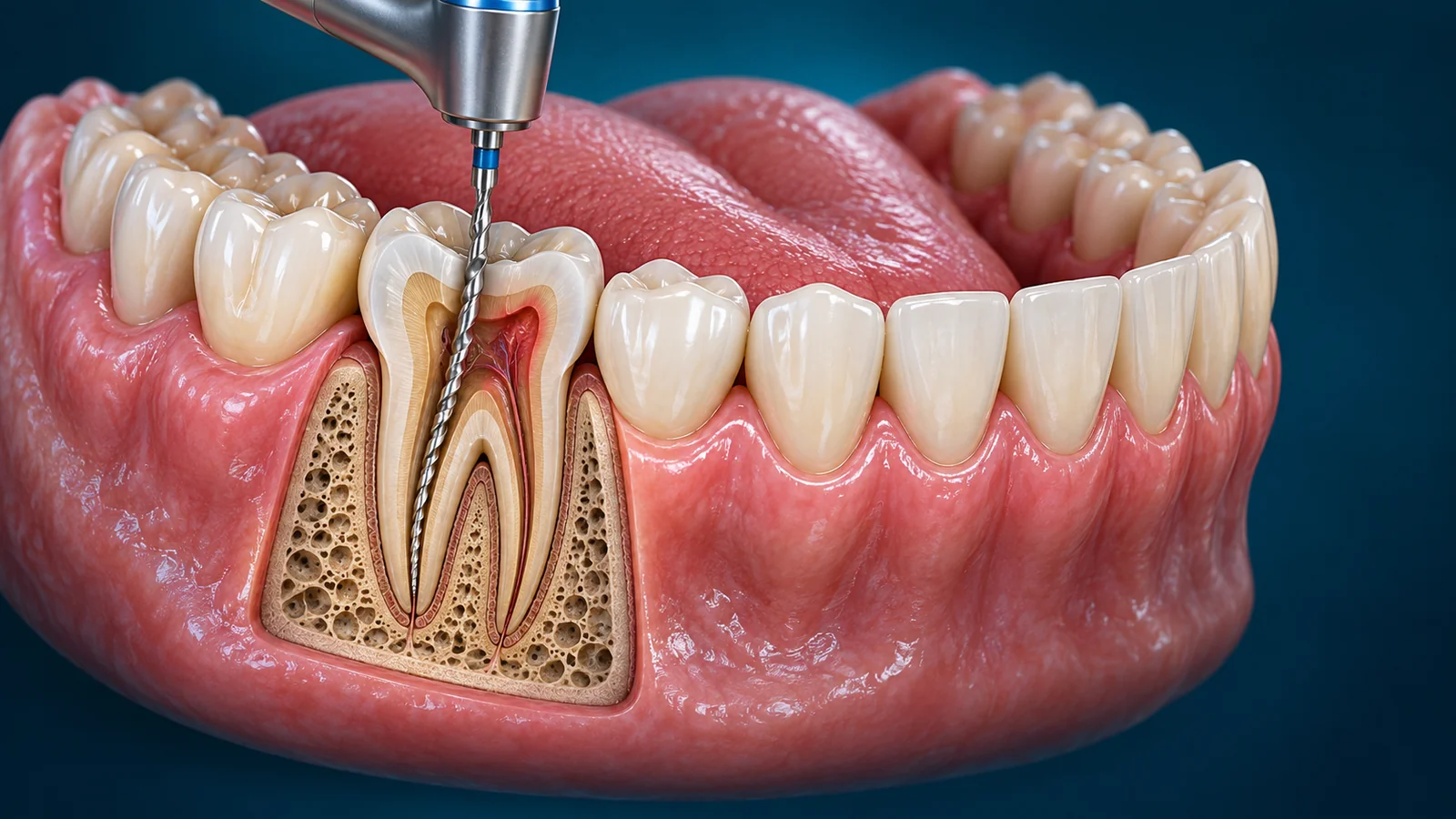
A root canal costs more on the day. An extraction is the smaller bill until the day you replace the tooth with an implant or a bridge.
Key takeaways
- A root canal removes the infected or inflamed pulp and keeps your own tooth. An extraction removes the tooth and ends the problem there
- Compare whole paths, not single visits. A molar root canal plus a porcelain crown runs about $2,200 to $2,800. Extraction plus an implant starts at about $3,200 to $3,800
- Extraction is the right call when the root is cracked, too little tooth is left to rebuild, or gum disease has destroyed the bone support
- The CDCP lists root canal treatment, extractions and eligible dentures. Implants and fixed bridges are excluded
What each option does
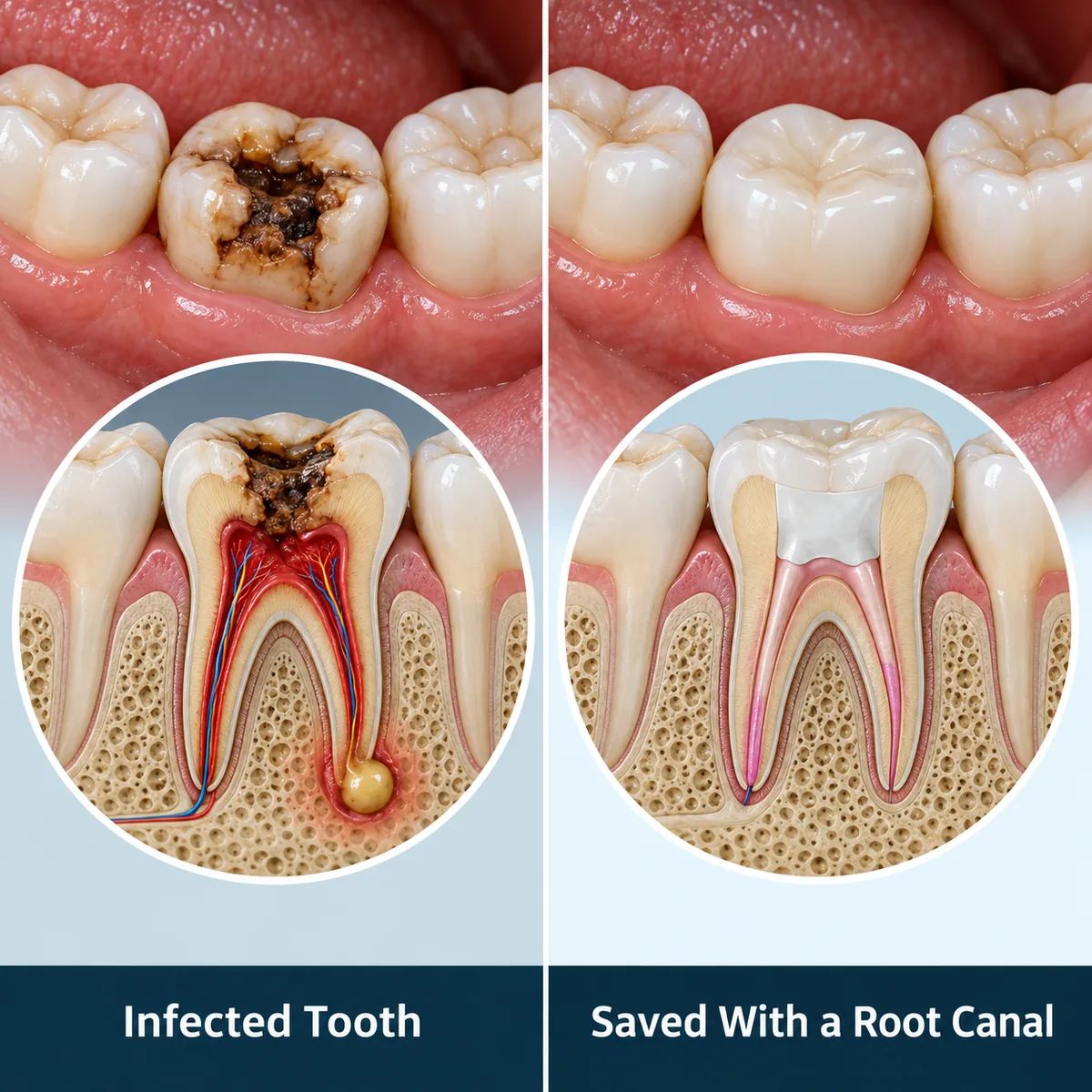
A root canal saves the tooth
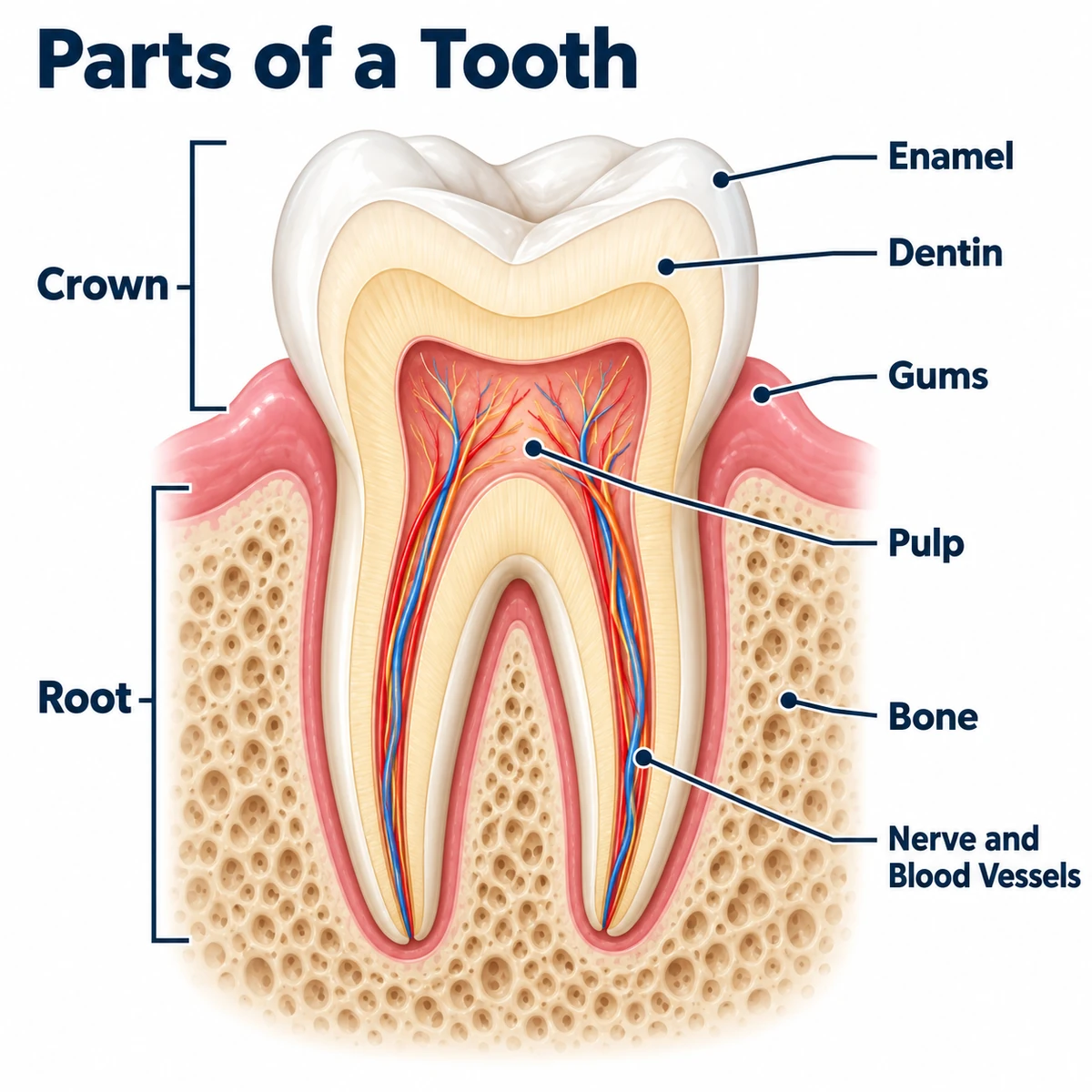
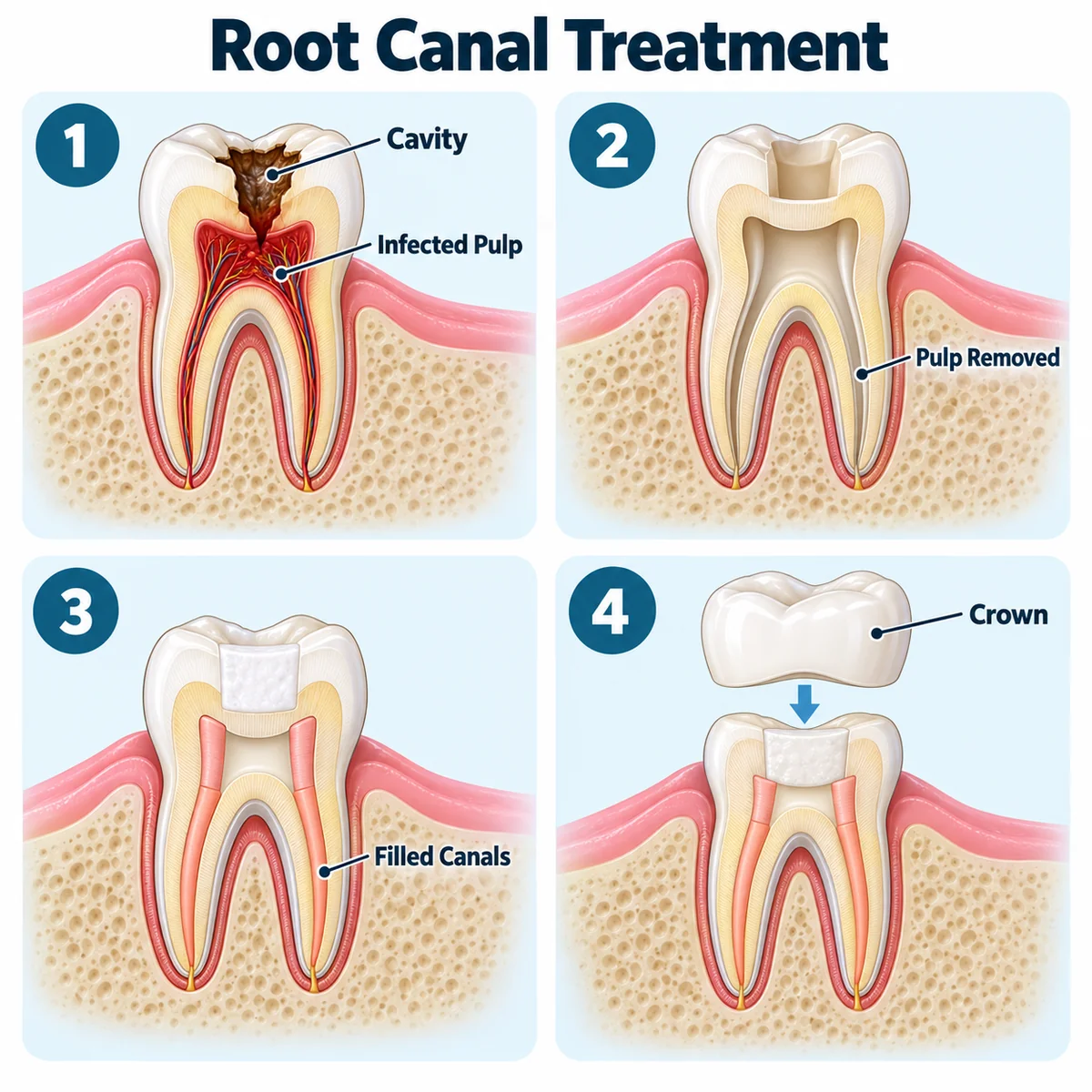
The centre of each tooth holds the pulp: nerve, blood vessels and soft tissue. Bacteria get in through deep decay, a crack or an injury. Treatment removes that tissue, cleans the narrow channels inside the roots and fills them. You keep the tooth and go on chewing with it.
Most back teeth need a crown afterwards. Decay and the treatment opening have weakened them, and they take heavy chewing forces. The crown covers the cusps so the tooth does not split.
An extraction removes it
An extraction takes the tooth out, root and all, and the infection goes with it. A surgical extraction is for a tooth broken at the gum line or harder to reach.
It does not replace the tooth, so what goes in the gap is a second decision with its own cost.
When saving the tooth makes sense
Your own tooth keeps the bone around its root in use and holds its neighbours in place. Nothing else in your mouth has to be reshaped to support it.
Root-treated teeth also last. A US study that followed more than 1.4 million treated teeth through insurance claims found 97% still in the mouth eight years on. It counts teeth kept and not teeth fully healed. Of the treated teeth that were later extracted, 85% had no full crown, which is why we press for the crown.
Signs to watch: pain that lingers after hot or cold, pain on biting, swelling, a darkening tooth. Our root canal treatment page lists them all. We treat front teeth, premolars and molars at the clinic, with no referral needed.
When extraction is the right call
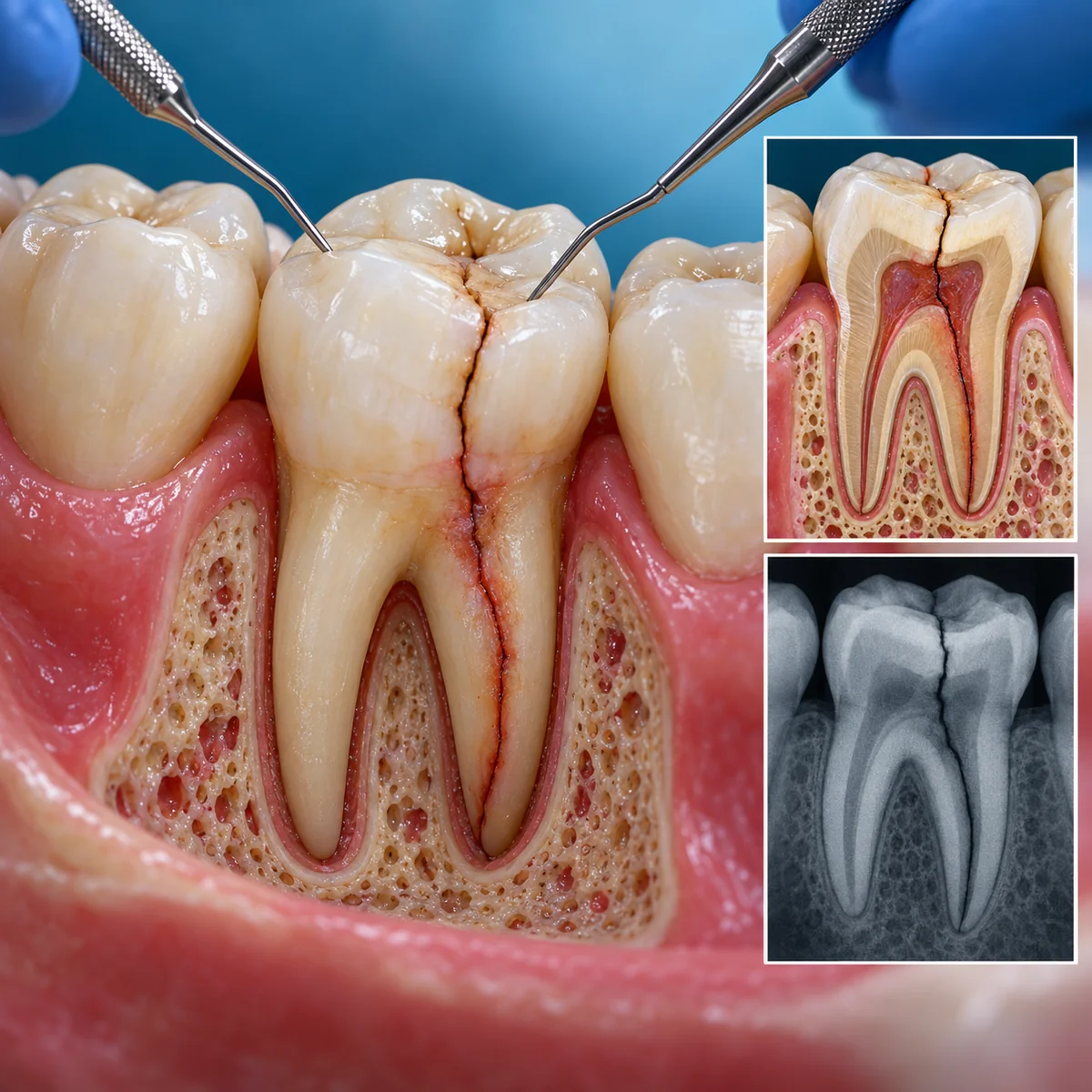
Extraction is the honest answer when:
- The tooth is split down the root. A crack that runs below the gum cannot be sealed
- Too little tooth is left to restore. Decay has taken so much that a crown has nothing to hold
- The bone support is gone. Advanced gum disease has destroyed the bone that holds the tooth
- A treated tooth has failed and no second attempt can work. Retreatment and root-end surgery are both ruled out
A tooth that feels loose is not always lost. Infection at the root tip can loosen a tooth that a root canal can still save. A tooth broken near the gum can be rebuilt after crown lengthening when enough root remains. We do that here.
We tell you which group your tooth is in after the exam and x-ray. If a root canal has a poor outlook you hear that before you pay for one.
Pros and cons at a glance
Root canal
- Keeps your own tooth and the bone around its root
- Most people recover in under a week
- Costs more on the day, and a back tooth needs a crown
Extraction
- Ends the problem in one visit
- The lowest cost on the day
- Leaves a gap, and replacing it adds visits, cost and sometimes a bone graft
Root canal vs extraction cost
These ranges come from prices that dental practices in Mississauga and across Ontario publish for each item. They are not our fees. You get your number in a written estimate after the exam.
| Path | What it includes | Area range |
|---|---|---|
| Save a front tooth | Root canal, $700 to $900, plus a filling or crown where needed | From $700 |
| Save a molar | Root canal, $1,100 to $1,400, plus a porcelain crown, $1,100 to $1,400 | About $2,200 to $2,800 |
| Extract and leave the gap | Simple extraction $200 to $300, surgical $300 to $600 | $200 to $600 |
| Extract and bridge the gap | Simple extraction plus a three-unit bridge, $3,000 to $4,000 | About $3,200 to $4,300 |
| Extract and place an implant | Simple extraction plus an implant with abutment and crown, from about $3,000 to $3,500 | From about $3,200 to $3,800 |
Ceramic, zirconia and gold crowns cost more than the porcelain crown priced here. A build-up or post under the crown can add to it.
The cheapest day is not always the cheapest decision. Extraction alone is the lowest number on the table. Add a bridge or an implant and the range starts well above saving a molar. A standard complete denture starts at about $1,500 per arch, and it comes out for cleaning.
A premolar root canal runs $900 to $1,100. Treating a tooth a second time costs more than the first. An endodontist referral comes with that office's own fee and estimate.
Side by side
| Root canal and crown | Extraction | |
|---|---|---|
| Visits | One or more, then the crown | One, plus any replacement |
| Recovery | Under a week for most people | Days, with the socket healing for weeks |
| Effect on neighbouring teeth | None | They can drift into the gap |
| Replacement needed later | Not unless the treatment fails | An implant, a bridge, a denture or a decision to leave it |
| CDCP | Listed, crown needs approval first | Listed |
| When it is the wrong choice | The root is cracked, the tooth cannot be rebuilt or the bone support is gone | The tooth can be restored and you want to keep it |
Recovery: what each one feels like
After a root canal
Under local anaesthetic it feels much like a longer filling appointment. The numbness lasts several hours and most people recover in less than a week. Call us if soreness has not settled after a few days.
Until the tooth has its permanent filling or crown, chew on the other side.
After an extraction
You bite on gauze for twenty to thirty minutes and a clot forms in the socket. That clot protects the bone, so no straws, spitting or smoking as it settles. Ask whether any stitches dissolve. Daily life returns in two to three days. The bone takes several weeks to heal, and up to four months after a molar.
The main thing to avoid is dry socket, when the clot is lost early. It follows under 5% of extractions in large studies. Smokers face more than three times the odds. Our tooth extraction page has the full aftercare routine.
Tell us every medicine you take. Bone drugs such as bisphosphonates and denosumab, and blood thinners, change how we plan an extraction. They can favour keeping the tooth.
What happens if you pull it and leave the gap
The teeth next to the gap lean into the space and the opposite tooth grows toward it. The bone where the root sat slowly shrinks. You do not have to replace the tooth that week, but you need a plan. Our post on implant, bridge or denture compares the options.
What else shapes the decision
Your general health, your budget and how you feel about each procedure all count. Tell us if dental visits make you anxious. We take that into account when we plan your care.
CDCP and insurance
Both treatments appear on the Canadian Dental Care Plan's list for people the plan accepts. Redoing a root canal needs the plan's approval before work starts. The crown that follows needs it too, along with any core or post (Government of Canada).
Implants and fixed bridges are excluded. Eligible dentures may be partly covered, subject to the plan's criteria and approval where required. The plan is open to all ages, subject to its income test.
Family income sets your share. Below $70,000 in adjusted family net income you pay nothing toward the plan fee. From $70,000 to $79,999 you pay 40% of it, and from $80,000 to $89,999 you pay 60%. A dentist fee above the plan fee is also yours. See CDCP at our clinic.
Private insurance: we can send your plan a pre-determination, so you see its expected share before you decide. It is an estimate, not a promise to pay. We bill insurers directly.
OHIP does not pay for dental work in a dentist's office.
If you are in pain today
Pain relief and the final decision can happen on different days. At an urgent visit we test the tooth, x-ray it and deal with the pain, and a tooth worth saving can have its canals opened and dressed that day.
Antibiotics have a place when infection spreads or causes a fever, but they never fix the tooth itself. Before you leave, ask us to write down what saving the tooth and removing it would each involve.
Frequently asked questions
Is a root canal worth it?
When the tooth can be restored, yes. You keep your own tooth and spend less than extraction plus an implant or bridge. It is not worth it when the outlook is poor, and we tell you that before you start.
Should I save the tooth or have it pulled?
If the tooth can be restored, keeping it is the stronger choice for chewing, the bone and the teeth around it. If the root is cracked, too little is left to rebuild or the bone support is gone, extraction is the better treatment.
Is it cheaper to pull a tooth than get a root canal?
It is cheaper on the day because extraction runs $200 to $600 in this area. A bridge or an implant on top of that puts the total well above a root canal and crown.
Does a root canal hurt more than an extraction?
Both use local anaesthetic, so neither should hurt during treatment. Most root canal pain is the infection beforehand. After an extraction, expect a few sore days as the socket heals over several weeks.
Can I have a root canal now and an implant later if it fails?
Yes, and saving the tooth first is what keeps that option open. If it fails you pay for both paths. Lost bone can also mean a graft before the implant.
Does the CDCP cover a root canal or an extraction?
Both are on the plan's list for people it accepts. A retreatment and a crown need the plan's approval first. Implants and fixed bridges are excluded.