
What flap surgery is
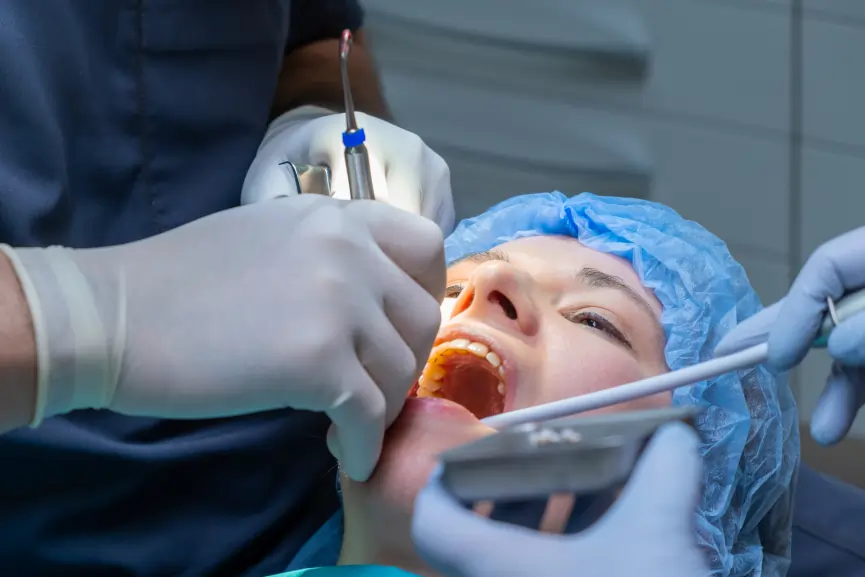
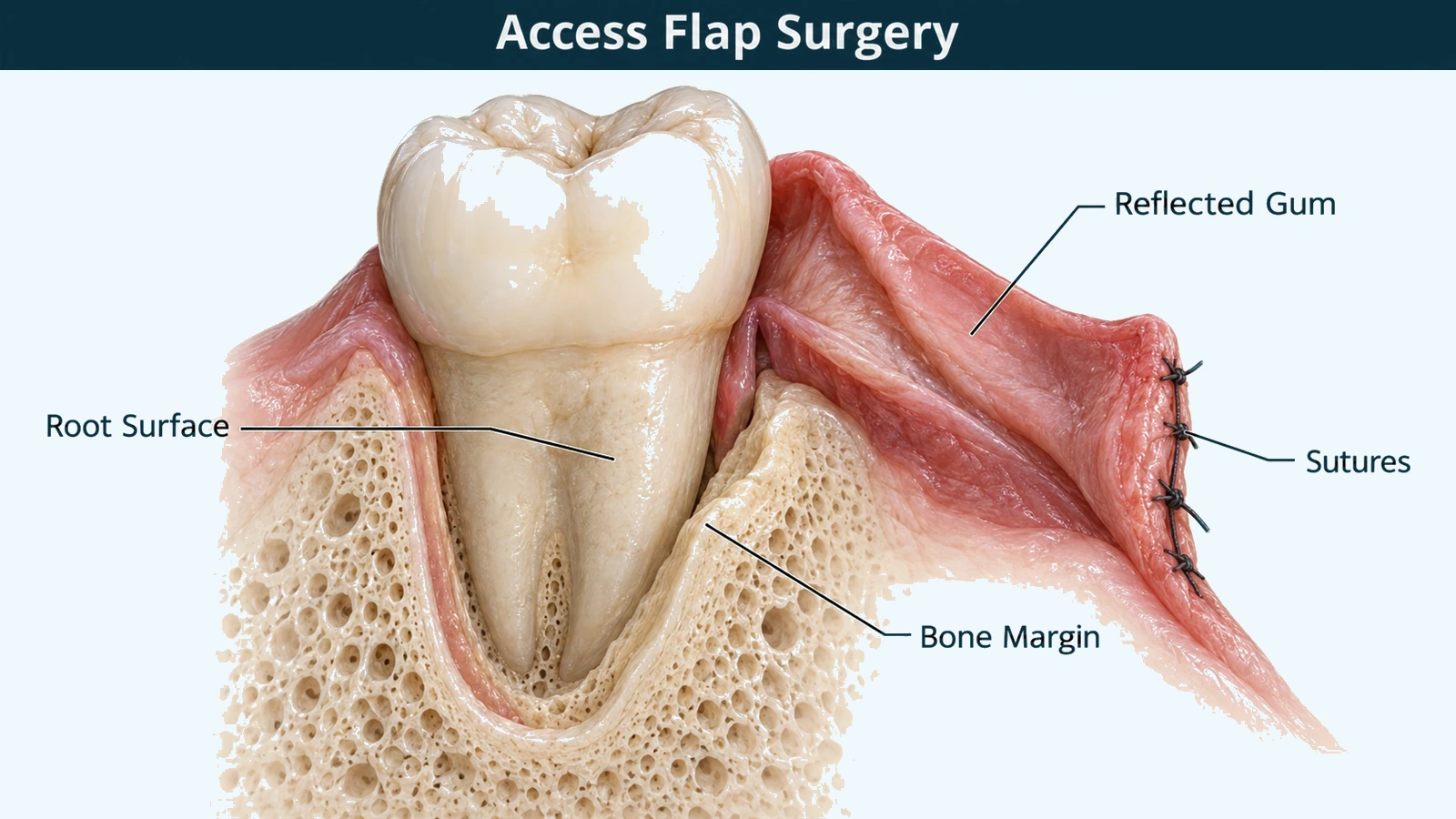
Where gum disease has created deep pockets, the gum is gently lifted away from the tooth. The root surfaces underneath can then be seen and cleaned directly, and the gum is repositioned and secured.
The purpose is access. Beyond a certain depth, instruments working blind from above cannot reliably reach the base of a pocket or the root surface inside it. Lifting the tissue turns a blind procedure into one done under direct vision.
It comes after non-surgical treatment, not instead of it
This sequence matters and it is not negotiable.
Gum disease is treated first with charting, then scaling and root planing, then a re-assessment appointment where the pockets are measured again and compared with the baseline.
Surgery is considered only for the areas that did not respond. Areas that respond to non-surgical treatment do not need it. Going straight to surgery without the non-surgical phase means nobody knows which areas would have settled without it.
Read about gum disease treatment and scaling and root planing.
When it is recommended
- Pockets that stay deep after non-surgical treatment and enough healing time
- Areas that keep bleeding on measurement despite good home care
- Root anatomy that cannot be cleaned blind, such as grooves or furcations between the roots of a molar
- Where bone contouring is needed to give the gum a shape you can keep clean
If your home care is not yet consistent, that is addressed first. Surgery in a mouth where daily cleaning has not changed treats the symptom and leaves the cause.
What it can and cannot do
| Can | Cannot | |
|---|---|---|
| Access to root surfaces | Provide direct vision | |
| Pocket depth | Reduce it | |
| Progression of bone loss | Halt or slow it | |
| Bone already lost | Regrow it | |
| Gum already receded | Restore it | |
| Teeth loose from lost support | Sometimes stabilise | Restore the support |
It does not regrow lost bone or reattach gum that has gone.
Recession is a normal outcome. Where a pocket is removed, the tooth looks longer afterwards because the tissue now sits where the bone is. Sensitivity where the root becomes exposed is common and usually settles.
Understand that before treatment and not after it. The trade is a mouth you can keep clean in exchange for teeth that look longer.
Told your pockets have not settled? Book an assessment or call (905) 821-8632.
What happens
- Local anaesthetic.
- The gum is lifted away from the teeth in the area being treated.
- The root surfaces are cleaned under direct vision.
- Bone is contoured where that is part of the plan.
- The gum is repositioned and secured, and stitched where needed.
How many appointments this takes depends on how many areas need treating. The office will explain the plan after the assessment.
Recovery
Expect discomfort and swelling for several days, managed with pain relief and the aftercare instructions you are given. Those instructions come before anything general on a web page.
In particular:
- Do not brush the surgical area until you are told to. Clean the rest of your mouth normally
- Use the rinse you are given as directed
- Eat soft food and chew elsewhere
- Do not smoke. It materially affects healing here
- Do not pull your lip out to look at the area, because that disturbs the stitches
On pain relief: do not go over the stated maximum and check you are not doubling up on the same ingredient in two products. Ask a pharmacist first if you are pregnant, treating a child, taking blood thinners or managing a stomach, kidney or liver condition.
When to get help urgently
Call 911 if you have difficulty breathing or swallowing, are drooling because you cannot manage your saliva, your voice has changed or sounds muffled, or you feel confused or faint.
Go to a hospital emergency department if you have:
- Swelling spreading under the jaw, into the neck or towards the eye
- Swelling under the tongue or in the floor of the mouth
- A fever with facial swelling or feeling unwell and shivery
- Swelling that spreads quickly over hours and not days
- Difficulty opening your mouth
- New problems with your vision
- Bleeding that will not stop
- A serious injury to the face or jaw after an accident
Call us if bleeding does not settle with gentle pressure, if swelling gets worse after the third day, if you have a fever without the signs above or if pain increases instead of improving.
Afterwards, and for good
Maintenance is what makes it worth having done.
Maintenance visits come at a shorter interval than before, such as every three to four months. That interval is the treatment continuing and not an upsell, and going back to six-monthly visits gives the disease room to return.
Daily cleaning between the teeth is most of it. What happens in the chair removes what has built up. What happens at home decides whether it comes back.
Stopping smoking can make more difference than anything done in the chair.
When it is the wrong answer
When non-surgical treatment has not been tried or has not been given time to work.
When home care is not yet consistent. That is addressed first, and it is not a judgement.
When the tooth's outlook is poor regardless. Removing a tooth and planning a replacement properly can be a better use of your money than surgery on something unlikely to last.
When the case needs a specialist. Where that is so, we refer.
Read about tooth extraction and dental implants.
What affects the cost?
We do not publish prices. The cost depends on how many areas need treating and how complex the case is. You get a written estimate before treatment begins.
CDCP: we accept the Canada Dental Care Plan. It is open to all ages for eligible Canadian residents; eligibility requires no access to private dental insurance, the required Canadian tax returns, adjusted family net income under $90,000, and Canadian residency for tax purposes. Treatment for gum disease is among the services the plan is built around, and some treatment needs approval in advance.
Insurance: plans set their own rules for gum surgery. Ask us to submit a pre-determination so you have your insurer's answer in writing. Direct insurance billing is available. Learn more about CDCP coverage at our practice.
Dentistry on Britannia is a general dental practice. Our dentists are general dentists, not specialists in any RCDSO-recognised specialty.