
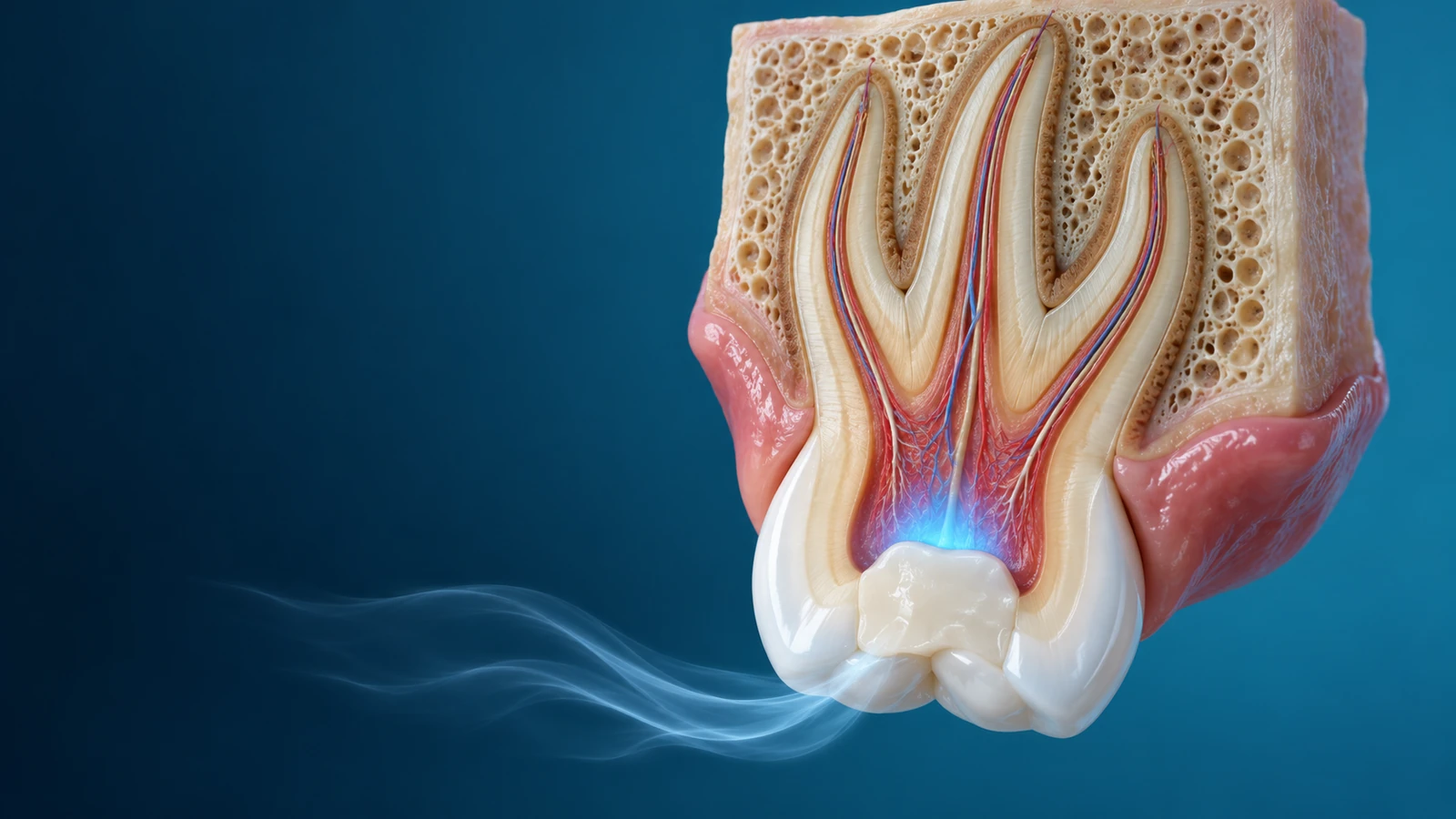
Here is why it happens, what eases it and which signs need a second look.
Key takeaways
- Mild sensitivity is expected. A sore gum and a brief twinge from cold settle over a week or two.
- A high bite can be adjusted. Your dentist can smooth down a filling that sits too high.
- Getting worse is not healing. Pain that builds over days or throbs on its own needs a check.
- Swelling needs a same-day call. Swelling, a fever or a lasting bad taste points to infection.
Is it normal for a tooth to be sensitive after a filling?
Yes. Mild sensitivity to cold and a sore gum around the tooth are normal after a filling and go away in a week or two.
Do not chew on that side until the freezing wears off, because a numb cheek is easy to bite. Once feeling is back you can eat as normal, since a tooth-coloured filling is set hard by a curing light before you leave the chair.
What you notice next is a short zing from a cold drink or cold air that fades within seconds.
Why does a filled tooth feel sensitive?
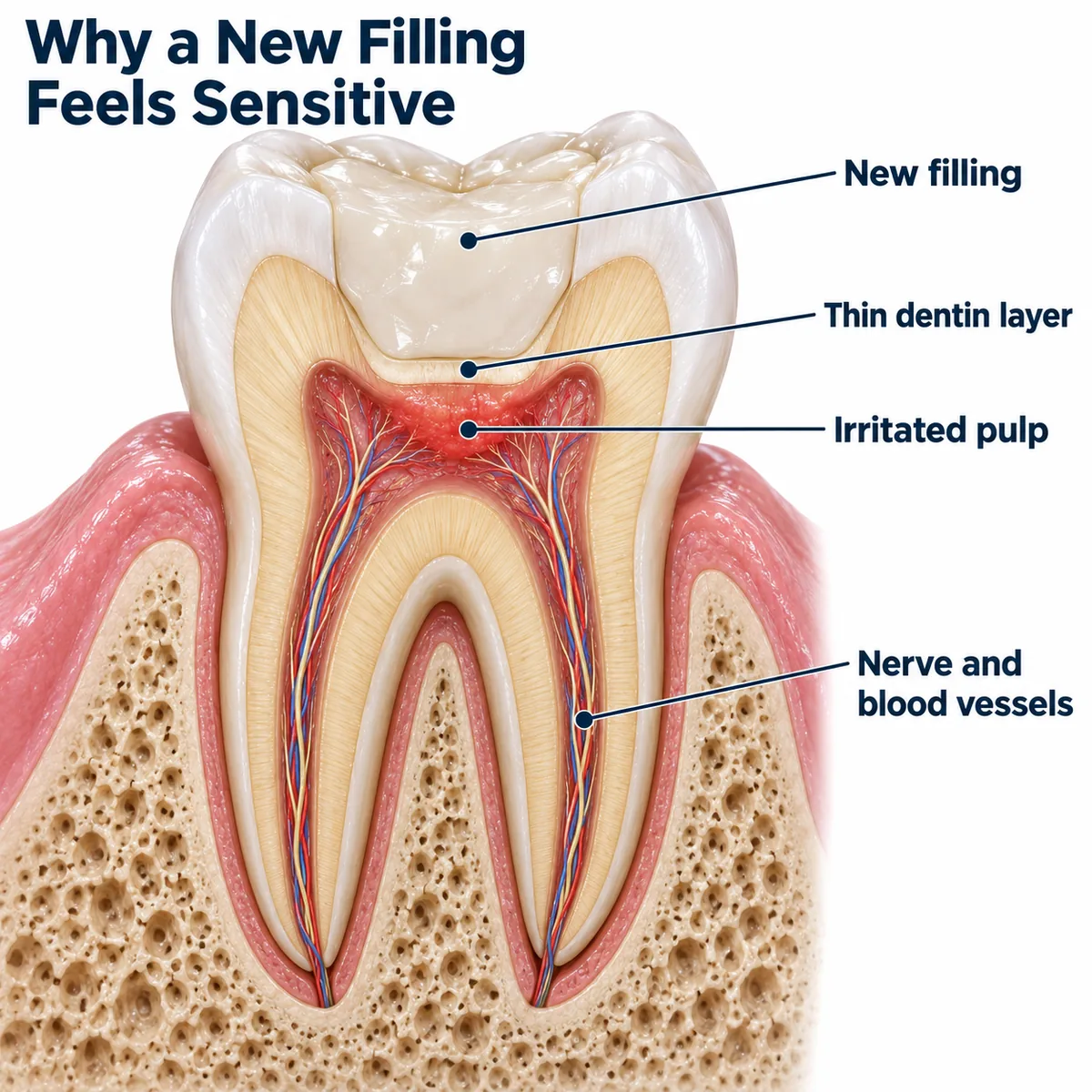
The work itself irritates the nerve. Removing decay with a drill creates heat and vibration, and the pulp inside the tooth reacts with mild inflammation that settles as it heals.
How deep the cavity went matters most. Under the enamel sits dentin, a layer full of tiny channels that carry hot and cold signals towards the nerve. A deep filling leaves only a thin layer of dentin over the pulp, so cold reaches the nerve faster and the twinge takes longer to settle.
Two other causes are worth knowing:
- A high spot. A filling that sits slightly proud takes extra force each time you bite and bruises the ligament that holds the tooth. Our post on why a tooth hurts when you bite down covers this pain in more detail.
- A reaction to the material. An allergy to a filling material is rare. Tell your dental team and your doctor about a rash or itching near the tooth. Sudden swelling of your lips or tongue with a rash or itching is an emergency, so call 911.
How long does sensitivity last after a filling?
Mild sensitivity to cold should ease a little each day and fade within a week or two.
A tooth that feels the same after two weeks, or worse after a few days, has a cause that needs finding.
What can you do at home to ease the sensitivity?
Treat the tooth gently for a few days:
- Choose lukewarm food and drinks. Very hot or iced drinks are the most common trigger.
- Go easy on acidic food and drinks. Citrus fruit, pop and wine can sharpen the zing.
- Use a toothpaste for sensitive teeth. Pastes with potassium nitrate are designed to calm the signal from the nerve.
- Chew on the other side. Give the filled tooth a rest from hard and sticky food.
- Take pain relief if you need it. Acetaminophen or ibuprofen helps if those medicines are safe for you.
When is sensitivity after a filling a sign of a problem?
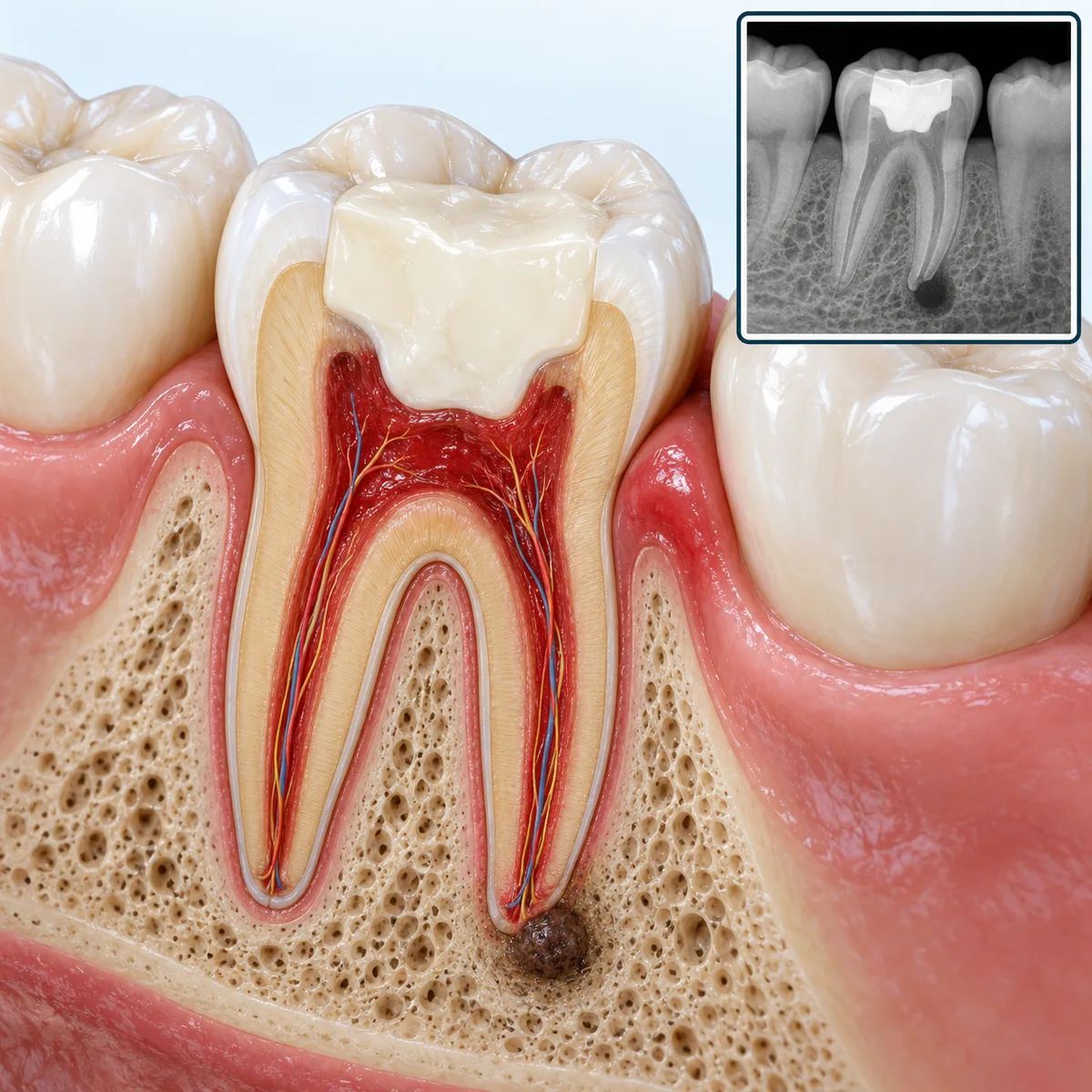
Sensitivity is a problem when it is severe or keeps getting worse. It points to a high bite, a failed filling or a nerve that cannot recover.
Call the clinic if you notice any of these:
- Your bite feels high or uneven once the freezing wears off.
- A twinge from cold or heat lasts long after you swallow.
- Pain builds over several days instead of easing.
- The tooth throbs on its own or wakes you at night.
- The filling feels rough, cracked or loose.
Pain that lingers after something hot or cold can mean the nerve is badly inflamed and the tooth needs root canal treatment. A tooth that suddenly stops hurting has not healed either, because a dead nerve sends no pain while the infection at the root keeps going.
Swelling in your gum or face, a fever or a bad taste that will not shift means infection, so call us the same day. Keep heat off your face. When the clinic is closed, use an after-hours dental service and phone us once we open. Call 911 if you are drooling because you cannot manage your saliva or your voice sounds muffled.
What can your dentist do about a sensitive filling?
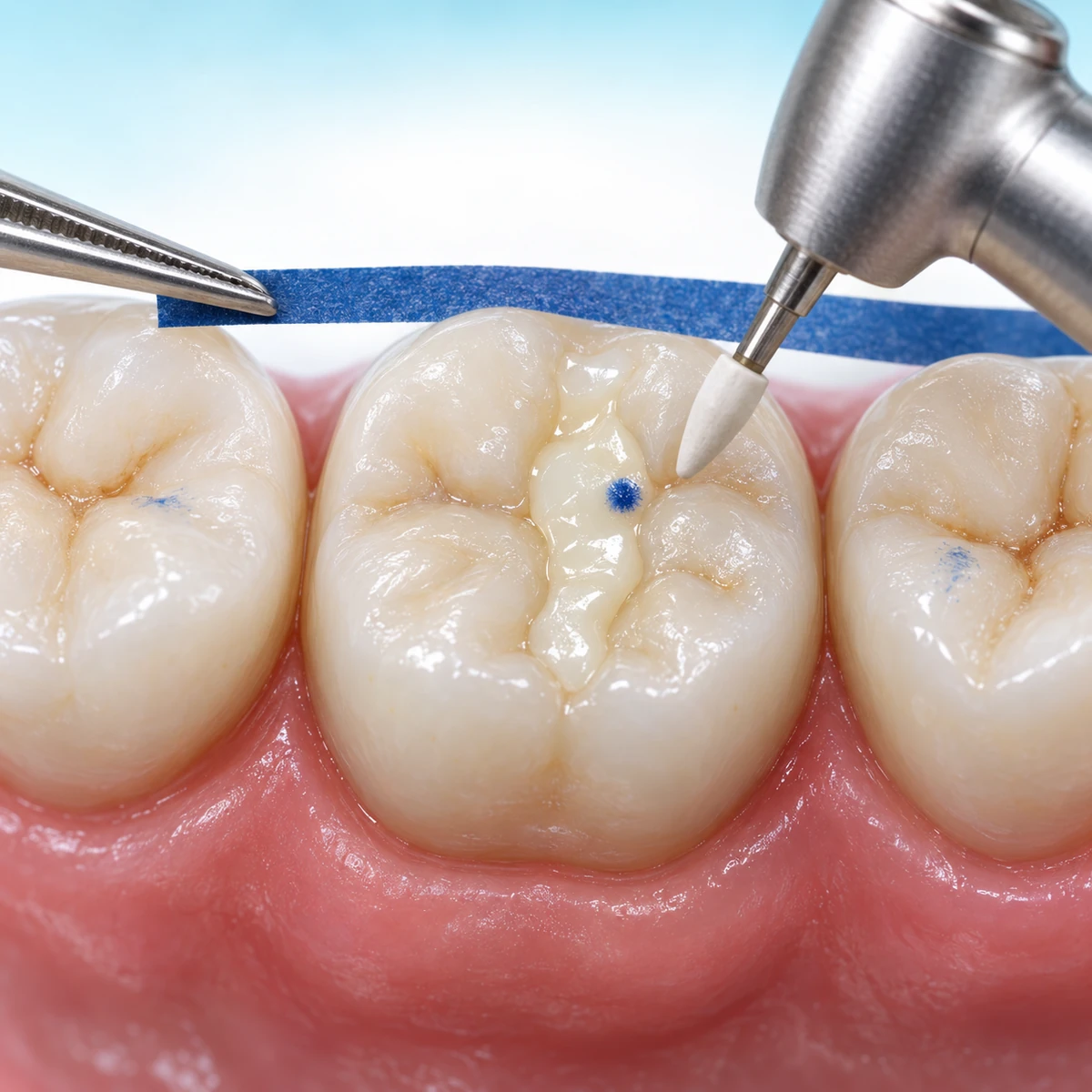
The fix depends on the cause. Your dentist checks your bite and the filling and takes an x-ray if the nerve is in question.
- Bite adjustment. You bite on a thin strip of marking paper, the high spot shows up as a dark mark, and the dentist smooths it down.
- Repairing or replacing the filling. A filling with a crack or a gap at its edge is redone so it seals the tooth again.
- Root canal treatment. When the nerve cannot recover, the inside of the tooth is cleaned and sealed, and most back teeth then need a crown.
- Removing the tooth. An extraction is the last option.
Dentistry on Britannia in Mississauga bills insurers directly and gives you a written estimate before any new treatment starts. Regular checkups find decay while it is small, and a shallow filling is easier on the nerve.
Frequently asked questions
Is it normal for a tooth to hurt when biting after a filling?
A sore gum is normal for a week or two. A sharp pain each time you bite points to a high spot, so call and have your bite checked instead of putting up with it.
Why is my filled tooth still sensitive to cold weeks later?
Mild cold sensitivity should fade within a week or two. Sensitivity that stays the same or gets worse after that needs a check.
Do metal fillings cause more sensitivity than white fillings?
Metal carries heat and cold more readily than tooth-coloured composite, so a metal filling can pass temperature changes to the tooth faster. Composite is the standard choice at our clinic.