
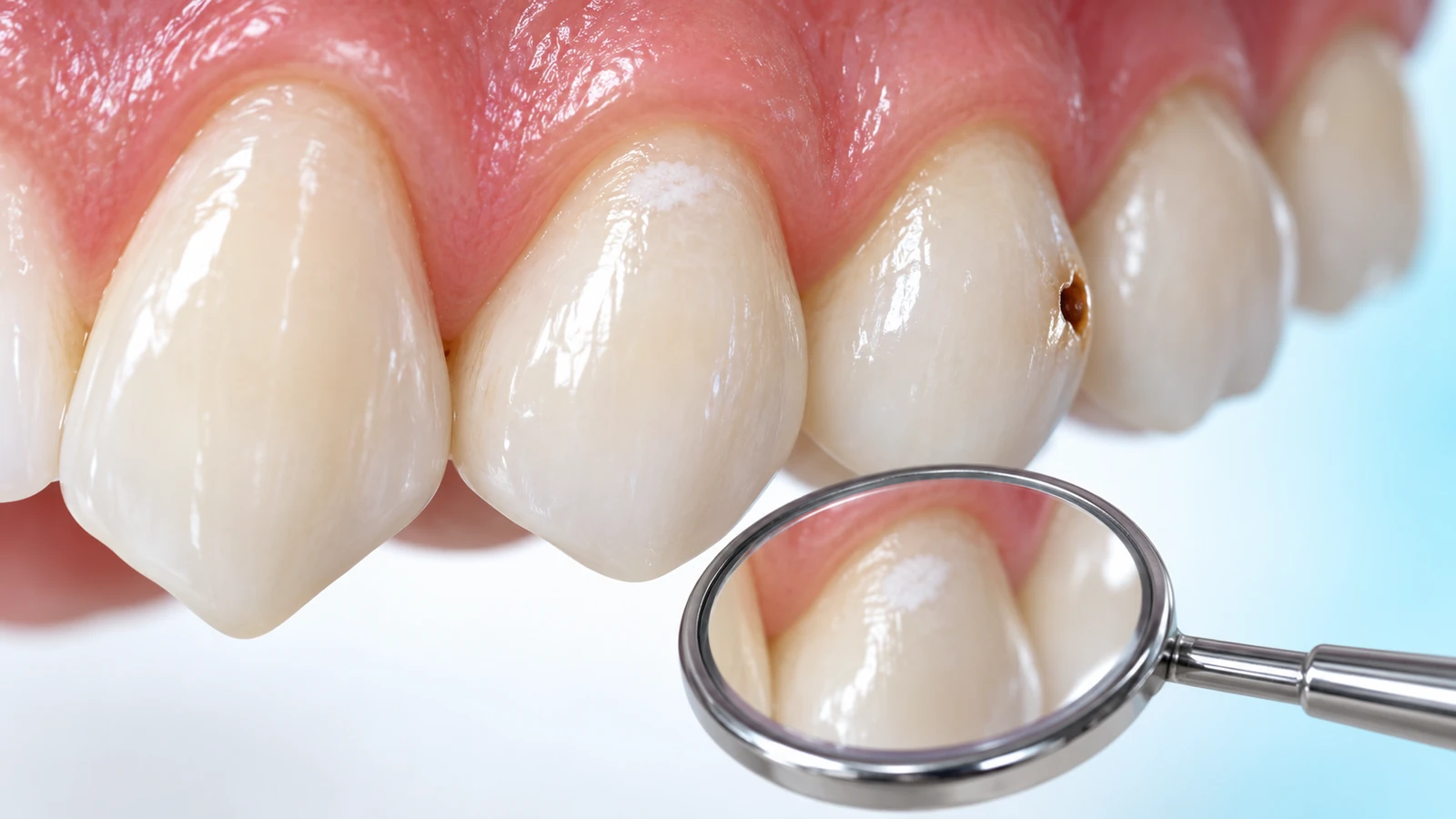
Here is how to tell the two apart, and what to do about each one.
Key takeaways
- Early decay can reverse. A white spot under a whole surface can take minerals back in and harden.
- A hole cannot grow back. Lost tooth structure does not grow back, so a true cavity needs a dentist.
- Fluoride helps the repair. Toothpaste, tap water and an office varnish all help minerals return to the surface.
- Waiting can make the job bigger. A small filling left too long can turn into a crown or a root canal.
Can a cavity really heal by itself?
No. A cavity is a spot where tooth structure is gone, and lost tooth structure does not grow back. The stage before the hole is different, because it can still be stopped and reversed.
Your enamel loses and gains minerals every day. Plaque bacteria turn sugar into acid, and that acid draws calcium and phosphate out of the tooth. Saliva returns some of those minerals between meals, and when the losses keep winning, a weak patch forms just under the surface.
At that point the outer layer is still whole, so minerals can move back in and the patch can harden again. When the surface finally gives way and a hole opens, the damage is permanent and brushing cannot fill the gap.
What is the difference between early decay and a cavity?
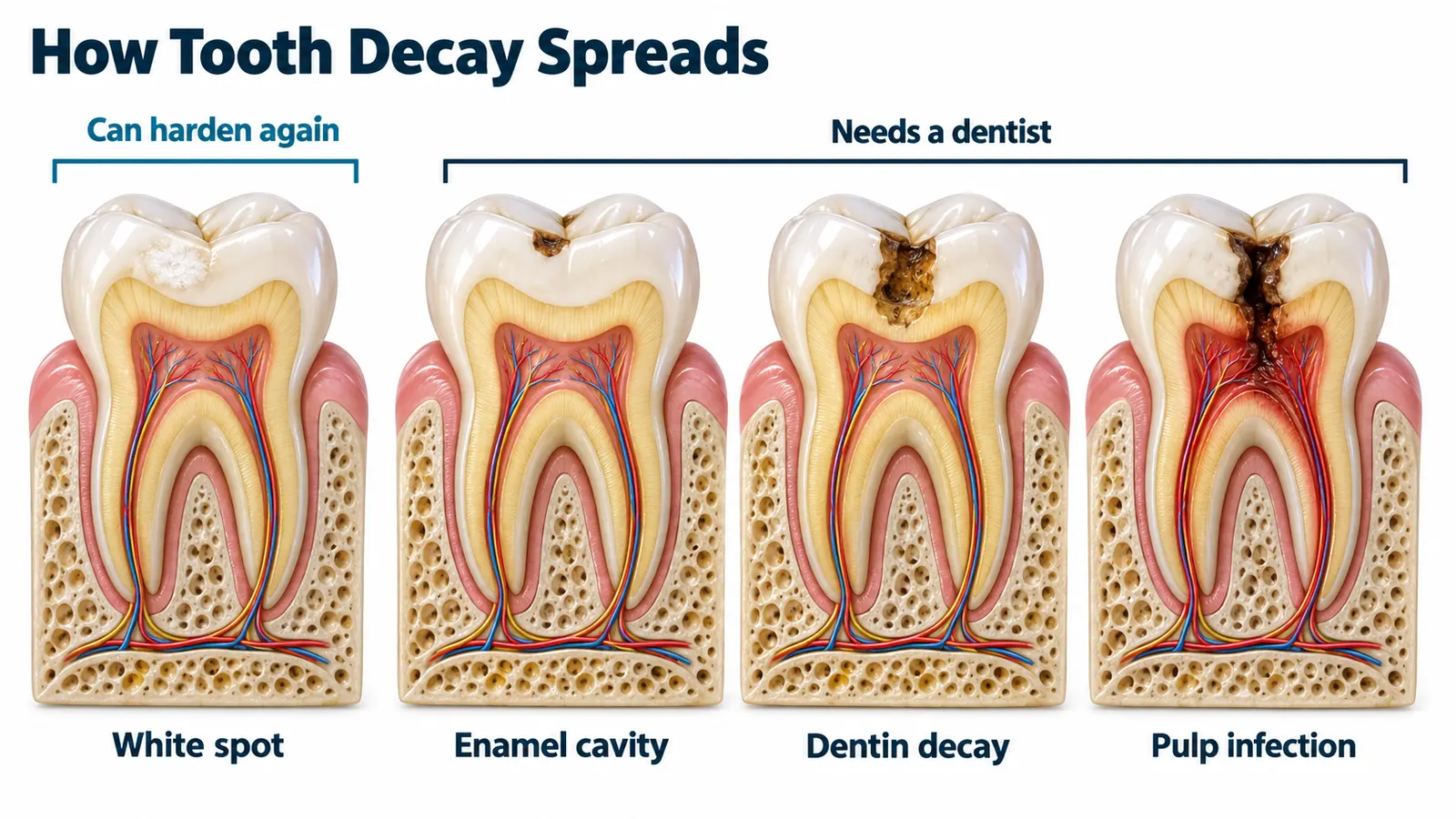
Early decay is a chalky white spot on enamel that still feels smooth. A cavity is a real opening in the tooth that keeps spreading inwards through these layers:
- White spot. Minerals are lost below a surface that is still intact. This is the only stage that can harden again.
- Enamel cavity. The surface breaks and a small hole forms in the hard outer layer.
- Dentin decay. The decay reaches the softer layer under the enamel and keeps working inwards towards the nerve.
- Pulp infection. Bacteria reach the nerve and blood vessels in the centre of the tooth, and pain and swelling can follow.
Not every white mark on a tooth is decay, so let your dentist look at the spot and tell you what it is.
How can you tell if you have a cavity?
You cannot always tell on your own. Most cavities show up at a checkup or on an x-ray before you notice anything at all.
When a cavity does give a sign, it is a twinge from cold, hot or sweet food that lasts after you swallow. A brown or black spot, food that catches in the same gap or a tooth that is sore to chew on are other signs.
Decay hiding between two teeth or below an old filling stays out of sight in the mirror, and your dentist finds it with x-rays chosen for your risk at a dental exam. If biting is what hurts, our post on pain when you bite down covers the other causes.
How do you help early decay harden again?
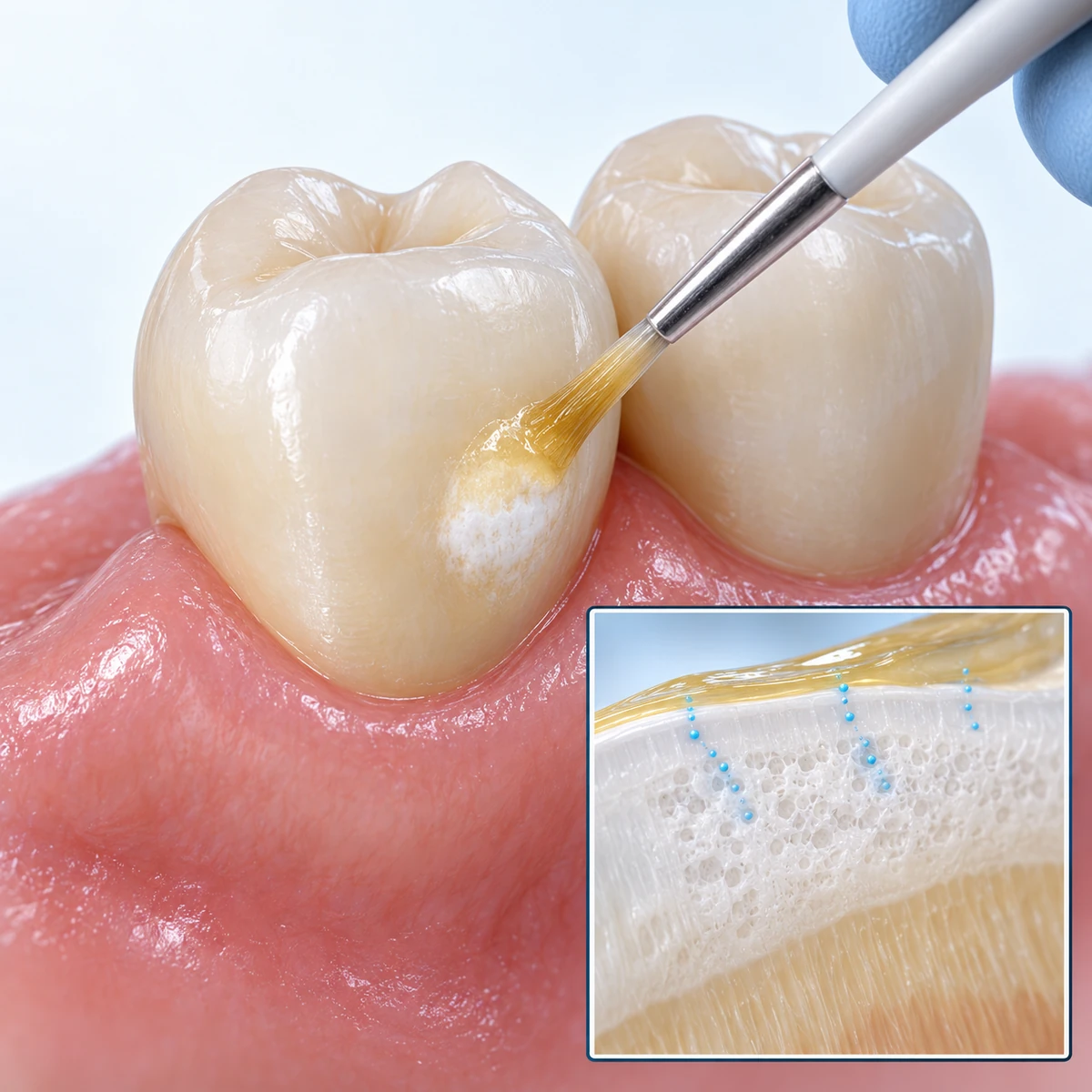
Get more fluoride onto the tooth and give it longer breaks from acid, so saliva and fluoride can rebuild the surface before it breaks.
- Brush twice a day with fluoride toothpaste. Spit out the extra and skip the rinse, so the fluoride stays on your teeth.
- Keep sugar to mealtimes. The number of sugar hits matters more than the amount, because each snack or sweet drink starts a new acid attack.
- Drink tap water between meals. Mississauga tap water is fluoridated and has no sugar.
- Ask about fluoride varnish. A fluoride treatment at the clinic holds a strong dose against the enamel for hours.
- Seal the deep grooves. Fluoride does a poor job in the grooves of back teeth, and a dental sealant covers them.
Your dentist checks the white spot again at later visits to see if it has hardened or grown. None of these steps fills a hole, because fluoride cannot rebuild a surface that has already broken down.
What happens if you leave a cavity alone?
Decay that has reached the dentin keeps growing. It does not repair itself and keeps moving inwards towards the nerve.
A small filling can turn into a larger one over time, and a larger one can need a crown. Once bacteria infect the nerve, the choice is root canal treatment or removing the tooth.
Pain that fades is not a sign of healing either, because a dying nerve goes quiet while the infection at the root end keeps going. Swelling in your gum or face means infection has spread past the tooth, so call us the same day. Do not put heat on your face, and if we are closed, use an after-hours dental service and call us when we open. Our guide on when a dental problem is an emergency explains the other urgent signs.
How does a dentist fix a cavity?
A dentist removes the decay and rebuilds the tooth. A small cavity needs one filling, and tooth-coloured composite is the standard choice.
A bigger hole needs an inlay, an onlay or a crown. Dentistry on Britannia in Mississauga offers direct insurance billing, and you get the plan and a written estimate before any work starts.
Frequently asked questions
Can brushing get rid of a cavity?
No. Brushing with fluoride toothpaste helps an early white spot harden but cannot fill a hole that has already formed.
Can a white spot on a tooth go away?
A white spot from early decay can harden and stop growing with fluoride and fewer sugar hits. Have your dentist check it, because not every white mark is decay.
How long can a cavity go without treatment?
There is no safe waiting period, because some cavities grow slowly and others grow fast and none of them repair themselves.