
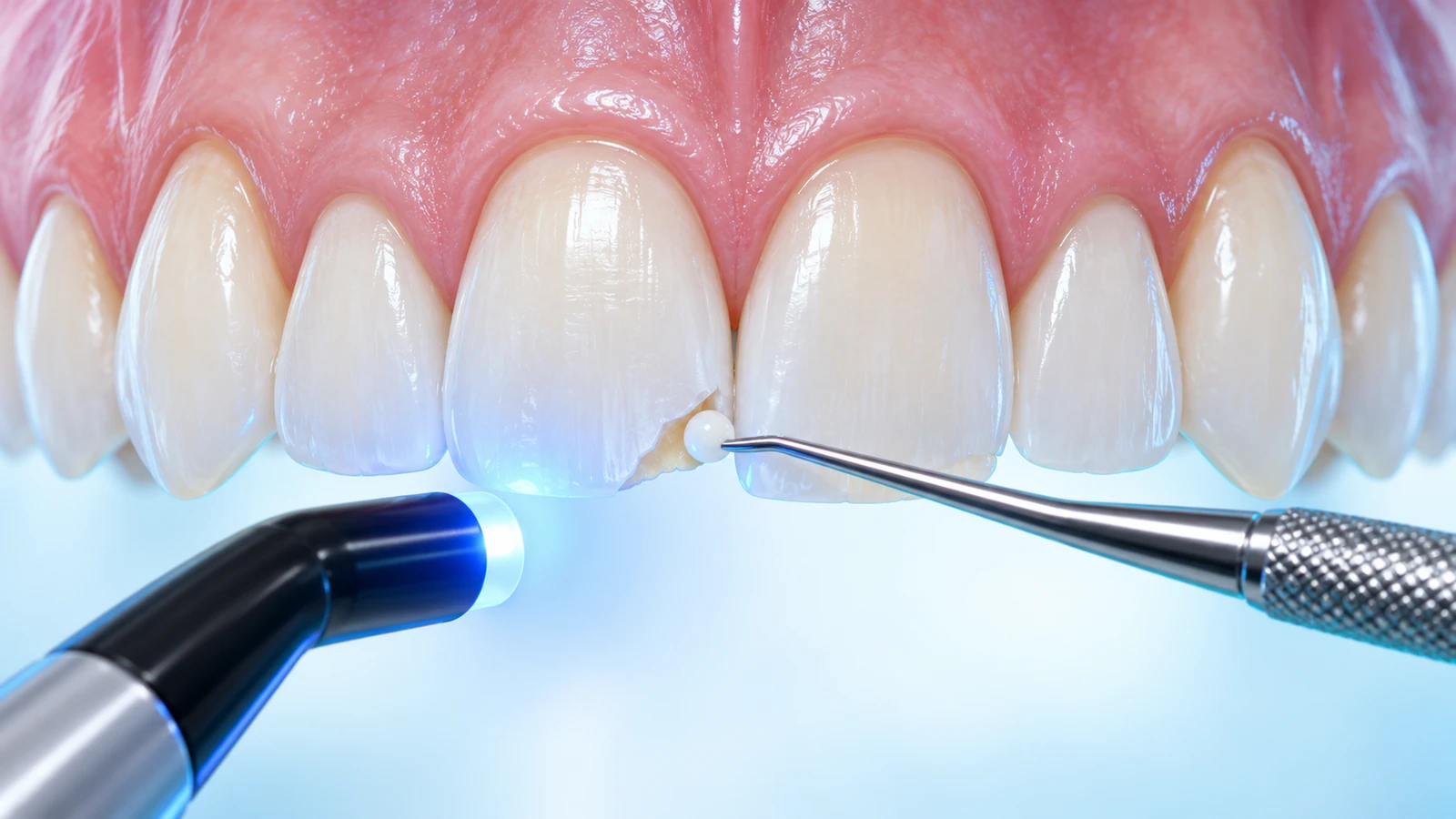
Here is what to do first, which chips need care today and how each repair works.
Key takeaways
- A painless chip still needs a check. Enamel has no nerves, so a deep chip can feel like nothing at first.
- Keep the broken piece in milk. Bring it with you to your visit.
- Small chips suit bonding. Larger breaks can need a veneer or a crown.
- Pink or red inside the break is urgent. It can mean the nerve is showing.
What should you do right after you chip a tooth?
Check for other injuries first and then protect the tooth:
- Rinse your mouth gently with warm water.
- Keep any broken piece you find in milk and never wrap it in tissue.
- Press clean gauze on any bleeding for a few minutes.
- Cover a sharp edge with orthodontic wax or sugar-free gum so it stops cutting your tongue.
- Chew on the other side and skip hard foods.
- Ask a pharmacist which pain reliever is safe for you and keep to the dose on the pack.
Is a chipped tooth an emergency?
A chip needs care the same day if the inside shows, it bleeds or it hurts a lot. A tooth that feels loose or has moved after a knock is a same-day problem, and a knocked-out adult tooth needs care within the hour. Dentistry on Britannia in Mississauga sees dental emergencies during opening hours only. Our guide on when a dental problem is an emergency lists more signs.
How deep did the chip go?
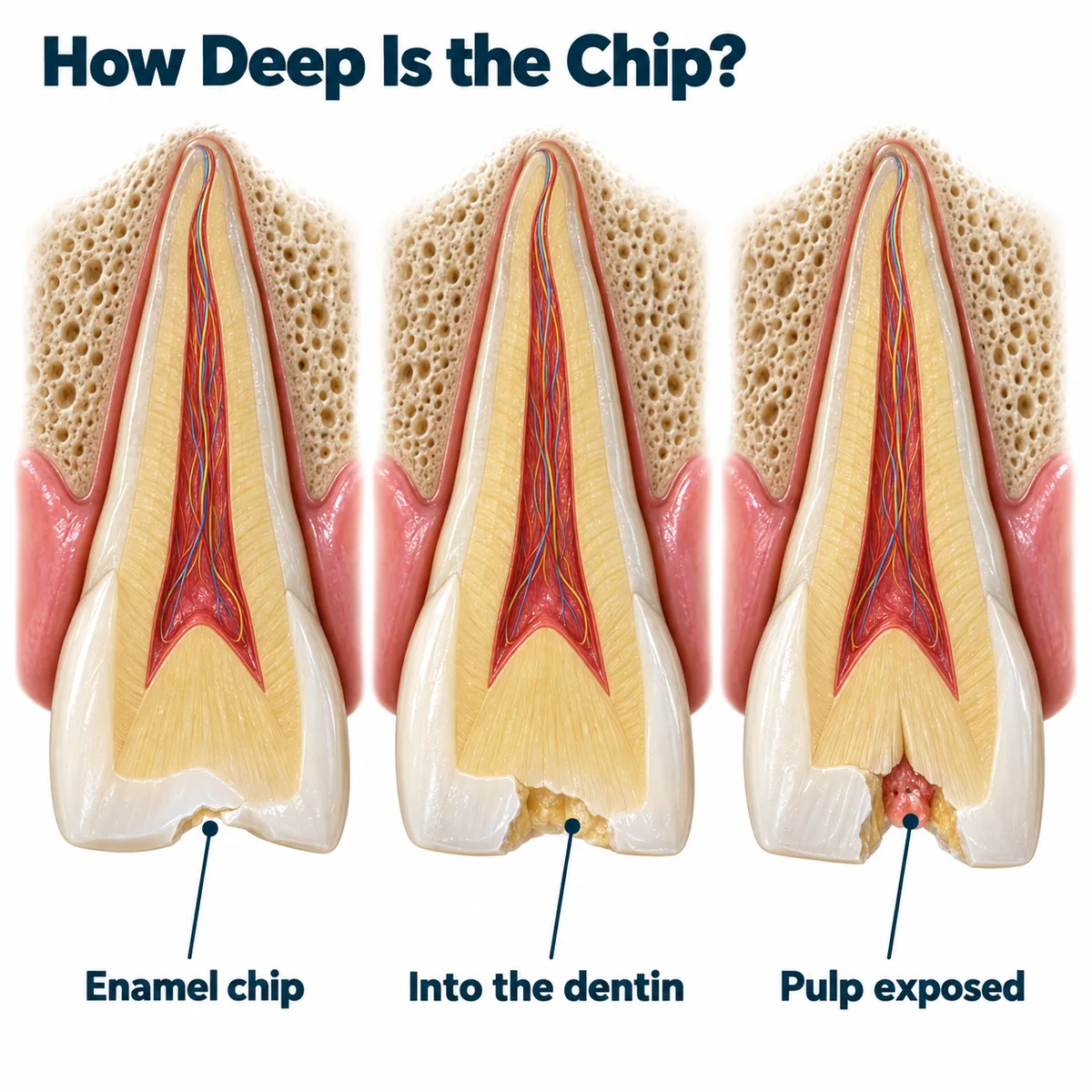
The depth of the break decides the repair, and your dentist checks it with a close look and an x-ray when needed.
- Enamel chip: only the hard outer layer is gone, so the edge feels rough but rarely hurts.
- Into the dentin: the yellower layer under the enamel shows, and hot or cold drinks can sting.
- Pulp exposed: the break reaches the soft centre with the nerve, and the tooth can need root canal treatment.
A chip can also hide a deeper crack, as our post on why a tooth hurts when you bite down explains.
Which repair fits your chip?
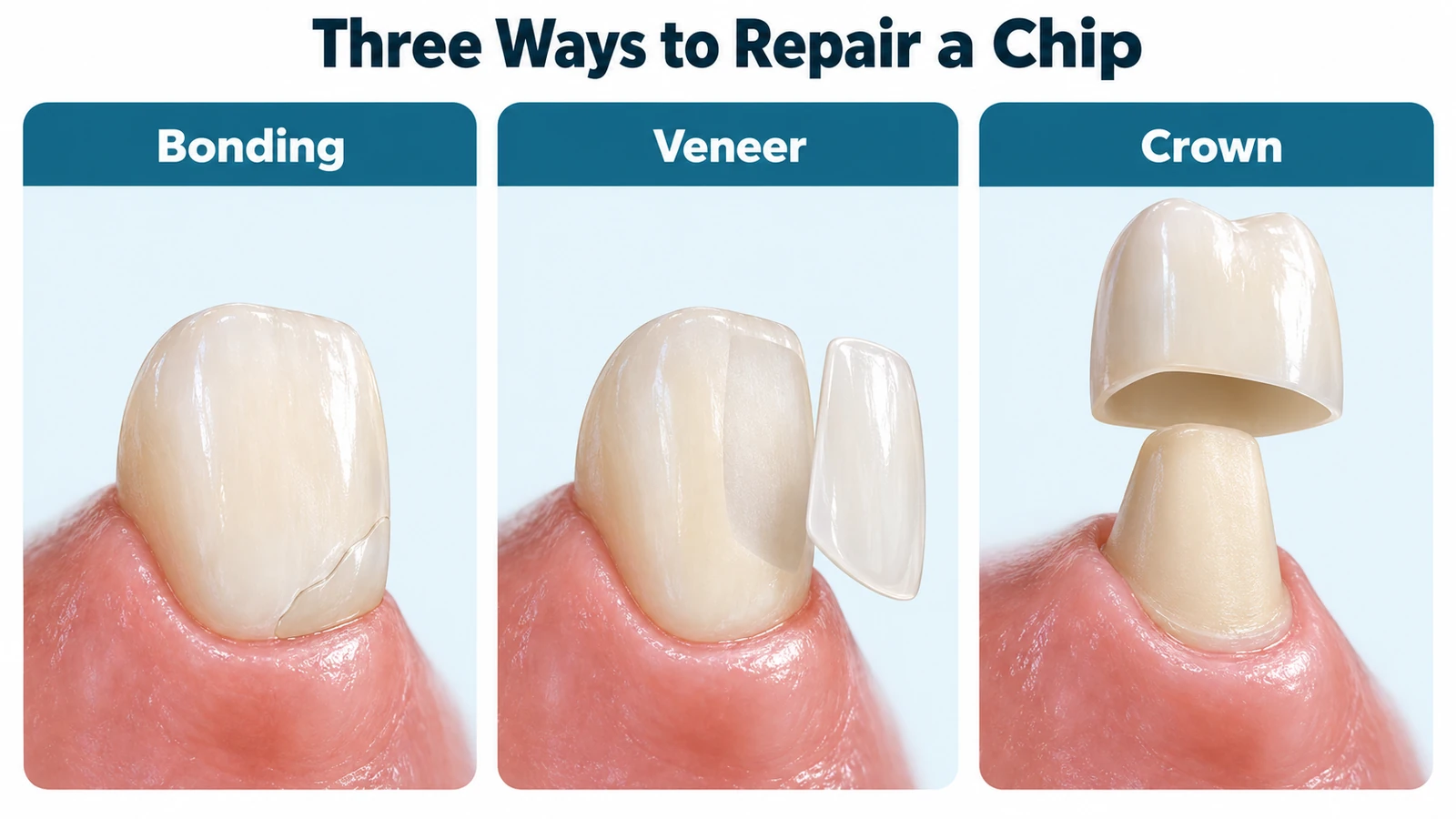
Small chips on front teeth suit bonding, and bigger breaks need a cover that adds strength.
Dental bonding is tooth-coloured resin shaped onto the tooth and set hard with a blue light in one short visit. A veneer is a thin porcelain shell on the front of the tooth. It needs a layer of enamel removed for good. A dental crown covers the whole tooth and suits a large break or a broken-off cusp.
| Your chip | Usual first choice | Why |
|---|---|---|
| Small corner off a front tooth | Bonding | Quick, and almost nothing comes off the tooth |
| Large break or a broken-off cusp | Crown | Holds the tooth together under chewing force |
| Break that reaches the nerve | Root canal treatment, then a crown | Treats the pulp before the tooth is rebuilt |
What does chipped tooth repair cost?
Composite bonding in the Mississauga area runs about $300 to $600 per tooth, and a porcelain crown about $1,100 to $1,400. These are area prices and not this clinic's fees, so your written estimate is the figure that counts. The CDCP lists composite fillings on permanent teeth for people who qualify. It allows one per surface every 24 months with any co-payment. It never pays for cosmetic work or veneers.
How can you avoid chipping a tooth again?
Wear a sports mouthguard for contact sports and never open packages with your teeth, and if you grind, ask about a night guard.
Frequently asked questions
Can a chipped tooth heal on its own?
No, because enamel does not grow back, so a chip stays until it is repaired.
Can I fix a chipped tooth at home?
No, because wax or sugar-free gum only covers a sharp edge for a short time until a dentist rebuilds the tooth.
Does dental bonding look natural?
Bonding resin is shaded to match the teeth beside it and polished, but it can stain over the years and need touch-ups.
What should I do if a child chips a baby tooth?
Keep any piece and call the clinic the same day if the inside shows or it bleeds or hurts. Never put a knocked-out baby tooth back, and treat any head injury first.