
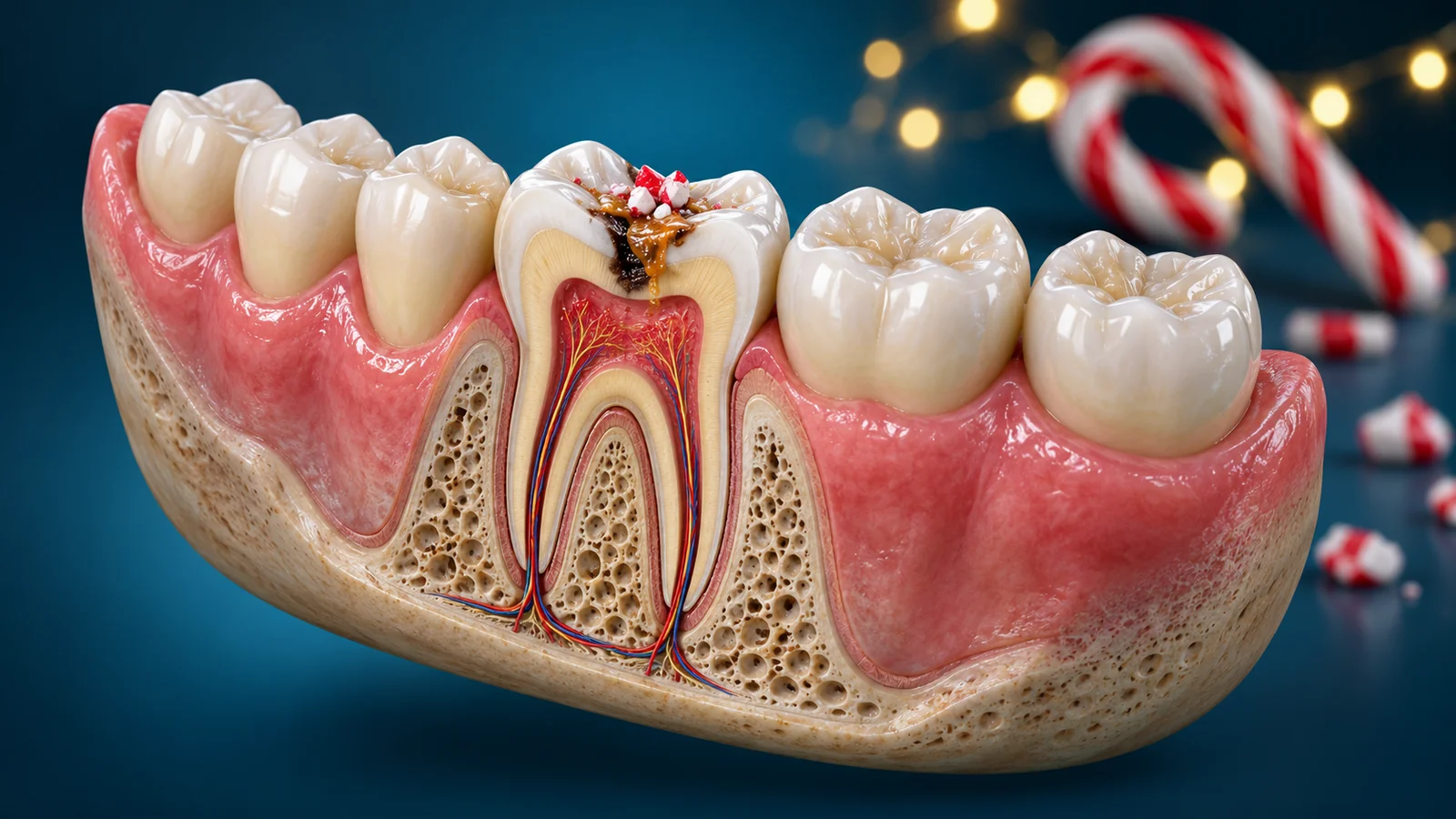
The holidays stretch over weeks of parties and cookie tins, so small habits add up fast. Here is how to protect your teeth until the new year.
Key takeaways
- Frequent snacking matters more than the amount. Every sweet snack starts a new acid attack on your enamel.
- Sticky and hard candies linger. Toffee and candy canes keep sugar on your teeth the longest.
- Drinks count too. Eggnog and hot chocolate coat your teeth in sugar with every sip.
- Your routine is your best defence. Brush twice a day with fluoride toothpaste and clean between your teeth once a day.
Why do Christmas sweets cause tooth decay?
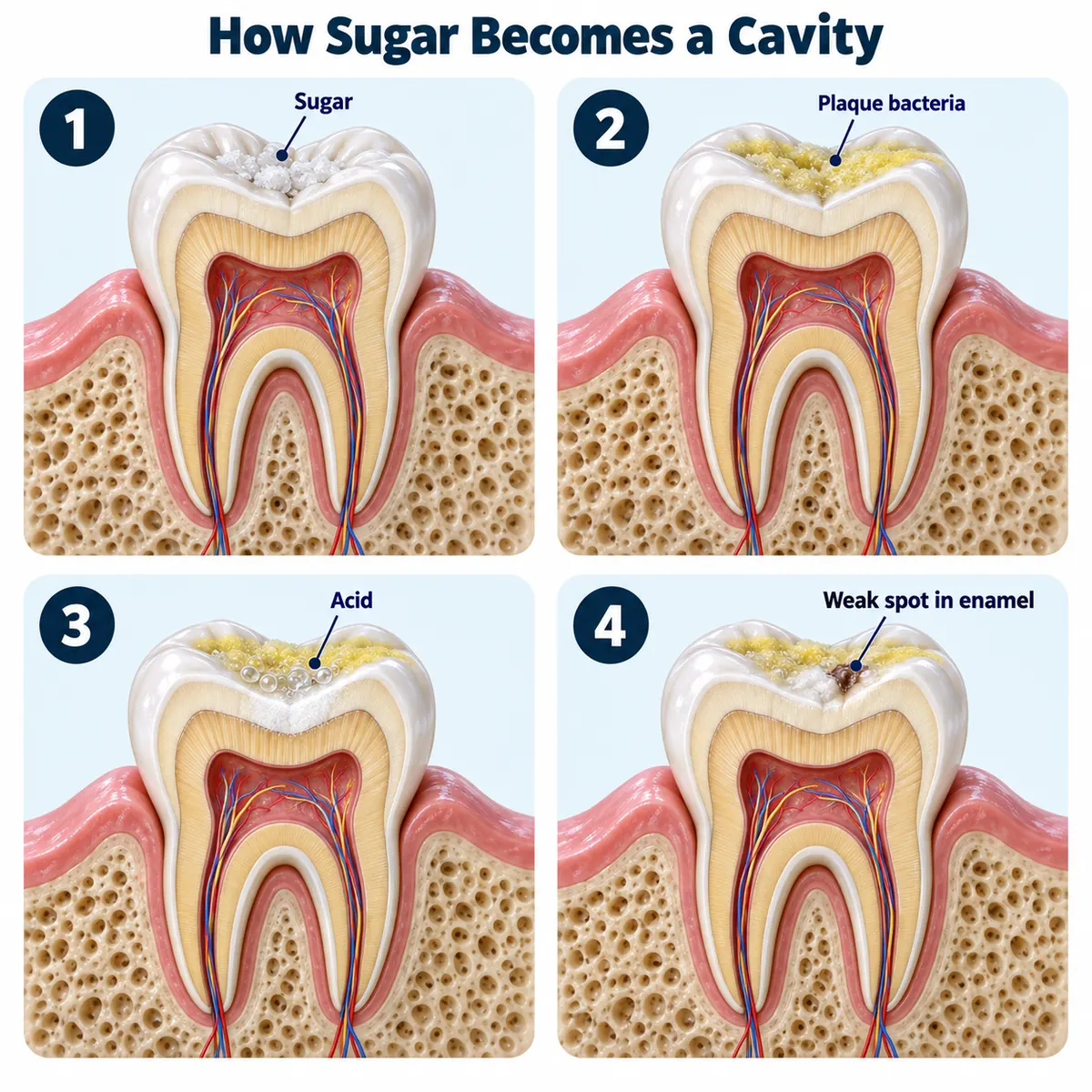
Sweets cause decay because the bacteria in plaque feed on sugar and make acid. That acid pulls minerals out of your enamel. Repeated attacks can turn a small weak spot into a cavity.
Saliva slowly washes the acid away and helps put minerals back into the enamel. Trouble starts when the next treat arrives before your saliva has caught up. Enamel cannot grow back once a cavity forms, so your dentist will check it and talk about a filling or other repair.
Which holiday treats are hardest on your teeth?
The hardest treats are the ones that stick to your teeth or stay in your mouth for a long time. Plain chocolate eaten with a meal is easier on your teeth.
| Treat | Why it is hard on teeth | Easier choice |
|---|---|---|
| Toffee, caramel and fudge | Sticks in the grooves and between teeth | Plain chocolate that melts off faster |
| Candy canes and hard candy | Dissolves slowly and can crack a tooth if you bite down | Choose plain chocolate after a meal |
| Eggnog, hot chocolate and cider | Sugar reaches every tooth with each sip | Finish the drink with food |
Cheese and nuts make good party snacks between the sweets. They have little sugar and chewing them gets saliva flowing.
Does it matter when you eat holiday sweets?
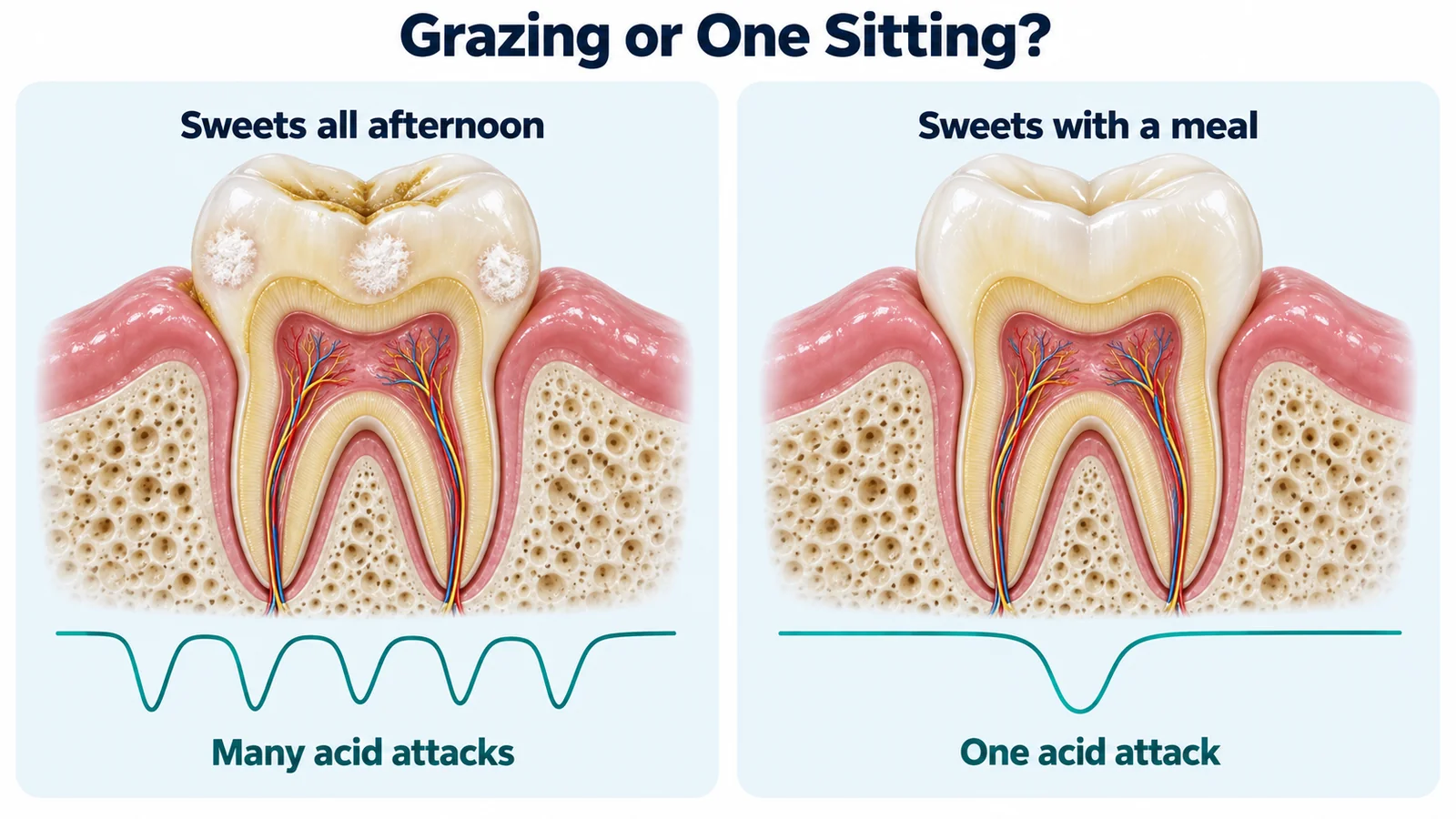
Yes. Eating sweets in one sitting with a meal is kinder to your teeth than grazing on them all afternoon. A meal gets more saliva flowing and one sitting means one acid attack instead of many.
Keep the cookie tin out of sight between meals so nibbling does not become an all-day habit. Finish a sweet drink with your food instead of nursing it for an hour.
How can you protect your teeth at holiday parties?
You can protect your teeth by rinsing with water and chewing sugar-free gum between treats.
- Rinse with water after sweets to wash sugar off your teeth.
- Chew sugar-free gum for a few minutes after eating to get saliva flowing.
- Wait before you brush after acidic drinks. Our fall dental care tips explain why.
Keep brushing twice a day with fluoride toothpaste and clean between your teeth once a day, even after late nights. If you get cavities easily, ask about fluoride treatment for extra protection.
At Dentistry on Britannia in Mississauga, a checkup and teeth cleaning before the holidays can catch early weak spots and clear away hardened tartar.
How do you keep children's teeth safe from holiday candy?
Keep hard candy, candy canes and whole nuts away from young children because they are choking hazards. Choose small, soft treats for little ones and hand them out after a meal.
Fill stockings with small toys and a new toothbrush along with a few treats. Help younger children brush and floss until they can do a good job on their own. If your child chips or knocks out a tooth, call us right away. Ask our children's dentistry team whether sealants suit their back teeth.
What should you do if you crack a tooth on hard candy?
Call the clinic if you crack or chip a tooth on a candy cane or a piece of nut brittle. Avoid chewing on that side until a dentist has checked it.
A crack needs an exam even if it does not hurt. Our guide on when a dental problem is an emergency covers the signs to watch for. The clinic sees dental emergencies during opening hours only.
Frequently asked questions
Is chocolate better for your teeth than candy?
Plain chocolate melts and clears from your teeth faster than sticky or hard candy. It still contains sugar, so eat it with a meal and rinse with water after.
Are candy canes bad for your teeth?
Candy canes dissolve slowly and keep sugar on your teeth for a long time. Biting one can also crack a tooth, so choosing another treat is easier on your teeth.
Does sugar-free candy cause cavities?
Sugar-free candy does not feed plaque bacteria the way sugar does. Sour sugar-free candy can still be acidic, so rinse with water after you eat it.