
Movember puts men's health in the spotlight every November and your mouth belongs on that list too.
Key takeaways
- Bleeding gums are the first warning. Healthy gums do not bleed when you brush.
- Smoking raises your risk. It harms your gums and can hide the bleeding that would warn you of trouble.
- Lost bone does not grow back. Early care aims to stop gum disease before it reaches the bone.
How does gum disease start?
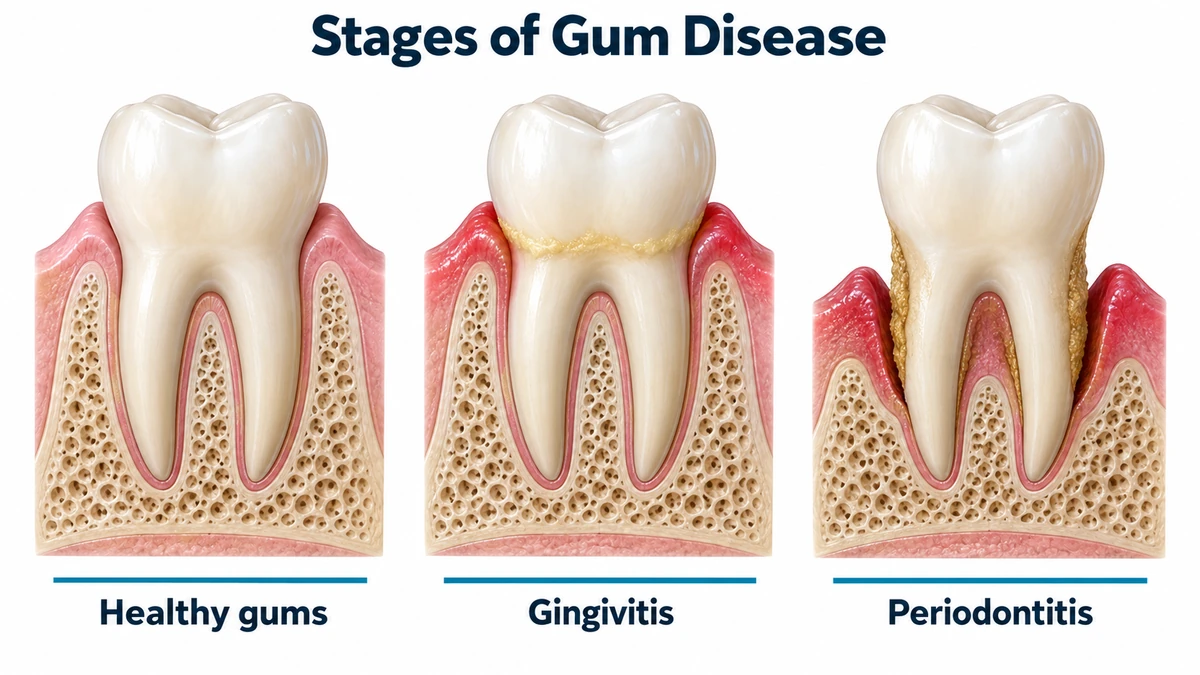
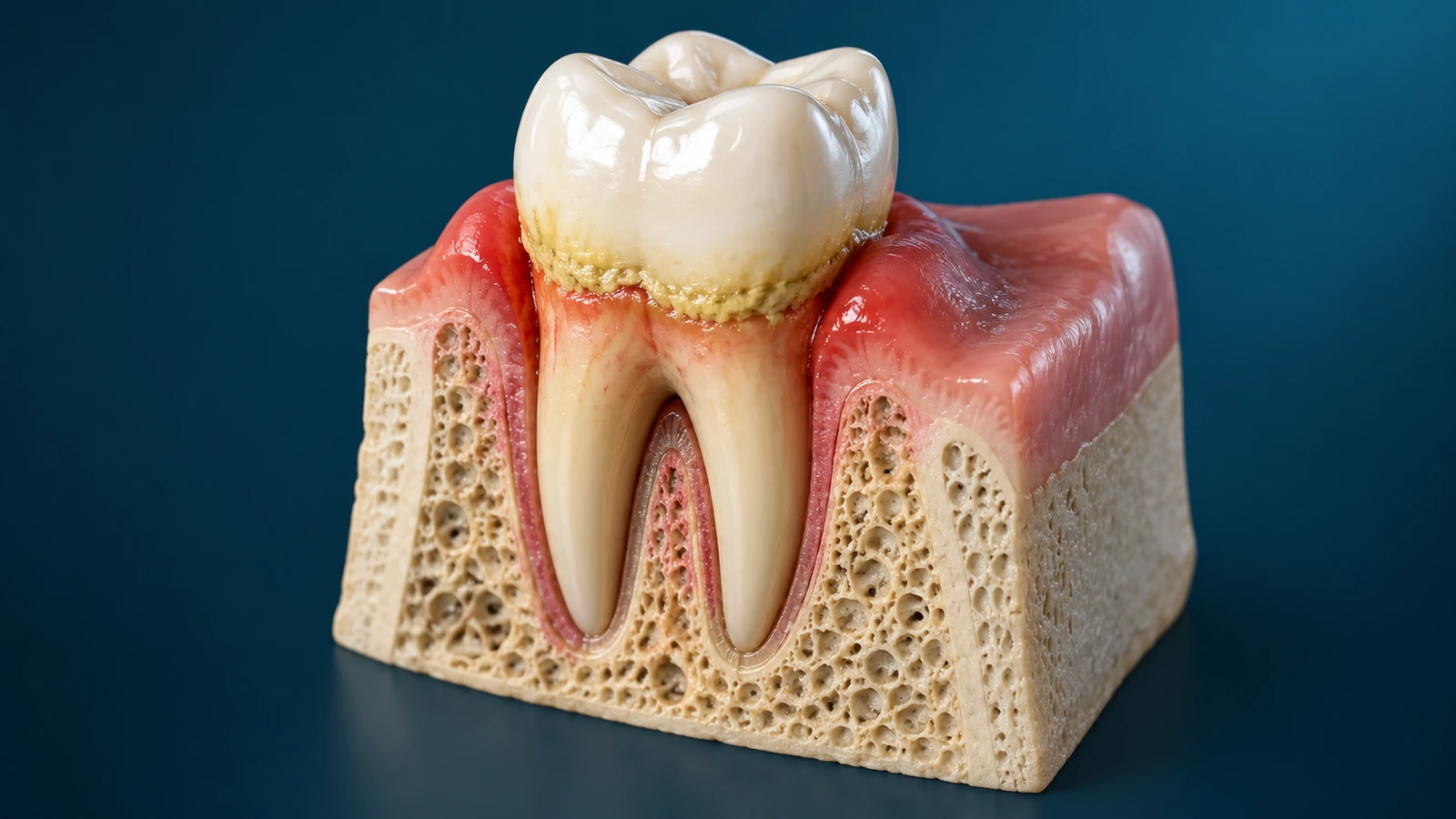
Gum disease starts when plaque sits along the gumline and inflames the gums. This early stage is gingivitis, when your gums turn red and bleed as you brush or floss. A professional cleaning and better habits at home reverse it.
Left alone, the inflammation spreads below the gumline as periodontitis. Pockets form between the gum and the tooth, and the bone that holds the tooth wears away. Once that bone is gone it does not grow back, so treatment aims to stop the loss. Deeper pockets call for scaling and root planing. Learn more about gum disease treatment.
How does smoking affect your gums?
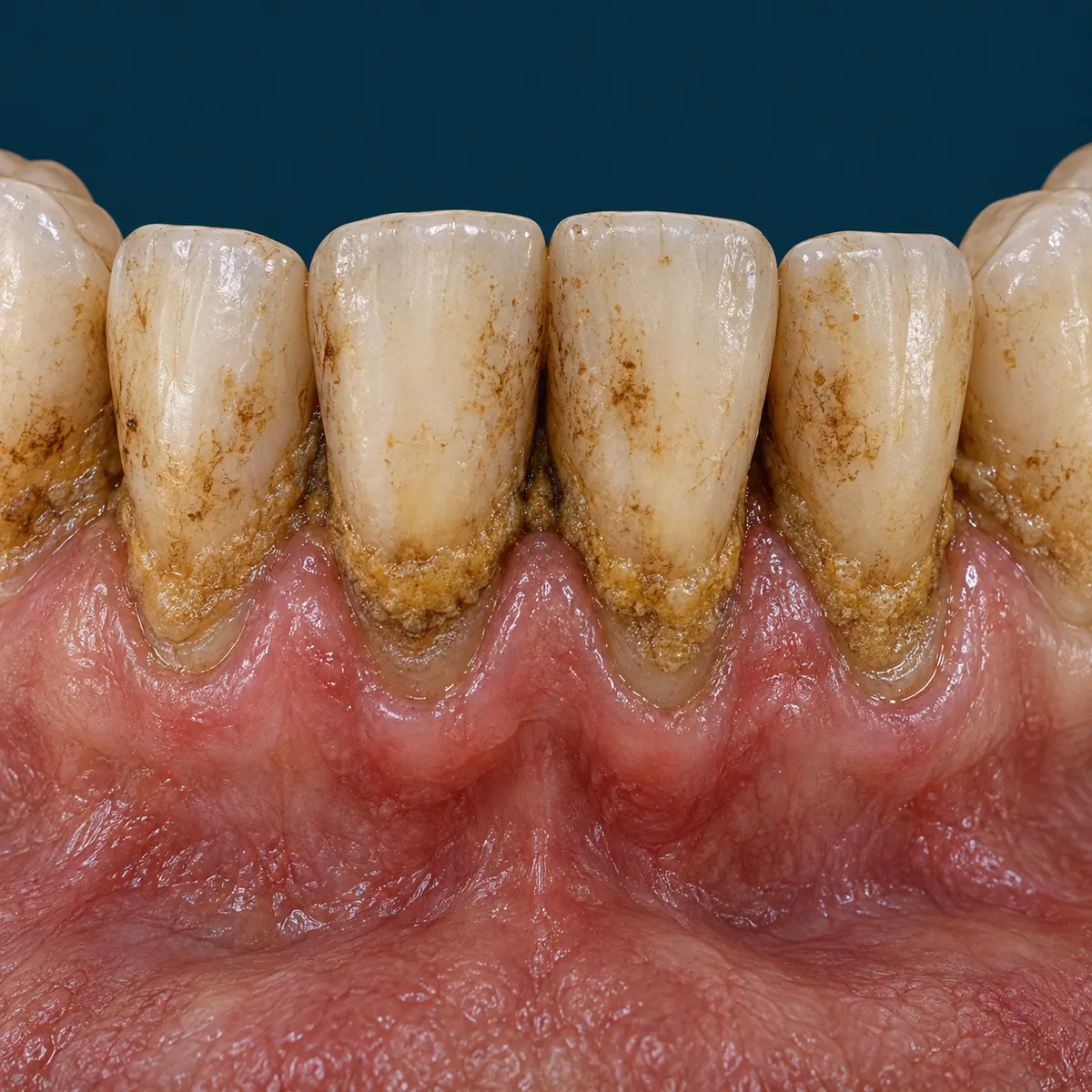
Smoking raises your risk of gum disease and can slow healing after treatment. It can also hide gum bleeding and let the disease progress without the usual warning.
Tobacco raises your risk of oral cancer as well. Smokers do best with shorter gaps between checkups, and your dentist sets that interval with you. Quitting helps your gums at any age and Health Canada's tools for a smoke-free life help you make a quit plan and find support.
Bleeding, swollen or shrinking gums and loose teeth are all reasons to book an exam.
If we are closed, use an after-hours dental service and call us when we open. Our guide on when a dental problem is an emergency explains the next steps.
What does a checkup look for?
A dental exam checks your teeth, your gums and the soft tissues of your mouth for changes. Your dentist measures the space between gum and tooth with a thin probe, because a deeper pocket is one sign of gum disease.
Dentistry on Britannia welcomes new patients across Mississauga for preventive care.
Frequently asked questions
Do I need a checkup if my gums do not hurt?
Yes. Early gum disease rarely hurts and bleeding when you brush is the usual first sign. An exam finds pockets and tartar that you cannot feel.
Can gum disease be reversed?
Gingivitis reverses with a cleaning and good brushing and flossing. Bone lost to periodontitis does not grow back, and treatment aims to stop further loss.
How often should men see the dentist?
Your dentist sets the interval from your gums, your decay risk and habits like smoking. Shorter gaps suit smokers and people with gum disease.