
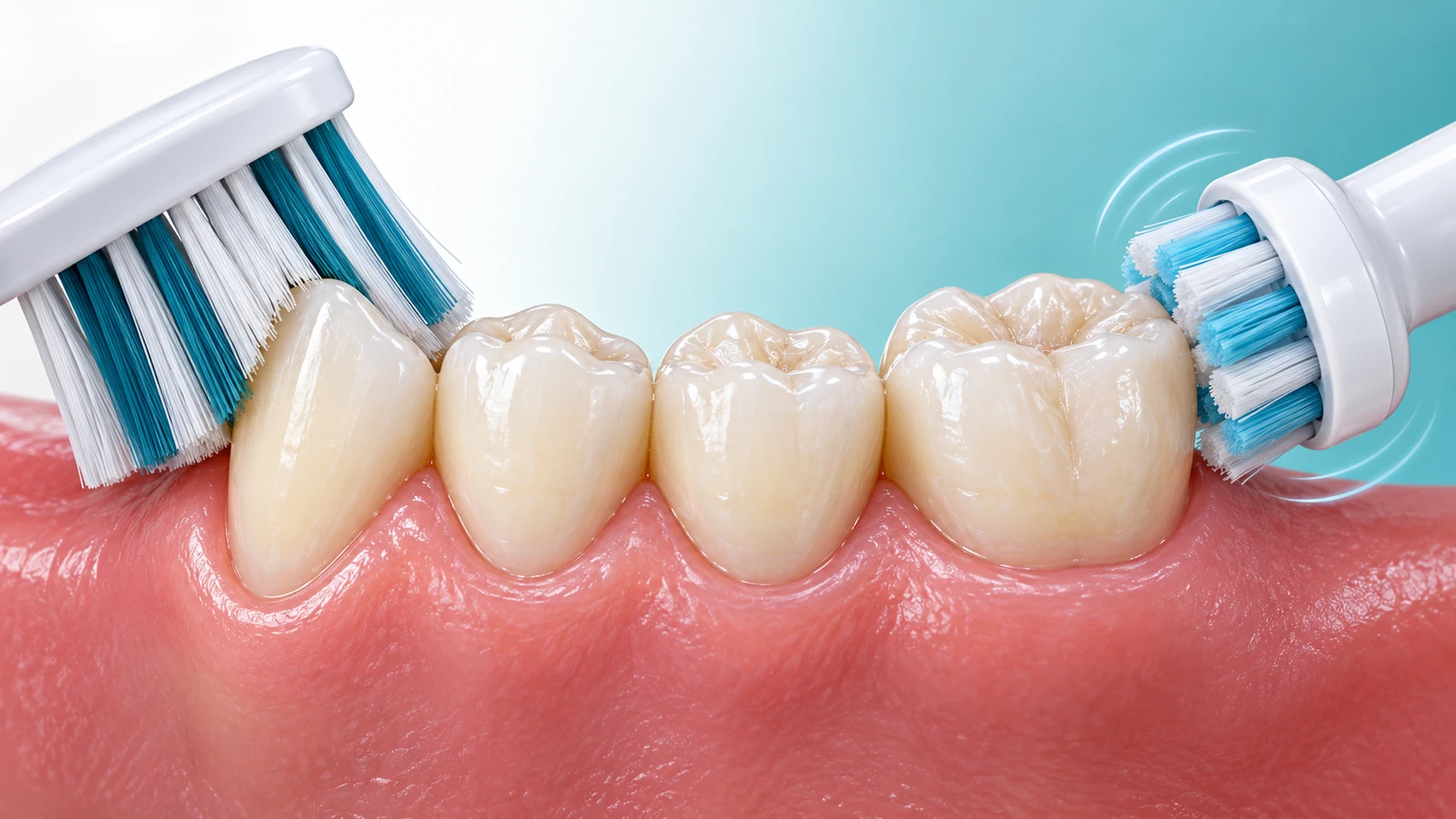
Here is how each type works, what each costs to keep up and who gains the most from a powered brush.
Key takeaways
- Both types work: good technique matters more than the motor inside the handle.
- Electric brushes have a small edge: studies link oscillating heads with less plaque and less gum inflammation.
- Some people gain more: braces, stiff hands and heavy brushing all favour a powered brush.
- Neither reaches everything: floss and regular cleanings cover the gaps a brush misses.
Is an electric toothbrush better than a manual one?
For plaque removal, yes, but only by a modest margin. Reviews of many trials found that powered brushes remove more plaque and cut gum inflammation more than manual ones. Brushes with a round head that turns back and forth did best.
That gap shrinks when you brush with care, because a manual brush moved slowly along every surface for the full two minutes keeps teeth and gums healthy. The motor mainly makes good brushing easier to repeat each day.
Plaque is the soft film that forms on your teeth within hours of brushing. Left in place, it feeds decay and early gum disease. The goal of any brush is to lift it off before it hardens.
How does each brush clean your teeth?
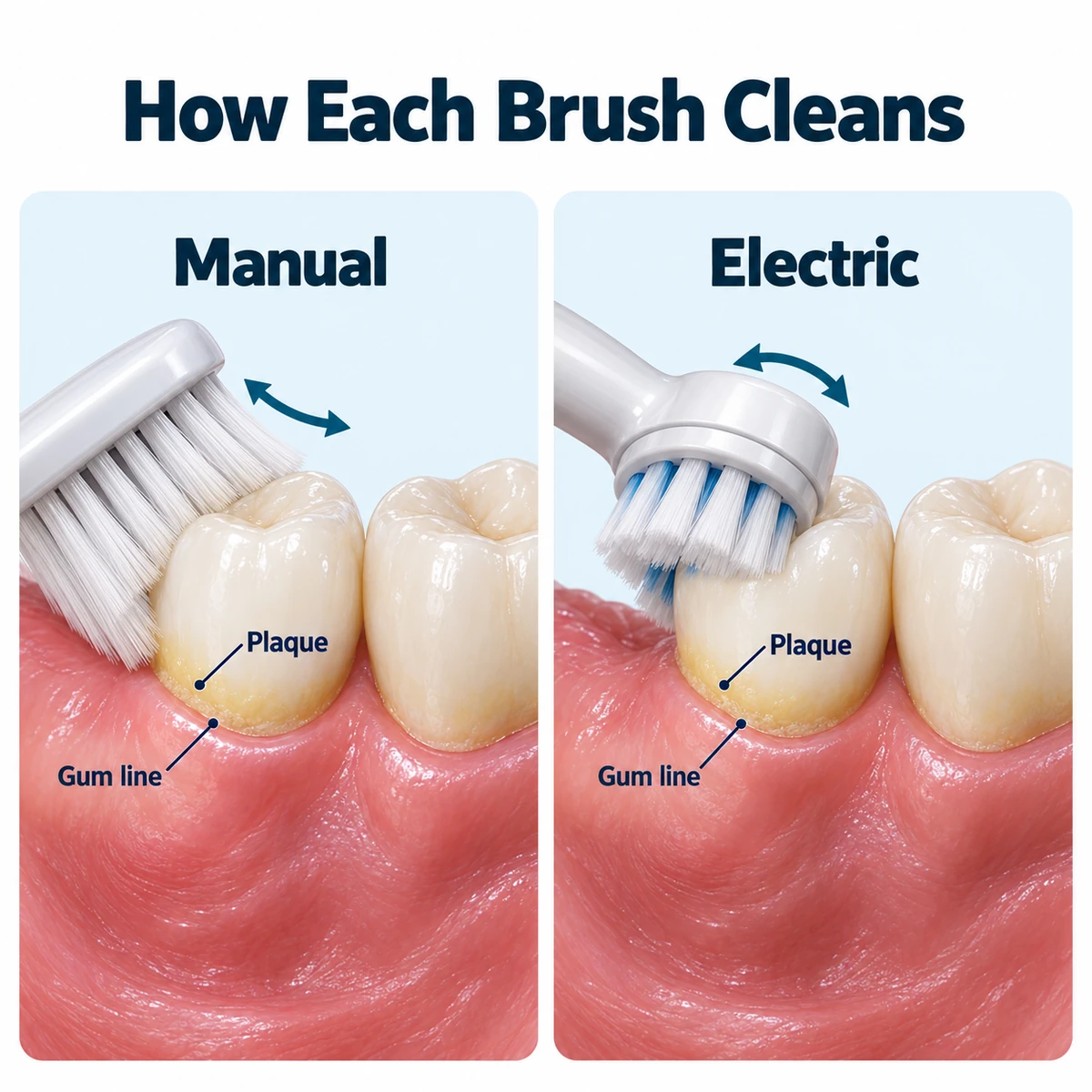
A manual brush only moves as much as your hand does. You supply every stroke, so the result depends on your angle, pressure and patience.
Tilt the bristles towards the gum line, then use short, gentle strokes on each tooth to cover the outer, inner and biting surfaces.
An electric brush supplies the motion for you, and it comes in two main designs:
- Oscillating-rotating: a small round head turns back and forth and cups one tooth at a time.
- Sonic: a longer head vibrates very fast and sweeps along the teeth.
With either design, you guide the head slowly from tooth to tooth instead of scrubbing. Pressing hard does not clean better and can wear enamel and push gums back over time.
Electric or manual: the pros and cons
Electric toothbrush
- Removes a little more plaque in studies.
- Needs less hand effort.
- Built-in timers and pressure sensors on many models.
- Costs more upfront and needs charging or batteries.
Manual toothbrush
- Inexpensive and sold everywhere.
- Light and easy to pack for travel.
- Works well with careful technique.
- No timer or warning when you press too hard.
How do the costs and upkeep compare?
A manual brush costs little upfront and little to replace. An electric brush costs more at the start, and you keep buying replacement heads.
| Manual toothbrush | Electric toothbrush | |
|---|---|---|
| Upfront cost | Low | Higher |
| What you replace | The whole brush, every three months | The head, every three months |
| Power | None | Charging or batteries |
| Two-minute timer | No | Most models |
| Pressure warning | No | Many models |
| Travel | Packs anywhere | Needs a charger or spare batteries |
Who benefits most from an electric toothbrush?
People who struggle to brush well by hand gain the most, because a powered brush helps where technique or grip is the weak point.
- Braces wearers: plaque collects around each bracket where a brush skips, and it can leave chalky white marks on the enamel. A powered head reaches around braces with less effort.
- People with stiff or sore hands: arthritis or a past stroke can make small brushing strokes hard, and the motor does that work for you.
- Heavy brushers: a pressure sensor warns you to ease off when you press too hard.
- People with bridges or implants: a powered head helps clean the gum line around this dental work. Our pages on implants and bridges explain the extra cleaning each needs.
Children can use either type, as long as an adult helps. Brush a young child's teeth for them. From about age six, once they can spit out the toothpaste, watch while they brush themselves. Our children's dentistry team tells you how much toothpaste suits your child's age.
Where do both brushes miss plaque?
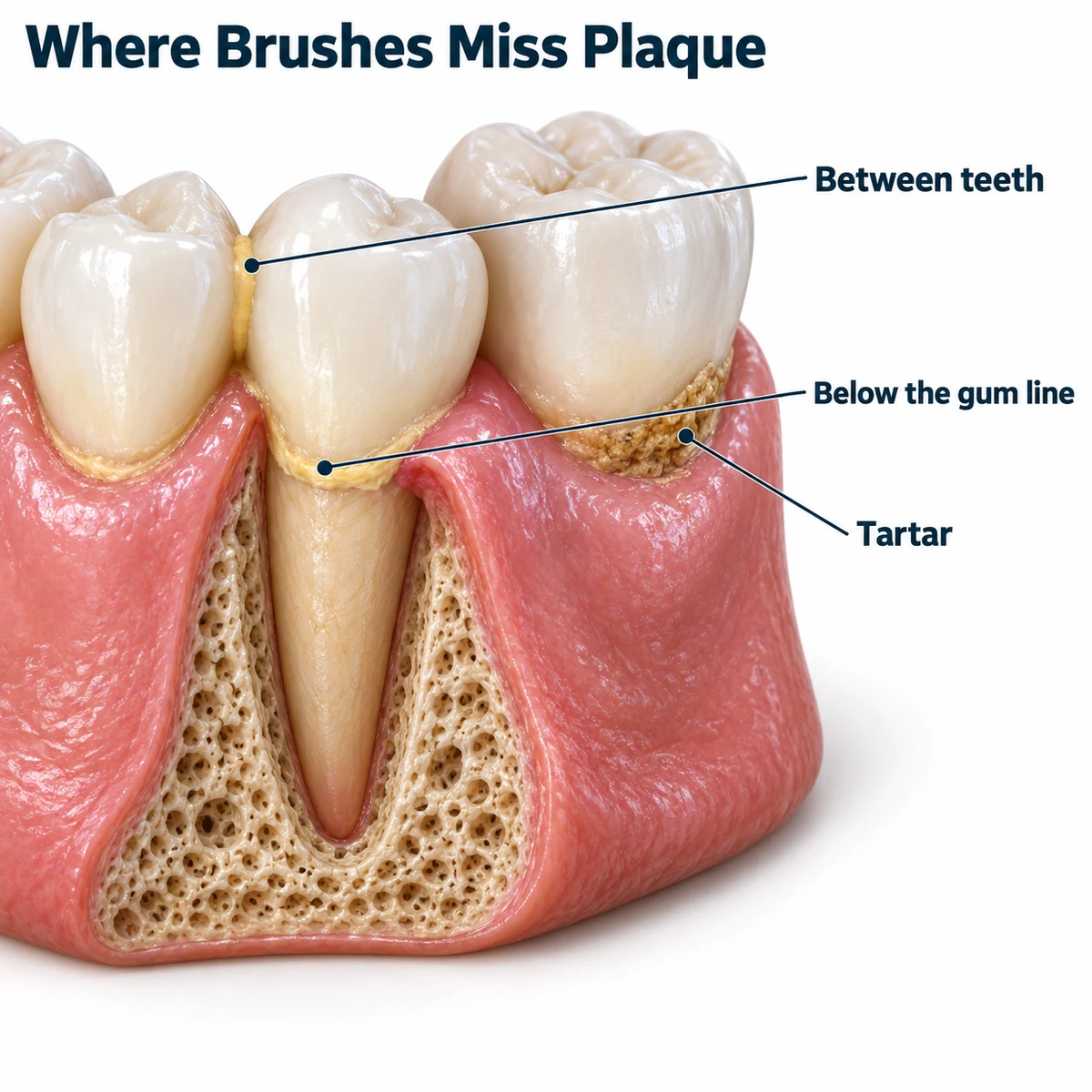
No brush cleans between your teeth or under the gum line. Those spots are where decay between teeth and gum disease start.
Once a day, clean the gaps with floss, a small interdental brush or a water flosser. The best choice is the one you will stick with.
Plaque that stays put hardens into tartar, which brushing cannot shift. Removing it takes instruments and is the job of a professional teeth cleaning. At each cleaning visit to Dentistry on Britannia in Mississauga, you hear which teeth need more attention and which technique to change. A brush of either type works better once you know where your weak spots are.
How do you brush well with either type?
Good habits matter more than the brush in your hand. These steps apply to both types.
- Brush for two minutes, twice a day: use a phone timer if your brush has none built in.
- Use a fluoride toothpaste: it strengthens enamel against the acid that plaque makes.
- Choose soft bristles: hard bristles can wear enamel and push the gums back.
- Aim at the gum line: plaque gathers first where tooth meets gum.
- Spit out the foam without rinsing: a rinse of water strips the fluoride away before it has time to act. Fluoride treatment adds extra protection for teeth at higher risk.
Regular checkups catch the problems that slip past good brushing. Our post on whether a cavity can heal on its own explains what early decay looks like.
Frequently asked questions
Can an electric toothbrush damage your gums?
Any brush can wear enamel and push gums back when you press too hard, so use a soft head and a light touch. If your gums have already pulled back, ask your dental team which brush and head suit you.
Is a sonic toothbrush better than a rotating one?
Both designs reduce plaque. Reviews single out oscillating-rotating heads, but the right pick is the one you find comfortable and will use every day.
How often should you replace an electric toothbrush head?
Replace it every three months, the same as a manual brush.
Can you use an electric toothbrush with braces?
Yes, and a powered brush makes it easier to clear plaque around each bracket. Keep cleaning between your teeth with an interdental brush or floss threader as well.