
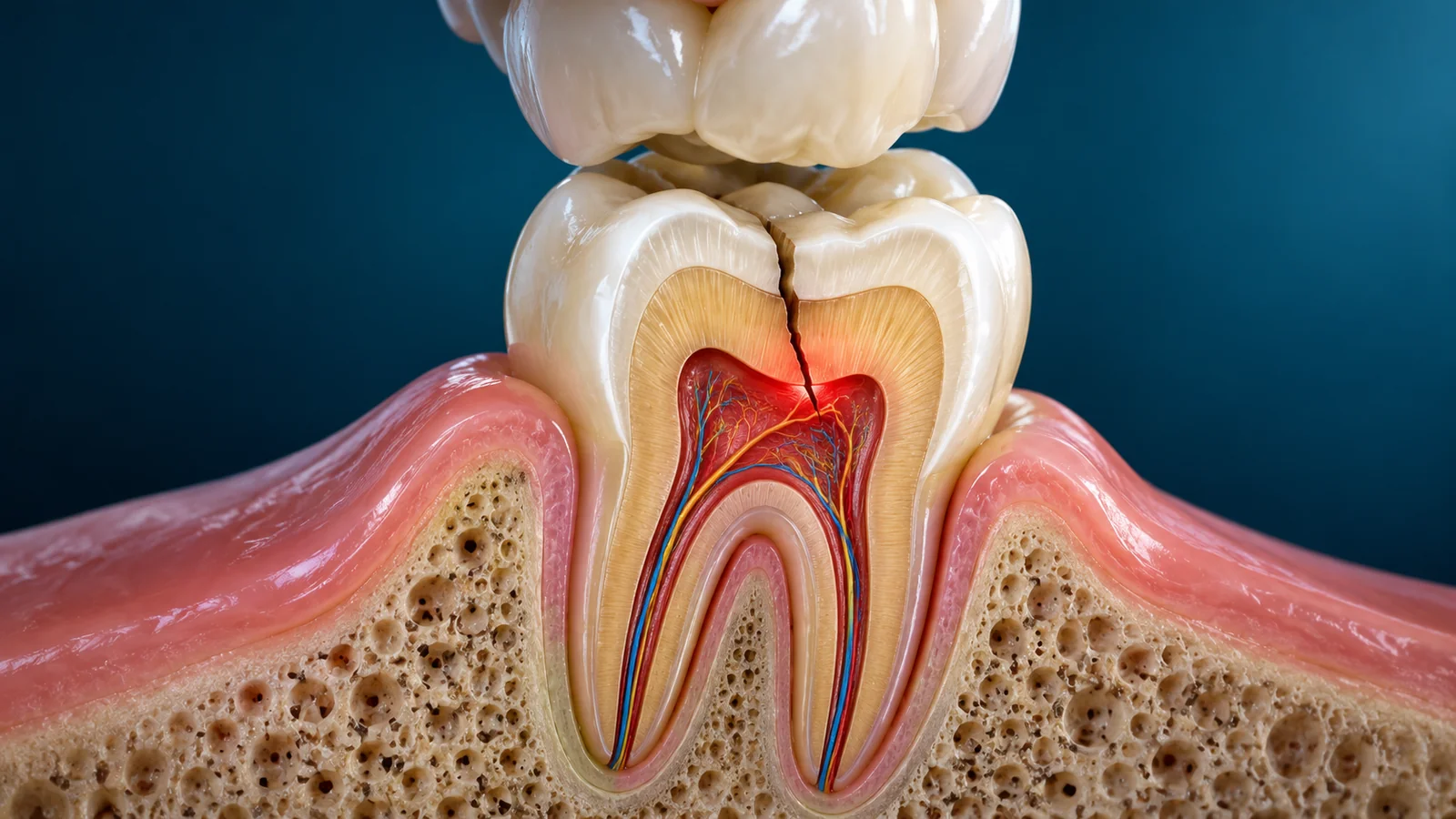
This guide explains what each cause feels like, how to ease the pain at home and which signs need care today.
Key takeaways
- Biting pain is a symptom and not a diagnosis. A crack, decay and an infection can feel alike at first.
- A sharp jolt that fades fast can point to a crack. A throbbing ache that lingers points more to an infection.
- New fillings and crowns can sit a little high. A bite adjustment can ease that kind of pain.
- Swelling or fever changes everything. Those signs need same-day care, and some need a hospital.
What can make a tooth hurt when you bite down?
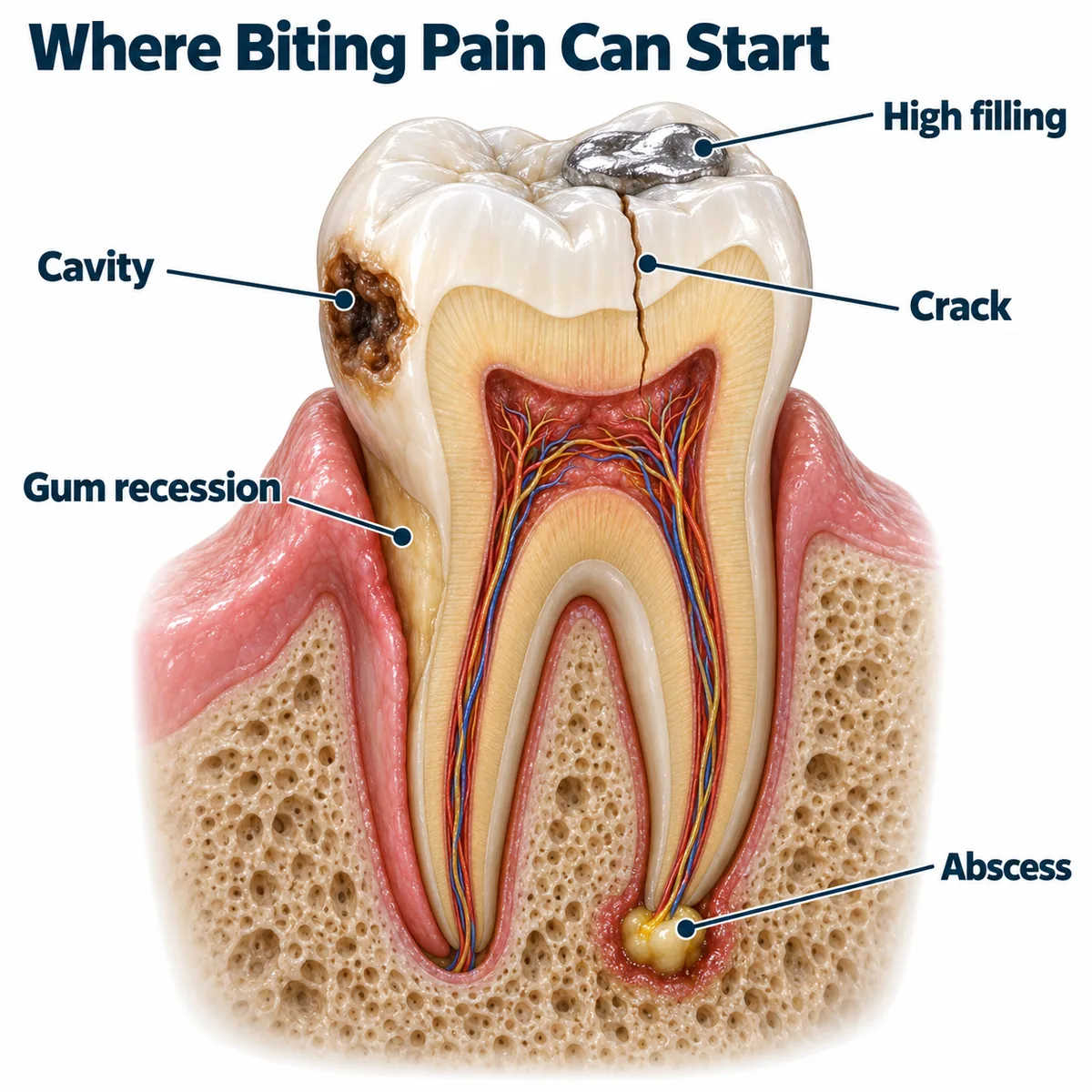
Biting presses on the tooth and the tissue that holds it. Damage in either one can hurt.
- A cavity. Decay eats through enamel into the softer dentin, and a filling is the common repair.
- A cracked tooth. A crack can flex open as you chew and press on the nerve inside.
- A high or worn filling. A filling that sits too high takes more than its share of force with every bite.
- An infection or abscess. Bacteria that reach the nerve can spread to the root tip and make the tooth feel tall and tender.
- Grinding and clenching. Night grinding bruises the ligament that holds each tooth, as our post on grinding your teeth at night explains.
- Gum recession. Gum disease and hard brushing can pull gums back and expose roots with no enamel on them.
How can you tell if a tooth is cracked?
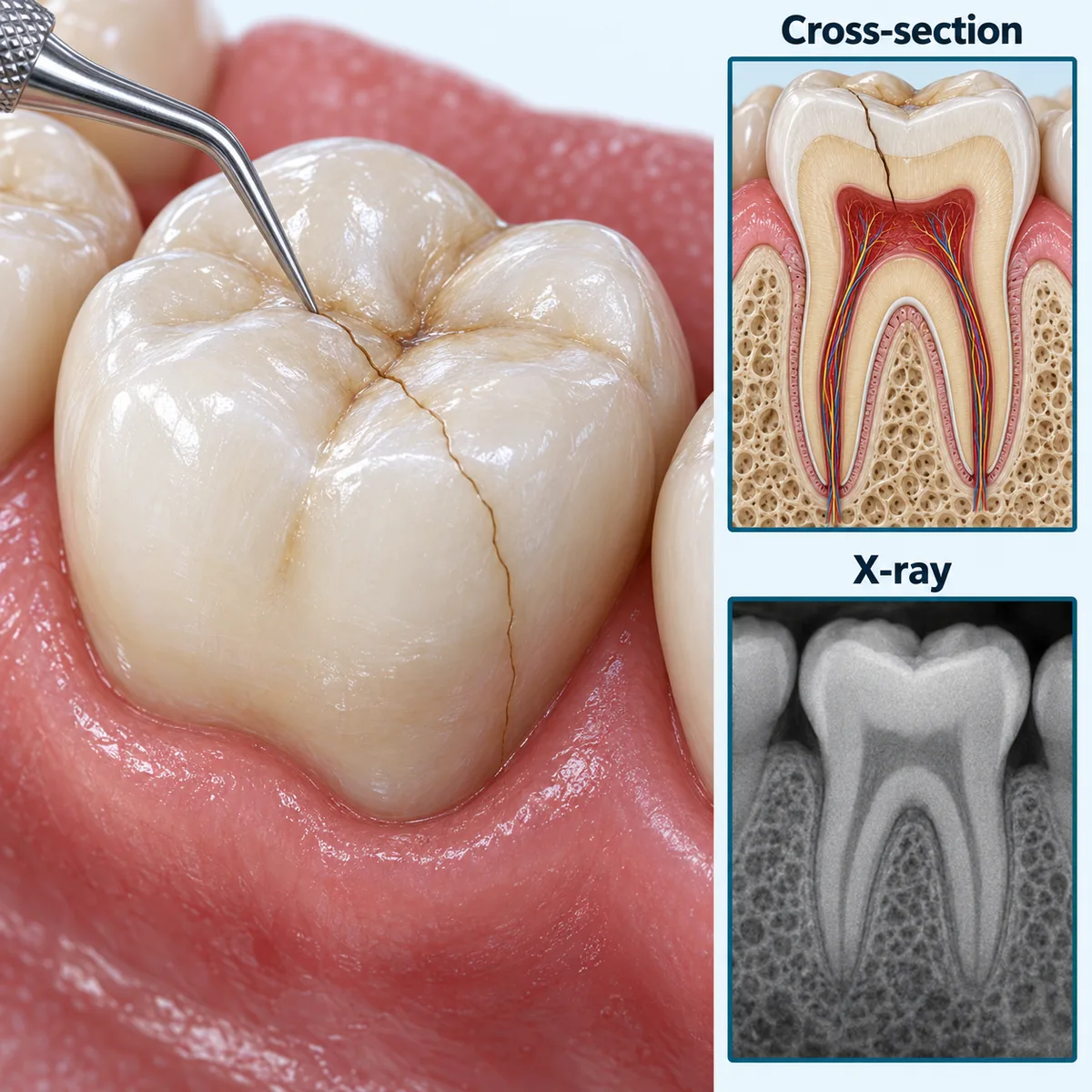
A cracked tooth gives a sharp pain when you bite on one spot, and the pain can flash again as you let go. The tooth can feel fine for the rest of the day and that makes it easy to ignore.
Fine cracks are hard to see in the mouth and can hide on an x-ray too.
The right repair depends on how far the crack runs. A dental crown can hold a small crack together, and a crack that reaches the nerve can need root canal treatment first. A crack that splits the root can mean the tooth has to come out.
What does the type of pain tell you?
The kind of pain and how long it lasts give your dentist early clues, but only an exam can confirm the cause.
| What you feel | What it can point to | What to do |
|---|---|---|
| Sharp jolt on one spot, gone in seconds | A crack or a loose filling | Book an exam soon and chew on the other side |
| Tender only since a new filling or crown | A filling that sits too high | Call the clinic for a bite check |
| Dull, throbbing ache that lingers after chewing | Decay near the nerve or an infection | Call the clinic soon, and today if it keeps you awake |
| Throbbing pain with gum swelling or a bad taste | An abscess | Call the clinic today |
Why does a new filling or crown hurt when you bite?
A new filling or crown that hurts on biting can sit a fraction too high. If your mouth was frozen for the work, the extra height is hard to notice at first.
That high spot takes the full force of every bite and the tooth gets sore over the next few days. Your dentist can check the bite with marking paper and smooth the high spot. Pain that grows stronger after deep work needs a call to the clinic.
What can you do at home until your appointment?
Home steps ease the pain for a short time but do not fix the cause. Plan an exam even if the pain fades.
- Chew on the other side and choose soft foods.
- Skip ice, nuts and very hot or cold drinks.
- Rinse with warm salt water and keep brushing gently.
- Ask a pharmacist which pain reliever is safe for you and follow the label. Tell them if you are pregnant or the medicine is for a child.
How will your dentist find the cause?
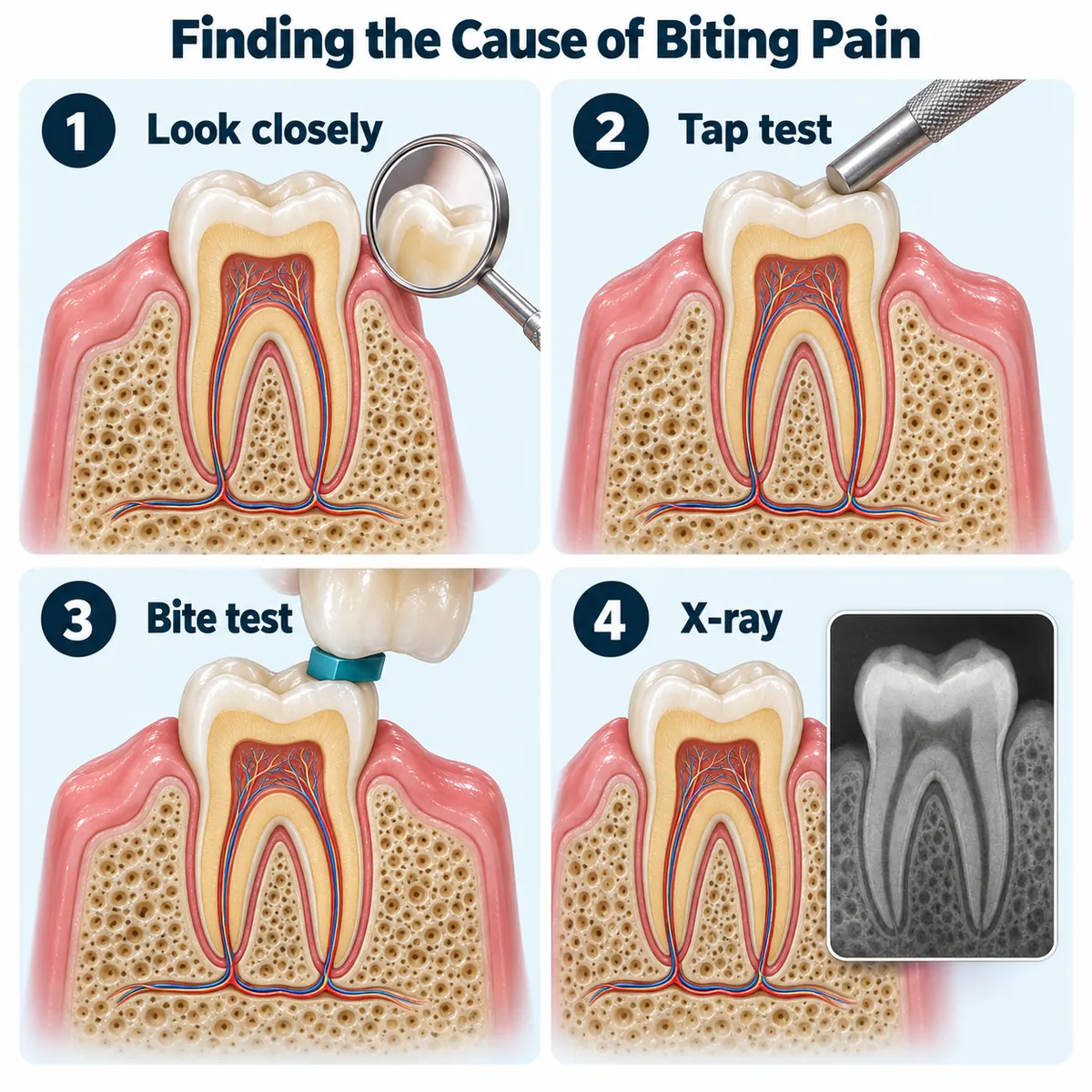
Your dentist finds the cause by asking about the pain, testing the tooth and taking x-rays.
Your dentist then taps each tooth and has you bite on a small tool one cusp at a time. Pain on a single cusp can point to a crack. An x-ray can show decay between teeth or infection at the root tip.
At Dentistry on Britannia in Mississauga, a dental exam is the place to start. If clenching turns out to be the cause, a night guard can protect your teeth while you sleep.
When is biting pain an emergency?
Biting pain becomes urgent when it comes with swelling, fever, pus or pain that keeps you awake, so call the clinic the same day for any of these. A child with a swollen face or a fever needs care the same day too. The clinic sees dental emergencies during opening hours only, and our guide on when a dental problem is an emergency covers more signs.
Frequently asked questions
Will a tooth that hurts when I bite heal on its own?
A crack, cavity or infection does not heal on its own. Pain that fades can still mean the problem is growing, so book an exam.
Why does my tooth hurt when I bite but not at other times?
Pain only on biting points to pressure on a weak spot such as a crack, a high filling or a tender root.
Can a sinus infection make my teeth hurt when I chew?
Yes. The roots of your upper back teeth sit close to the sinuses, so sinus pressure can make several of them ache when you chew. Tell your doctor about sinus symptoms, and get a dental check for pain in a single tooth.