
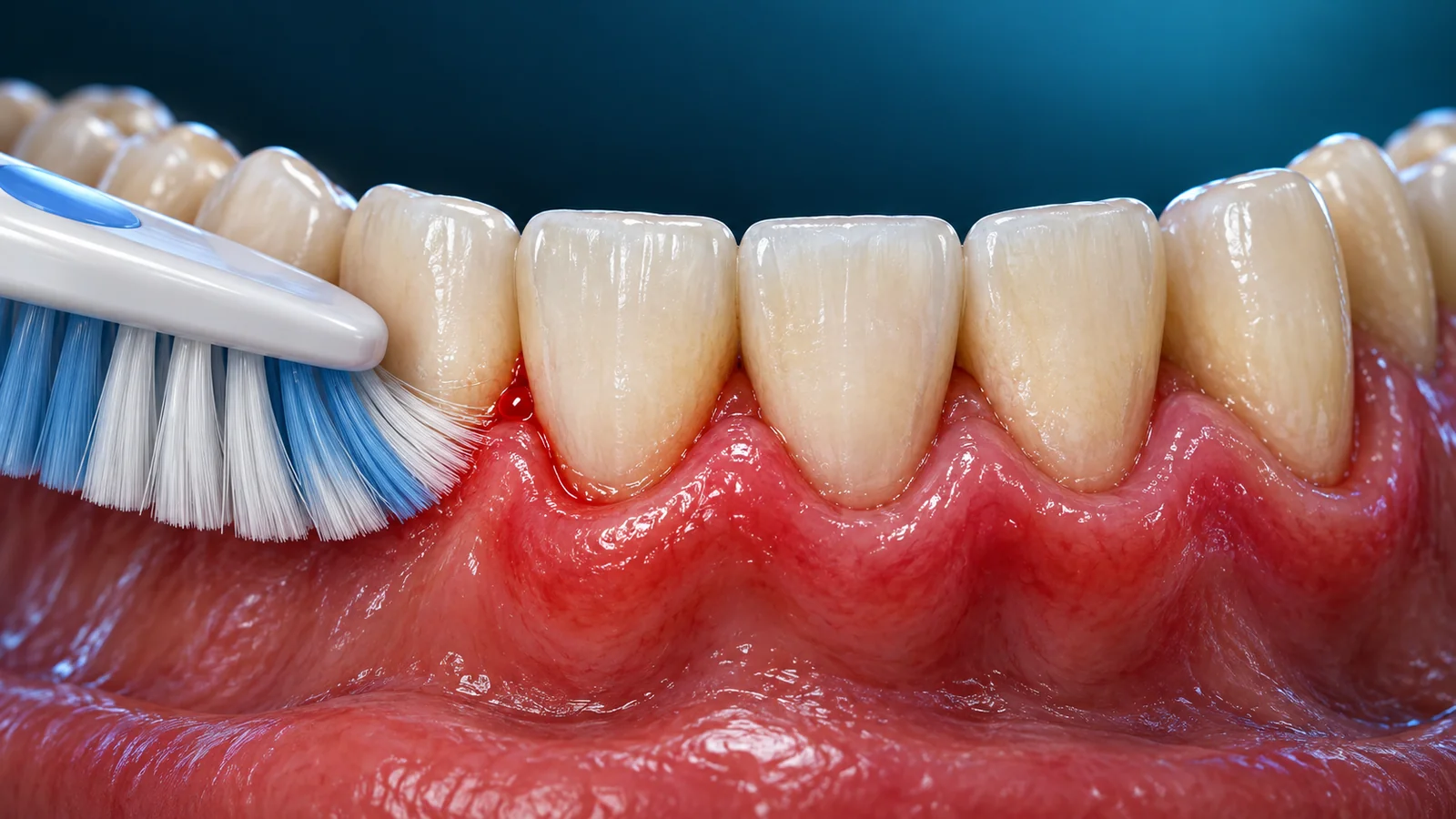
That little pink in the sink is the earliest sign of gum disease you can see for yourself.
Key takeaways
- Bleeding gums are inflamed gums. Plaque left at the gum line is the most common cause
- Early gum disease can be reversed. Good daily cleaning and a professional cleaning bring the gums back to health
- Smoking, diabetes, pregnancy and some medicines raise the risk and can make gums bleed more easily
- Bleeding gums are worth having assessed at any stage. Gum swelling or pus needs a same-day call
- Advanced gum disease cannot be undone. Bone lost around a tooth does not grow back, so early treatment matters
What bleeding gums tell you
Healthy gums are firm and pink, and they do not bleed when you brush or floss. Gums that bleed are reacting to something and most of the time that something is plaque.
Plaque is a soft and sticky film of bacteria that builds up on your teeth every day. When it sits along the gum line, the gum tissue becomes red, swollen and tender. Inflamed tissue bleeds at the lightest touch.
This early stage is called gingivitis. Canada.ca lists its signs as pain in the gum area, persistent bad breath, red and puffy gums, and blood on your toothbrush or floss.
Left alone, plaque hardens into tartar. Brushing and flossing cannot shift tartar once it has set, and only a professional cleaning removes it.
Gingivitis or periodontitis?
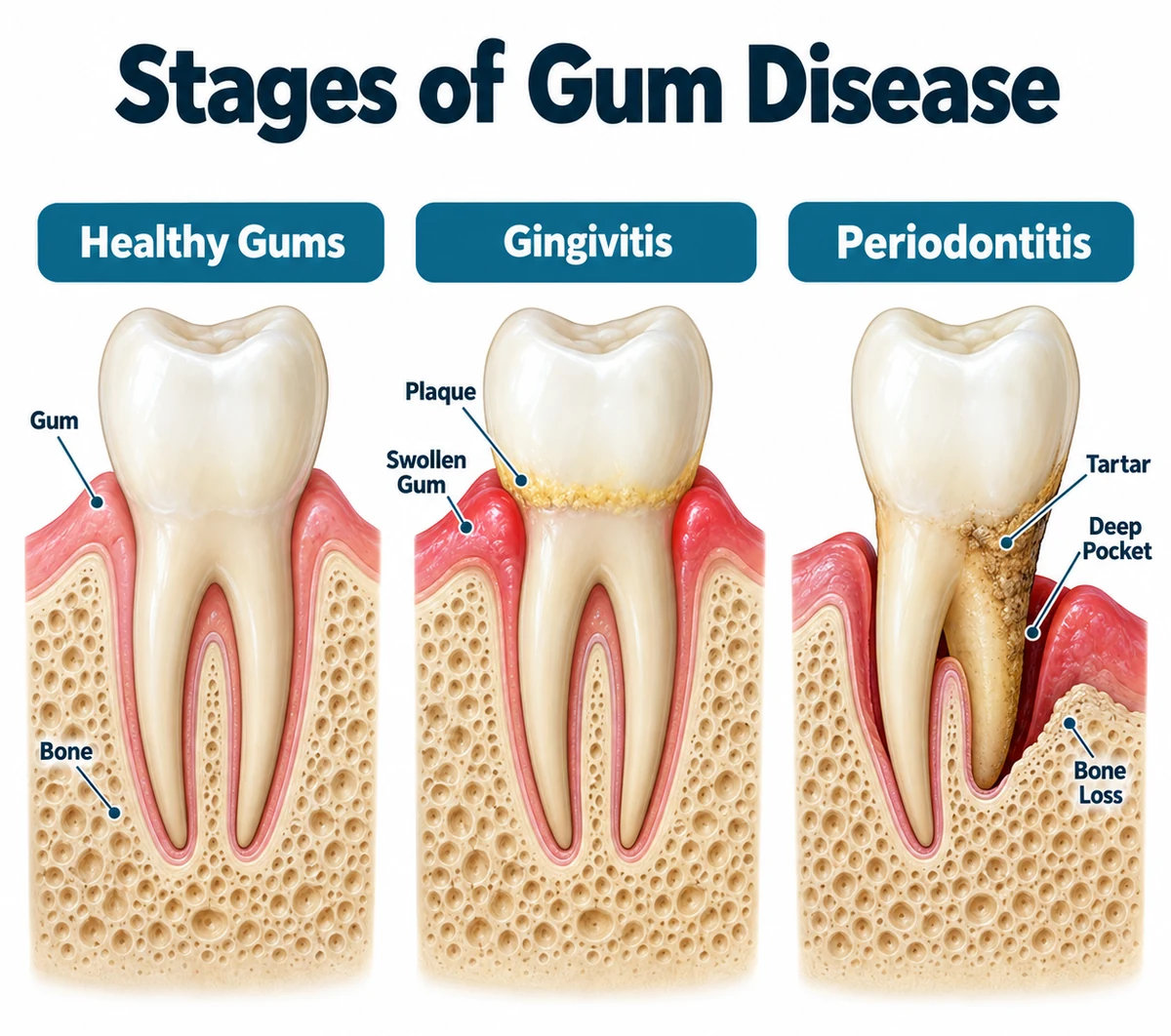
Gum disease comes in two stages. They feel similar at first, and the difference is what is happening under the gum.
Gingivitis affects the gum only and the bone and fibres that hold the tooth are still intact. Good cleaning at home plus a professional cleaning can reverse it.
Periodontitis is the advanced stage. The infection reaches the bone and tissues that support the tooth. Pockets form between the gum and the tooth, and bacteria collect deep inside them. Lost bone does not regrow by itself.
| Gingivitis | Periodontitis | |
|---|---|---|
| What is affected | Gums only | Gums, bone and supporting fibres |
| Bleeding | When you brush or floss | Can happen on its own |
| Other signs | Red, puffy, tender gums | Loose teeth, pus, bad taste, gums pulling away |
| Can it be reversed? | Yes, with good daily care and a cleaning | No, but treatment aims to halt or slow it |
| Usual treatment | Better home care and a routine cleaning | Scaling and root planing, then reassessment |
Canada.ca describes periodontitis bleeding as something that can be spontaneous. Gums that bleed when you are not brushing need an exam soon.
Common causes of bleeding gums
Plaque and tartar
This is the cause behind most bleeding gums. It starts in the areas you miss along the gum line and between the teeth. Back teeth and the inside surfaces are the spots people miss most.
Brushing too hard, or a new flossing routine
A hard-bristled brush and heavy pressure irritate the gums. Use a soft brush and gentle circles at the gum line. If you have just started flossing, your gums can bleed at first. Keep going gently because cleaning is what calms the inflammation.
Smoking
Canada.ca lists smoking as a risk factor for gum disease, and quitting helps your gums heal. Tell us at your exam if you smoke or vape.
Hormone changes and pregnancy
Changing hormones make gums more sensitive. Canada.ca's pregnancy guidance says gums can bleed easily during pregnancy even with good oral hygiene. It also describes pregnancy gingivitis, which can appear any time from the third to the ninth month. Most of these gum problems clear up after the birth.
The same guidance suggests a checkup and cleaning in your first trimester. It names the second trimester as the best time for dental work such as fillings, and keeps x-rays for emergencies. Tell us you are pregnant when you book.
Diabetes
Canada.ca lists diabetes as a risk factor for gum disease. If you have diabetes, regular gum checks belong in your routine.
Medicines
Certain medicines make gums bleed more easily and blood thinners are the best known. Never stop a prescribed medicine to stop gum bleeding. Tell us what you take, and speak to your doctor about any change.
Bleeding with no cause in your mouth
Sometimes the gums look healthy and still bleed when you brush. Bleeding that comes with easy bruising, nosebleeds or unusual tiredness can point to a health problem outside the mouth. That needs your doctor as well as your dentist.
How to stop bleeding gums at home
Better daily cleaning is the first step, and it works alongside an exam rather than in place of one. Here is what to change.
- Brush twice a day with a fluoride toothpaste and a soft brush. Spend two minutes and angle the bristles toward the gum line
- Clean between your teeth once a day. Use floss, an interdental brush or a water flosser. Pick the one you will keep up
- Do not stop because of the bleeding. Bleeding gums need more cleaning, not less
- Stop smoking. Your gums heal better without it
- Cut back on sugary snacks and drinks. Sugar feeds the bacteria in plaque
- Rinse with warm salt water if your gums feel sore. It soothes the tissue but does not remove plaque
A mouthwash does not replace brushing or flossing, because it cannot reach plaque that is stuck to the teeth.
When to see a dentist
Book an exam if any of these apply to you:
- Bleeding when you brush or floss
- Bleeding that starts on its own, without brushing
- Gums that look like they are pulling away from your teeth
- Teeth that feel loose or have started to shift
- A bad taste or bad breath that does not go away
- You are pregnant, have diabetes or smoke and have not had a gum check this year
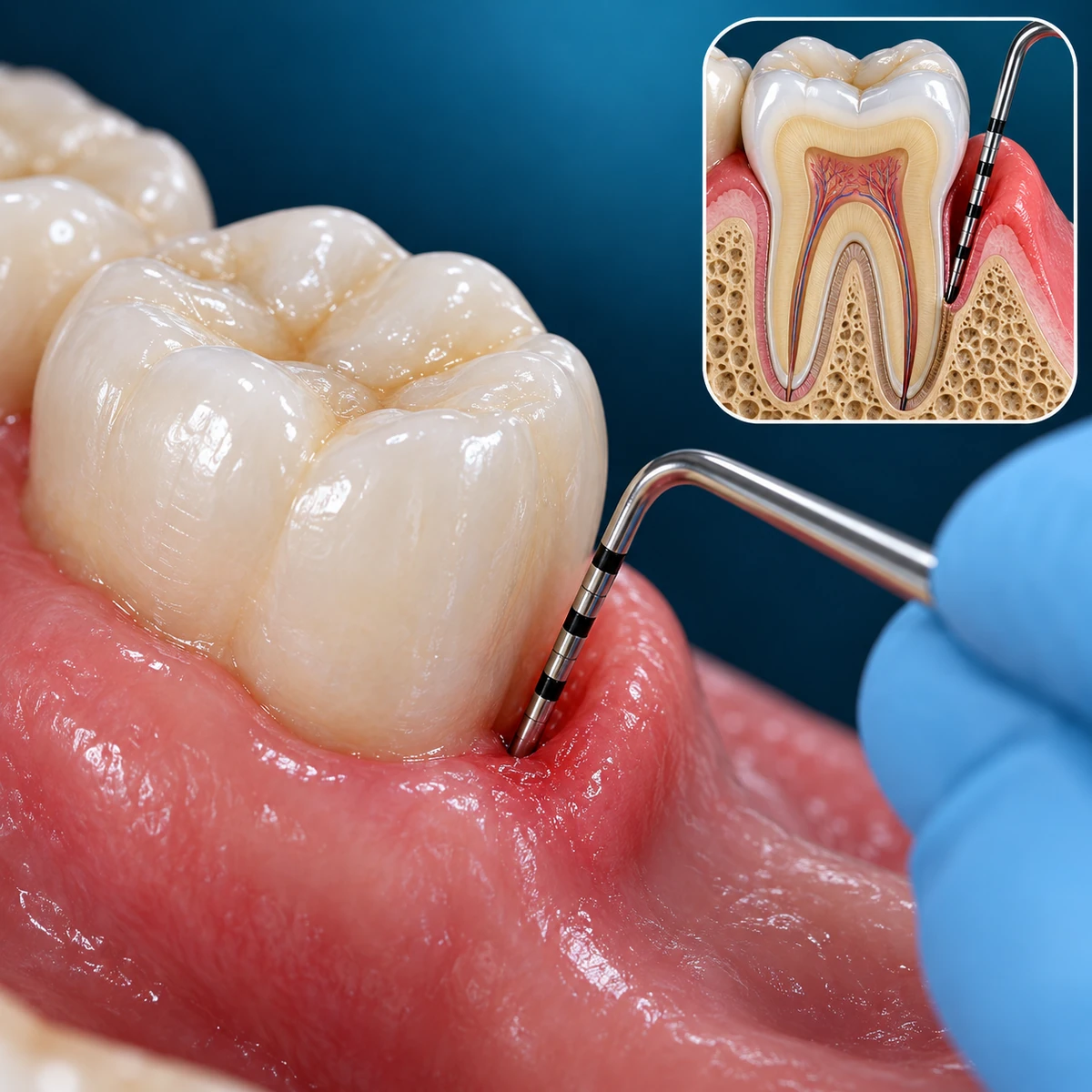
At the exam, we look at your gums and measure the space between each tooth and the gum with a thin probe. A healthy pocket is shallow and measures a few millimetres. A deeper pocket is one sign of gum disease, read together with bleeding and the x-ray.
Call us the same day for swelling of the gum or face, or pus from the gum. Gum bleeding on its own is not a dental emergency. Our emergency guide explains which problems need a same-day call.
How gum disease is treated
Gum disease treatment follows the stage you are at.
For gingivitis, a routine cleaning removes the plaque and tartar. We show you where your brush is missing and how to clean between your teeth. We check your gums again at your next visit.
For periodontitis, the first step is a deep cleaning called scaling and root planing. Scaling lifts the deposits off the teeth and from under the gum. Root planing smooths the root surfaces so the gum can heal against them and your gums are numbed for it.
A reassessment follows a few weeks later, when we measure the pockets again and compare them with the first readings. Areas that do not respond can need flap surgery, which lets the root be cleaned under direct view. Once gum disease is under control a connective tissue graft can cover some exposed root where recession needs it. Full coverage cannot be promised.
Gum disease left untreated can loosen teeth until they are lost. A lost tooth then means a bridge, an implant or a gap, and each adds visits.
What treatment costs
Deep cleaning is different work from a routine cleaning and it is priced on its own terms. In Mississauga, published prices for scaling and root planing run about $200 to $400 per quadrant. A quadrant is one quarter of your mouth and these are area prices rather than our fees.
The number of quadrants you need decides the total. One area starts at about $200 and the full mouth costs more. You get a written estimate before treatment starts.
The Canadian Dental Care Plan lists cleanings and non-surgical gum disease care among its services. It is open to all ages for people with no private dental insurance, subject to its income test, frequency limits and any co-payment. Ask us what the plan covers for you before you book. If you have private insurance, we bill your plan directly.
Keeping gums healthy for good
Healthy gums take the same few habits every day: brush twice, clean between your teeth once, and keep your cleaning appointments.
Six months between cleanings suits many people. Gum disease, smoking, diabetes and braces all point to shorter gaps. Your dentist sets the interval with you based on your own gums.
Grinding your teeth does not cause gum disease, but it can add stress to teeth that have already lost bone support. Read our guide to grinding at night if you wake with a sore jaw.
Frequently asked questions
Is it normal for gums to bleed when I brush?
No. Healthy gums do not bleed with normal brushing and even a little bleeding is a sign of inflammation that needs attention.
Should I stop flossing if my gums bleed?
No. Keep flossing gently every day. The bleeding comes from inflammation, and cleaning is what calms it. It settles within a week or two for most people.
Can bleeding gums go away on their own?
Pregnancy is the exception, and most of those gum changes clear after the birth. Plaque-related bleeding needs a change, because the plaque causing it has to go. Better daily cleaning reverses gingivitis, and tartar needs a professional cleaning.
How long does it take for bleeding gums to heal?
That comes down to the cause and the stage. Gingivitis can clear with good daily cleaning and a professional cleaning. Periodontitis needs treatment and follow-up, and your dentist tells you what to expect after the exam.
Can bleeding gums mean something serious?
They can point to periodontitis, which damages the bone around your teeth. Bleeding with bruising or nosebleeds elsewhere can point to a health problem that needs your doctor.
Do bleeding gums in pregnancy go away?
Canada.ca says most pregnancy gum problems clear up after the birth. Keep brushing and flossing and book an early checkup and cleaning.